AI Is Changing Everything — Here’s What It Can’t Change
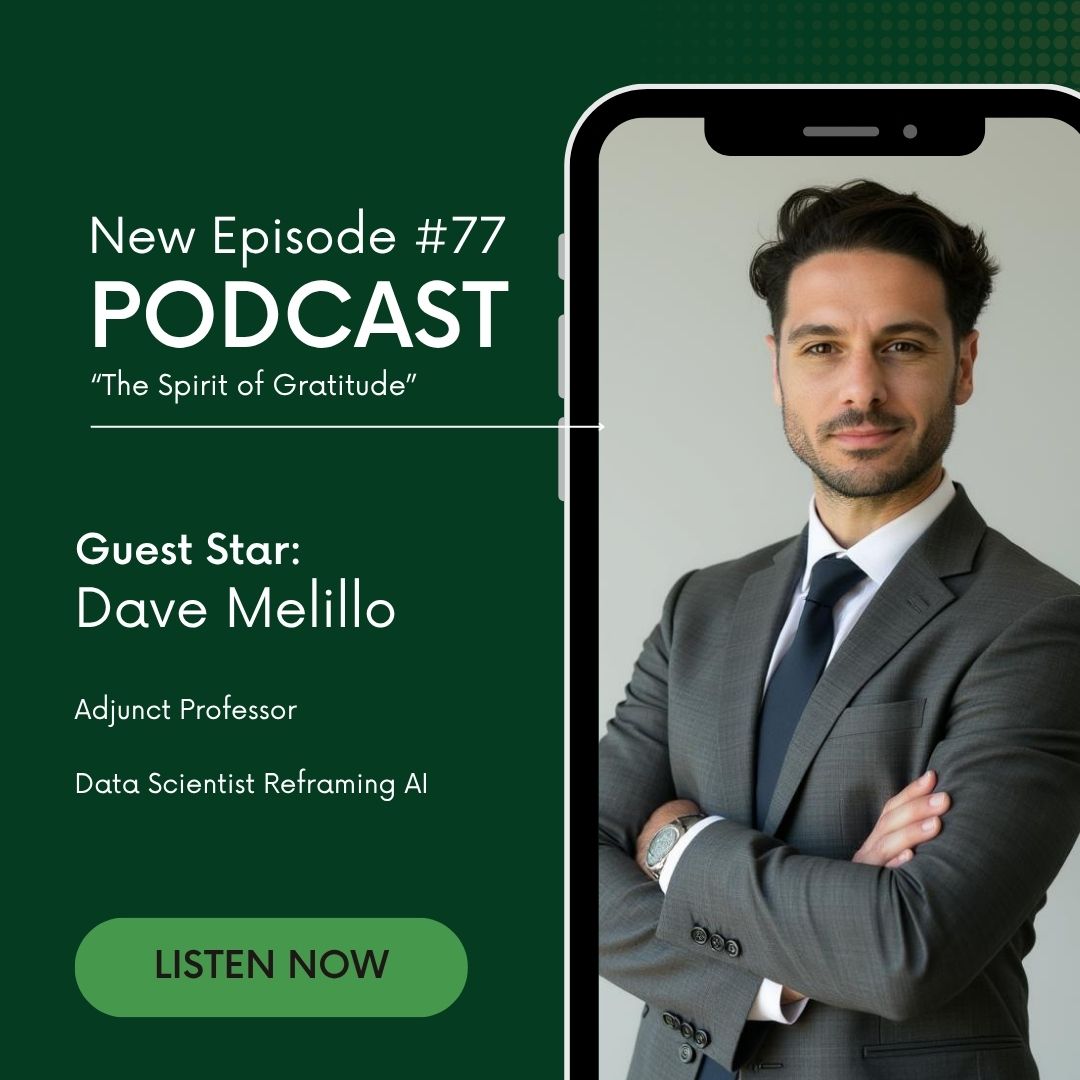
What if the fear of AI replacing your job is actually a signal to evolve, not retreat? Dave Melillo, a former touring musician turned data professional, shares how he rebuilt his career from the ground up and what it really takes to pivot when passion and income no longer align. From scanning invoices to working in high-performance data environments, his story shows how small steps and consistent learning create real momentum. 🧠 What you will learn: How to transition careers by starting...


What if the fear of AI replacing your job is actually a signal to evolve, not retreat?
Dave Melillo, a former touring musician turned data professional, shares how he rebuilt his career from the ground up and what it really takes to pivot when passion and income no longer align. From scanning invoices to working in high-performance data environments, his story shows how small steps and consistent learning create real momentum.
🧠 What you will learn:
- How to transition careers by starting small and stacking skills
- Why tools like Python, Tableau, Snowflake, dbt, and Power BI only matter when paired with effort
- What AI can and cannot do in real-world workflows
- How to treat AI as a co-pilot instead of a threat
🔑 Key takeaways:
- Career pivots start with humble, practical steps
- Learning and repetition build long-term resilience
- AI rewards those who adapt, not those who resist
Listen now to Dave’s story on navigating career change, AI, and building skills that last.
Watch on YouTube or subscribe to YoggNation’s Spirit of Gratitude podcast for more conversations that help you stay steady and keep growing in a changing world.
00:00 - Welcome And Podcast Mission
01:01 - Meet Dave And The AI Panic
01:58 - The Music Grind And Success Myths
08:43 - From Invoices To Data Science
11:06 - Teaching Bootcamps And Watching Growth
13:45 - Reinventing Careers During AI Layoffs
23:30 - Why AI Still Breaks Things
24:10 - Stubbornness Built Through Public Failure
29:04 - Family Support And Final Takeaways
Welcome And Podcast Mission
SPEAKER_00
Welcome to the Yog Nation, the Spirit of Gratitude podcast on the OneTech platform. Hello, friends. My name is Yogesh Patel, and this podcast explores the themes of bullying self-awareness and the power of our inner spirit, including the silent battles we all face. Join me every week as I invite high-profile guests as we explore how adversity shapes us, how gratitude lifts us, and how we can all uncover the inner strength that we all have within ourselves. Join the conversation. I appreciate you listening in.
SPEAKER_01
His path has been anything but predictable. Today, as a data scientist who has worked in high-performance environments like FanDuel and DraftKings, Dave brings a grounded and honest perspective to a world that is changing ever so fast. At a time when AI is creating both incredible opportunity and real fear among job loss, evident in the recent layoffs at Amazon, Oracle, and now Meta today with 6,000 individuals. He challenges us to focus less on panic and more on what is within our control. In today's episode, Dave's journey speaks to resilience, awareness, and the discipline to keep moving forward when one chapter closes and another begins. And with gratitude, welcome to the podcast, Dave.
SPEAKER_02
Oh, thank you so much for having me on, Yugesh. I'm really excited to share my story and uh just have a great conversation today.
The Music Grind And Success Myths
SPEAKER_01
Thank you. Well, as I always say to every guest, the honor is absolutely mine to have you on the podcast. So thank you, Dave. Well, I'm curious, Dave, how do you go from music to being a data scientist? I wouldn't never have equated an individual crossing these two career paths. So would love to share and hear your story.
SPEAKER_02
Yeah, I before I go into my story, I think generally a lot of people undersell how much creativity there is with data and technology. I think even uh if you talk to software engineers, they'll tell you there is some type of, you know, artistic element to uh building software and coding. And so I always found that. I also, even before I picked up music, I was a little bit of a self-professed nerd. You know, I was into like Star Wars and anime, video games, which is like the natural on-ramp to, you know, uh statistics and programming and kind of being that type of person. So I was somewhat programmed for that, but I was also programmed for music, right? Uh again, I I've always loved music. It came natural to me. I was singing at a young age, then I started playing in bands, as you mentioned, and I got I got a great opportunity when I was very young to go out on the road. And I was probably lucky that my parents let me do that, right? For all the the parents out there listening, imagine letting your uh 15-year-old uh go out on the road. But um I digress. Uh yeah, it was a great life, but when it comes to music, you have to be willing to do anything uh to be successful and to go through a lot of tribulations in order to be successful.
SPEAKER_01
Is it just to be seen and noticed by people? Is that the tribulation or is it something else?
SPEAKER_02
Uh, you know, I I think it's uh uh we were talking a little bit before the podcast, like you still need to pay the bills, right? As a musician. And and the time comes, and you know, I was I think I was a little too punk rock for my own good. You know, I was an artist, a starving artist in the worst way, right? I uh measured my my legitimacy by my suffering. And so uh, you know, when it came to commercial opportunities and you know, selling out, I was a little bit averse to that. And I was a kid, right? So I had the I had the element of not having to have bills, not having I I was able to be selfish, right? Um, but anyway, I got to a point where I wasn't I wasn't successful with that mindset, right?
SPEAKER_01
I I was I wasn't Were you burned out or did it just not pay the bills?
SPEAKER_02
And no, I I think it it was more about success because I I was I still have a lot of energy to this day. You know me, Yogesh, right? I've I have energy, I have tons of it, but it needs to be pointed in the right direction. And so with music, I just felt like I was doing all the right things. I was, you know, I I felt like I was doing really well, but it just wasn't turning into material success for one reason or another.
SPEAKER_01
So But should that dissuade the next Taylor Swift from pursuing your path though?
SPEAKER_02
No, uh I mean, but you really I think there's a lot of things as a musician that you need to want in order to be commercially successful. I think that's a really important word here, right? Because there are a lot of really great musicians, I'm sure, that you see on the subway every day, right? Or busking in San Francisco. There's there's amazing musicians, but that doesn't always equal commercial success. And so in order to be commercially successful, I just think there were some things that uh I had to do I wasn't willing to. I wasn't willing to sell. Uh again, I was a little bit too entrenched in in some morals that I made up in my mind at the time. But um, yeah, again, it was it it wasn't burnt, it wasn't being burnt out. It was the feeling that I was trying so hard and I was really putting my all into it, and I just I wasn't getting a return. You know, I I kept coming home from tours and sleeping on my parents' couch, and and I didn't feel like I was building a life, and that's something that I wanted, you know. So so that's when I I started you know looking elsewhere.
SPEAKER_01
What's the advice you give aspiring musicians that want to achieve a dream in this in this field?
SPEAKER_02
You have to never give up, right? I've uh someone I started out with when I was very young, her name is Haley Williams. She's the singer of Paramour, superstar, right? But she had the same ups and downs. And I think if you really want it, you will stick with it, right? Um, but you have to be willing to go on that ride, and you have to be willing to get knocked down not once, not like every day, you have to be willing to get rejected and be told like you're going the wrong way and and keep on going.
SPEAKER_01
But what was your mindset at the time? I mean, it must have been really challenging. On one hand, you have these aspirations, but on the other hand, you have, let's just say, life's gravity weighing at you. Very well said.
SPEAKER_02
Yes, exactly. And you know, you you go home and you your friends are kind of on a different track than you. People are going to school and talking about college and and starting a life, doing those things. Uh, you have to be the type of person where that's not how you measure your success. You measure your success in art. And uh again, for for better or for worse, I I saw an out and and I definitely took it. But for musicians out there, if you really believe in yourself, don't listen to anyone be genuine and just don't give up, right? It it might mean you're gonna be homeless for a little while, but you know, it'll all be worth it when you make it that day, you know? Yeah, it's it's definitely a degree of persistence. Yes, a hundred percent.
SPEAKER_01
Yeah. So then tell me, how did you manage to be interested in computers and on that path? You mentioned yourself as a self-described nerd with you know, being a Star Wars. I'm a trackie, by the way.
SPEAKER_02
So that's great.
SPEAKER_01
Same, same, same vein, right? Same neighborhood. I don't know, it's a little different, right? Joan Luke Picard versus uh, you know, Darth Vader and and Luke Skywalker. But I digress.
From Invoices To Data Science
SPEAKER_02
No, no, definitely. Um, how did I fall into it? Well, again, I've always been a technologist. So I was not only a nerd, but I remember like, you know, my dad uh was in tech my whole life. And so we always had computers around, and I was always like playing like the best computer games. Like that game Mist. I'm not sure if you remember when it came out. Like that was it was all the rage on the computer, but um, and you know, I was like opening up telnet ports on my dad's computer and like you know, pinging different servers, but all that stuff was really interesting to me. Like when the Matrix came out, that like inspired me. I wanted to be a hacker and you know, like be in the matrix. So I think I grew up around a lot of that. And again, I took to it the same way that it did with music. I can't explain it um unless you've experienced it, but there is definitely an intersection between like being in the zone when you're playing a song and uh being kind of in a flow state when you're coding or creating something. That's like you're actually creating things. If you're a game designer, if you're a songwriter, if you're a data scientist, you are creating something out of nothing. And so again, I was naturally drawn to it. And um, I I'll tell you, I started out in the like humblest of situations, Yogesh. I came, I came off of a tour, I think it was like 2012, something like that, back to my parents' house. And I made the decision instead of going back out on the road for the summer tour, that I was gonna try and do the straight and narrow or just figure something more stable out. And so I got a temporary job scanning invoices at a um in accounts payable at um a place called McGraw Hill Companies that turned into SP and blah blah blah. But that's where I started, right? And scanning invoices, graduated to data entry, graduated to managing databases, graduated to creating reports and now everything that I've been in. But I mean, that's I I think there's probably other places to start, but you know, that's that's my story. And I I feel like it's yeah, I had very humble beginnings, if you will.
SPEAKER_01
So how did these elements translate into you becoming a data scientist?
SPEAKER_02
Yeah, like I said, it was it was um, so I was always very gracious. Uh, it was hard for me to transition, you know, from being a musician and then, you know, having to accept what I thought was a normal life. I would I think I was not very gracious. But once I started taking these opportunities, I was just very happy to be making progress, right? Like whether seeing money in my bank account or I could start to do things with my friends, right? I I started to see that same success that I didn't see when I was um pursuing other tracks. And so um once that happened, uh I I was just very up for any opportunity that they gave me, right? It's like, okay, you're scanning invoices today. Well, instead of scanning an invoice, we need someone to actually like put that into the system. And then I figured, you know, I just saw the opportunity, I learned all about the system. I became an expert in like Oracle ERP, right? Like who, but that that's the I had that mindset that, hey, this is like a really great opportunity for me, right?
SPEAKER_01
And well, and it looks like, and if I could just interrupt here, it looks like a lot of it is not only did they did you challenge yourself, but it's the ability to learn new skills.
Teaching Bootcamps And Watching Growth
SPEAKER_02
Definitely, definitely. Learning is a big part of it, but maybe so you know, uh you you mentioned I'm an adjunct professor, I am a teacher. I I've also really enjoyed school. I'm one of those people, I don't know if you were like that, but like And I'm sorry, tell the citizens of your ignition your professor at Rutgers and uh University of Penn. Uh yeah. So UPenn and Rutgers, I was an adjunct professor and I taught data boot camps uh you uh to continuing education students, not undergrads, or things like that, people who were trying to reinvent their career, right? Um and become data scientists. And so that's been very rewarding. I also teach, you know, I just did like uh an engagement at Salesforce teaching them um Tableau, and I teach people data technologies like Snowflake and DBT and Power BI. So all that is to say, um, I'm a teacher, but when I was a student, I really enjoyed it. And I know there's some people out there who understand like the the process of learning and training for something. I don't know what it is in my mind, but uh I just have that gene and I I really love that experience. So so yeah, learning new things comes somewhat naturally, it gets very interesting to me, and I get really into it, even if it's Oracle ERP or Python.
SPEAKER_01
I'm just curious to find out from the from the perspective of your students. Do you happen to see maybe not transformation is the right word, but do you see perhaps more of an interest or a progress from perhaps the first day of class versus when they the last day of class? Did you do you see that evolution in them?
SPEAKER_02
Oh, a hundred percent. And it's about what they put into it, obviously. That that's the whole thing with learning is uh you could have the best teacher in the world, but if you're not reciprocal with that, um, and you don't have like that feedback loop, it's really tough to be successful. So I've seen both, right? I've taught enough people to have seen folks who never changed, people who got really good quickly and plateaued, and people who just were uh completely different at the end of the experience. Again, I get a lot of um enjoyment, I'll say, out of like watching my students get hired. I've had so many students who graduate the boot camp and they're an analyst at Wells Fargo, right? Or they wind up getting a job at Meta. I've seen that over and over, and I can't explain it. I don't have children myself, but I would imagine it's a very similar thing. It's like you feel proud, you know, you feel some type of ownership in that experience. And uh I that's that's gratifying for me for sure. And there's your sense of gratitude right there. There you go. I love it.
Reinventing Careers During AI Layoffs
SPEAKER_01
See, you you extracted it out of me. I love it. Well, some more extraction, again, as you mentioned, you know, the job that you do as a professor and seeing these uh men and women, these young men and women achieve perhaps what they didn't think was possible a few years ago. And, you know, again, let's just bring the 800-pound gorilla in the room now, this conversation around AI, right? It's that's disruptive. It causes a lot of fear and anxiety amongst, let's just say, white-collar high-tech people, especially here in the Bay Area, the fear of job loss. And I understand the perspective of reinventing yourself. Uh, how do you do that with the stress of not paying your bills? So I would appreciate any guidance or blueprint that you would be able to share for a person that either has lost a job or perhaps in you know, today's uh climate where a lot of the young graduates from college, especially in CS or even in business, their jobs are not being replaced by AI, but their jobs are no longer needed because of AI. What do you say to that, Dave?
SPEAKER_02
It's it's a really tough question. And I want to open up with that. And I don't think that there's a right answer. If someone had a right answer, right, they would be the next billionaire. Um I all I can do is talk about my experiences and kind of to address again how I've I've approached it, um, because it's been a transition for me as well, right? I think that when it comes to coding, that was the first place that AI went, and that's the first thing that AI has really done well. Um, so so I saw that. Um, and again, I approached it the same way that I went from invoices to ERP system, is I was very interested in the technology. I started to appreciate how it could give back to me, how I could automate a lot of the not fun parts of my job and get time back either for myself or to do things that are more interesting. And so with that mindset, um, whenever I'm nervous about something as myself, I tend to want to know more about it, right? And study it even more instead of run away from it. So that's what I did. I've self-reflection. That that's a really great term and a great way to put it. But I I dove headfirst into AI. So transition, like answering your question more directly about folks who are now coming in to the job for the in the workforce and and how they should look at it. I think that, yes, it can be scary. The jobs that were there yesterday are not there anymore. I can't deny that. But then at the same time, I do know that there's probably paths for people that were not there before. Case in point, when I started using AI, like I've never been a video game designer. It's always been something that's been interesting to me. I got AI and I started building like all of these like side-scrolling video games. These are this is something that I would never be able to do before, right? But um, because I have this new creative outlet, like I have this whole new path as a game designer. So to your point, that's not paying the bills for me, right? Uh I totally understand that, but I I have more paths to me than I did in the past. And I think for someone new, that's even better, right? Because if you're if you're going fresh into things, yeah, some paths have closed, but it feels like to me that some other doors have been opened as well.
SPEAKER_01
Yes. And I want to, and I want to maybe arm wrestle you here. You need to find a hiring manager that believes in what you're doing. And with more people that are out of work, that just means that there is way more supply of candidates than the demand. And I think that's where it becomes a scary proposition. I mean, this whole, you know, this in in on in this, you know, podcast theme around resilience, courage, self-awareness, appreciation, humility, right? I think all that ties into, you know, what we're talking about right now, which is yes, AI is here to stay. However, how, you know, how can we transform ourselves so that it does become a co-pilot of sorts, yet still there's that fact of there's less demand with more supply. I think that to me was what fundamentally, you know, scares me. I speak for myself as well as uh, you know, family members that are currently looking for work.
SPEAKER_02
Yeah, I I think especially uh so we talked more about early career folks, and I think not that it's less impactful, but hopefully they're young and you know have more neuroplasticity. I know that for folks who are getting shanked up right in the middle of their like journey or closer to the back half, the back nine, um, it's it's even harder. Uh uh and all that I can do uh and and say from my perspective, how I have approached it is that I've just let it ignite my entrepreneurial um side of me and and again maybe uh start to find streams of income that I I never could before. Um and yeah, that's that's definitely scary, but um, yeah, that that's what I can say. And when it comes to work, let's say this, because I think this is really important to say. People think that AI is figured out, no one has it figured out, right? I I mean, I think that you have companies. I saw something like Facebook or Meta today was gonna like is anticipating a 10% cut cutback for efficiencies, right? Like we have not all used AI to the point where we can unequivocally say it's gonna make everything more efficient. To be honest, in a lot of my cases, like with coding, I've actually seen it create more problems than it solves. So, and it's and especially as like these new models come out. You've probably heard about Mythos and Anthropic, right? That they think it's so powerful that they don't want certain people to get it. There's gonna be this continuous cat and mouse game, especi when it comes to security, when it comes to hardware, when it comes to all these problems that are actually being created at the same time that they're being solved. So maybe that's just the way that I think and the way that I see things, but well, I've I think of it as a sandwich.
SPEAKER_01
So when you when you work into these AI systems, whether it's Chat GBT, Gemini, or or uh what's the latest uh Claude.
SPEAKER_02
I'm a big Claude guy, yeah.
SPEAKER_01
Yeah, okay. Um you as a human, you input what you need, your your expectation, then AI comes in and does what it needs to do, and then on top of it, there's an oversight of what it still need what you still need it to do. So it becomes more or less a sandwich or an Oreo cookie or whatever. So that's the way I see it. It's it's it's how we coexist, you know, using AI as a tool to complement us rather than to replace us. The challenge again comes in the uncertainty of uh of individuals in terms of is it gonna help me lose my job? And I keep on going back to this just because I think, you know, today's theme really hits upon uh this particular subject matter.
SPEAKER_02
Yeah, it's uh maybe I take for granted that I've seen a lot of how the sausage was made. Again, I I I've dove into AI and to get it to be like agentic or autonomous, or people use, you know, like a singularity um like to get to AGI, like we're not there, not even a little bit. If I want to set up a system that like runs a like a very basic script every day, there's so much that goes into that. I have to tune agents, I have to have the right prompts, I have to have the right memory system, I have the right, have the right orchestration system. There's uh and there's this cost management element of it. All that is to say it's just like when I think when anyone really gets into AI and it's just not automatic. So for me, maybe on its face, I just don't believe it when when like corporations are are taking these stakes and like, oh, we don't need people anymore, the robots can do it. I'm like, you're basically going to be rehiring these people in six months, twelve months to clean up the mess that you're making right now by letting everything run free. So that that's kind of my perspective.
SPEAKER_01
And that is the reassurance that I wanted to hear for myself, right? It's we're in this honeymoon phase. It's It's not the end all be all to solving the world's problems. In fact, it's just another another layer of uh of oversight.
SPEAKER_02
Yeah, I I think it's it's really I think you have to look at it as the computer. Like that's how I've been looking at it. It's a whole new interface to a tool that we've never had before. So what I think is gonna wind up happening is that they're just gonna need really good operators of this new computer. And so that's how I've approached it. I'm like, I want to know how to work the computer because the computer is not, in some cases, yes, the computer will be able to be autonomous. And we'll get to that in certain sectors, but come on, you know how companies are, small or big, to execute technique uh uh transformations, digital transformations. I mean, people are still adopting the cloud, right? Like, like I don't there's it's very hard for me to swallow that these huge corporations who can't get out of their own way are just gonna all of a sudden automate everything into existence. There's no shot. But on the other side of it is you're gonna need to operate a different machine, right? Instead of a laptop, it's gonna be your laptop and how do you operate this brain that you have access to in this system, right? That that's that's how I'm I'm seeing it. Satya Nadell calls it uh infinite minds. Yeah, sure. That that's a great analogy. I it's yes, there's a lot of a lot of good, but no one has it figured out. People can't even quantify it right now.
Stubbornness Built Through Public Failure
SPEAKER_01
Well, and here's the thing, Dave. I think that the introduction of AA presents a different dimension of your own self-awareness, because perhaps not knowing you had this entrepreneurial spirit, right, that you have control over things, right? I think that's what the theme of this podcast is how do you have control over things when perhaps on one lens you look at the world as you know not rosy, but on the other hand, it's like, look, I have these skills, I have this inner drive, I have this stubbornness. I think stubbornness is also something, Dave, you and I talked about, which led you to transition from music to data to AI. Tell me about that.
SPEAKER_02
Yeah, I mean, uh you might it might sound counterintuitive because like, well, if you were stubborn, why didn't you just be stubborn in in one direction? And I think it's a lot harder to I think it's a lot harder to change. And I was just stubborn in believing that I, you know, I knew what was best for me, or at least the vision that I had for my life was the right one, right? Um, it's like knowing, you know, when to fold when to hold them and when to fold them, and and like making those calls and kind of believing in yourself. So I've always Who influenced you in that vision though? I I I don't know. My the voices, right? The the kind of inspiration, my all my experiences that kind of tell me what direction I should take next. Um it's it's kind of it's just trusting yourself that you know, not not in an arrogant way, but um, you know, in a way that this these are the things that are important to me.
SPEAKER_01
It's scary though, because on one hand, I look at some of the population of the US and even the world where they're afraid to do things because that was perhaps the lived experiences of their parents or their relatives or their family. And they're like, you know, no, Johnny, you can't do that. Well, I want to do it. And so I think there's also that plays into account. I mean, the human condition is is is it's so incredible.
SPEAKER_02
That's another thing I think that's unique to me, and why I have the privilege to be stubborn is because I've been humiliated in I've like faced all my worst fears in my life and and then some, right? Like I've been I fell on stage in Madison Square Garden while I was playing, you know, playing a song, right? Exactly. I've I've had like think of every embarrassing stage moment that you could have falling into the drum set, losing my voice, um, the sound cutting out in the middle of my set. Like, you know, it's there's everything has happened, and and that's where I've been lucky, right? I I feel gratitude for having gone through those things as young as I did, because um, in a lot of ways, the adversity that I I have now on a day-to-day, I'm like, well, it can't be as bad as that was, right? Like, like I had like a you know, a record label, you know, I had the most important show to play, and I completely blew it, right? But what happens is that you're like, oh, I'm I'm still alive, I'm still here. And and so it it What happened?
SPEAKER_01
I'm curious.
SPEAKER_02
This all those things that I just said, right? Falling on stage, blowing big opportunities, being too selfish to take good opportunities. Every single one of those things happened to me in spades uh during my music career. And so, and and it's the same thing professionally, right? Everybody makes mistakes all day long, right? You commit the wrong thing, you write the wrong piece of code, you take down the pipeline.
SPEAKER_01
Like so I'm curious, how did you overcome that rock bottom moment? Is it it does it does it boil down to stubbornness or was it something else?
SPEAKER_02
You know what? I again I think it goes back to like my statistical mind and probability. You have to, it's experience, is the answer, is the short answer. Like the only way that I got over it was failing hundreds of times. Um a lot of those times, Yogesh, I did not respond. I did not handle it uh well, right? It's not like I was a master at handling failure the first time. Actually, there was a lot of disasters after the failures, but uh, you know, going through it a lot of times and still having that feeling I'm still here, that gave me that feeling like, okay, you can be stubborn, like you know what you're doing, and even more so, if you fall down, you're gonna get right back up and you're just gonna go take another hit. Like, and that's why I feel every day that I wake up, and a lot of people say this, and I don't know if they mean it, but I truly do. I'm like, I get another shot today. So if I'm alive, I have a chip and a chair, and I'm I wish I was better at pursuing exactly what I wanted, but I I'm you know, it's uh everyone's a work in progress, but that's kind of the this the answer to the stubbornness, right? It's like I have another day, I'm really happy for it. I might fall down, but uh at least I'm I'm trying, right?
SPEAKER_01
This this echoes what I had Cliff Starks. He was uh at one point number five uh middleweight in UFC. And I asked him point blank, it's like, dude, don't you get afraid to get hit in the octagon? And he goes, Yes, Shogi, every single time, but he allows his fear to turn into faith. That's it.
SPEAKER_02
Yeah. And I I give I love the UFC and I think about that all the time. How much of a strong person do you have to be to get knocked out in front of 50,000 people and then go do it again? I know there's uh money incentive to it, but those guys don't also fight that often, right? So it's a lot of pressure. Um, and uh yeah, you just have to be a different kind of animal um to do that, you know?
SPEAKER_01
Well, Dave, as we wrap up this episode, and I think for the citizens of Yog Nation, I think take what Dave has uh said um and certainly apply it to yourself. I mean, think in the corner, reflect, see the things that perhaps he shared that relates to you, because it certainly relates to me in this journey, what we call life. Um, but again, I I ask the citizens of Yogg Nation to do that, or perhaps tell a friend, recommend a person that perhaps is in need of this sort of messaging, because we all know people, whether it's a layoff due to AI or just a layoff in general. I think what Dave brings is a certain perspective of how to calm your inner fears so that you can focus, you have that stubbornness, you have that entrepreneurial spirit to really understand what it is I can do to take that one next step that will lead to another step, that will lead to another step. And, you know, sooner, soon you know you're you're at the top of the hill. So, Dave, this has been wonderful. Final question Is there anything that I missed in this amazing conversation that you'd like to share to the audience? Or even to your family?
SPEAKER_02
I'm getting married, so shout out to my fiance, Samantha. Um, get some score some brownie points early there. Um, no, I congratulations. Thank you so much. I appreciate it. I'm I think you extracted more than I even bargained for. I would just say I know that a lot is changing in the world. Um, you know, I would always just encourage everyone to try and and look at the bright side of it. There's there's bad and good of everything, but uh yeah, if you focus on the good stuff and what you can control, I think it all it all works out the way it should.
SPEAKER_01
Yeah, I mean I've like keep your keep your chin up and rely on your on your faith of and family and friends to help get you through. Uh well said. Because I don't think that to to transition from music to data, you did it all by yourself.
SPEAKER_02
Oh no, I I definitely well, I I I mentioned that I lived on my parents' couch, right? I had to come back somewhere off a tour, and they definitely supported me when I got that temp job and they helped me get my first house. They at least, you know, uh kind of pushed me to do that, and all those things are things I wouldn't do by myself. So yeah, I'm very lucky too that I've had my family in my life. I know there's a lot of people that don't have that, right? I have a lot of friends that don't have family, and their story didn't turn out the same way. So I know in that way I'm really lucky to have that support. I had great friends um as well uh that I met in music and after music. So you're a hundred percent right. The support system means a lot.
SPEAKER_01
So uh well, and for those friends of yours that don't have family, I beg to differ because you are their family. We try.
SPEAKER_02
That that was what was great about music. You know, when you go on tour with folks or you go through something like that, you develop this bond, right? Uh going through such a I mean, we we even have that when you work with people at a company, right? And you go through trials and tribulations, you you just form a bond, like you're in the foxhole with these people. And so I do I have a lot of surrogate family, right? Fam I I'm Italian as well, so we just generally have a lot of non-family that are family, but uh my circle, I I try to I try to live that way too. Some of my you know, my best friends, people I would consider brothers and sisters and mothers and fathers are not blood related.
SPEAKER_01
That must be one big kitchen table that you have at your parents' house.
SPEAKER_02
That's it, man. And that's what Sunday dinner's all about. Invite everyone, right?
SPEAKER_01
Oh boy, that's that's the ideal. Oh yeah, I'm just thinking about those Sunday night dinners. That's where memories are are created.
SPEAKER_02
A hundred percent. Yeah, those are those are the best. So so yeah, thank you so much, Yogesh. I I appreciate you giving me the opportunity to talk and and just have a great conversation. I love what you're doing, and uh yeah, I hope we get to do it again soon. Absolutely.
SPEAKER_01
Well, number one, Dave, thank you for telling your story, uh providing a source of inspiration to others that perhaps you know are in need of your messaging because they ultimately, if they see themselves in you, they can do it as well.
SPEAKER_02
So if I can do it, you can definitely do it, right? I I I I did it with like some cement shoes on, so you can do it. I I I believe in you. That'll be the conversation for the next uh beer that we're gonna have together. Love it. Cement shoes.
SPEAKER_00
Dave, take care.
SPEAKER_02
All right, thanks you guys.