Consistency Matters More Than Talent, Nick Lowery Explains


Winning feels incredible, but what happens when the excitement fades, and something still feels missing?
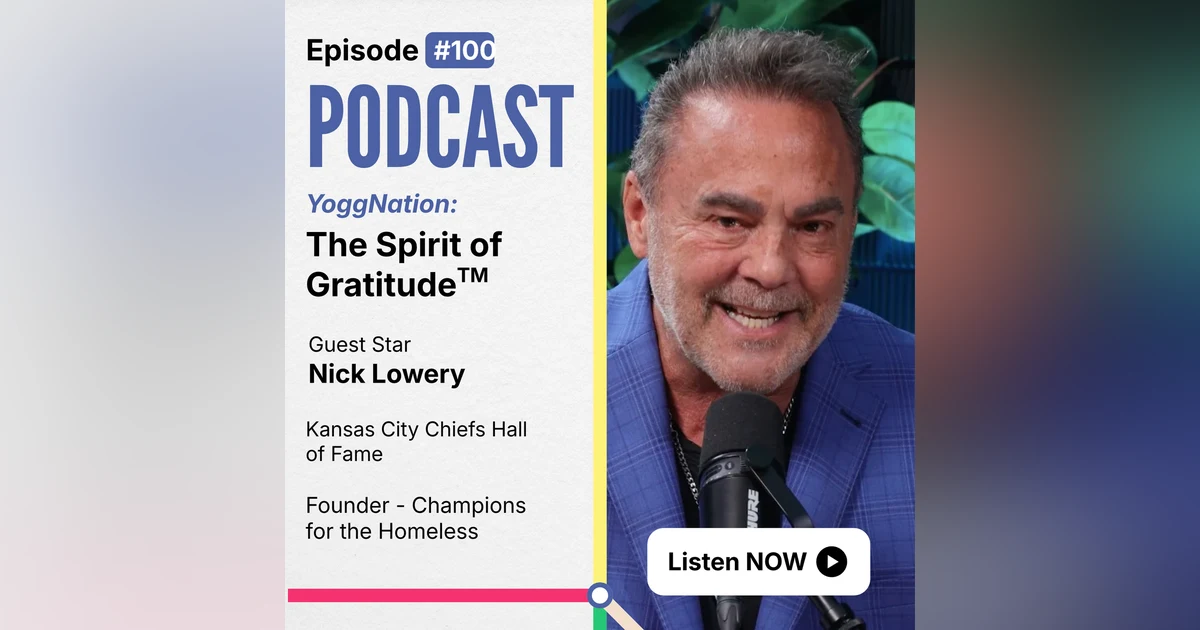
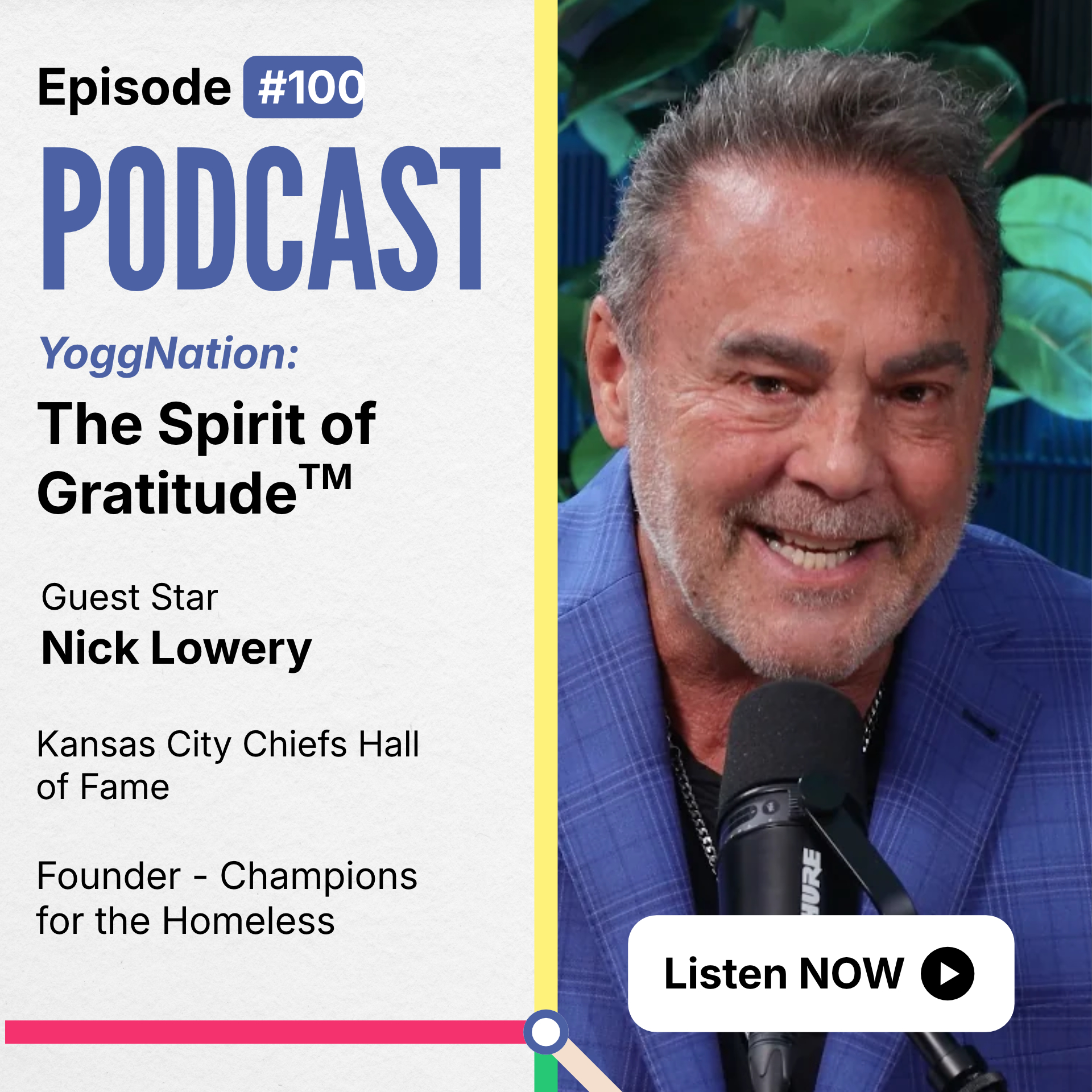
NFL kicker and Kansas City Chiefs Hall of Famer Nick Lowery returns to share a surprising Pro Bowl experience that changed how he viewed success, relationships, and fulfillment. We explore the mindset behind high performance, the importance of mental fitness, and why lasting impact takes more than one big achievement.
🧠 What you will learn:
- Why success doesn't always bring fulfillment
- How consistency and accountability shape performance
- How gratitude and mental fitness help manage pressure
- Why long-term service creates meaningful change
🔑 Key takeaways:
- Success means more when it connects to purpose
- Your inner conversation shapes how you perform
- Gratitude and humility strengthen leadership
- Real impact comes from commitments you keep
Listen now to Nick Lowery on performance, mental fitness, gratitude, and discovering what truly matters beyond the highlight reel.
Watch on YouTube or subscribe to YoggNation’s Spirit of Gratitude podcast for more conversations about resilience, purpose, and personal growth.
00:00 - The Quiet Fear Behind Success
00:40 - 100th Guest Milestone And Welcome Back
04:18 - Why Nick Writes His Memoir
10:42 - The Pro Bowl High And The Void
13:27 - Poetry Gratitude And Bold Leadership
16:22 - Culture Decline And Challenge Response
20:03 - Mental Fitness App And Mind Management
23:48 - Kicking Pressure Accountability And Self Talk
26:56 - Champions For The Homeless In Phoenix
31:55 - Mentorship Generational Change And Standards
33:34 - Commit For Twenty Years To Matter
37:02 - Better Stories Ethical Choices And Closing
The Quiet Fear Behind Success
SPEAKER_00
Suddenly I felt this void. And it really was very simple. Who am I going to have dinner with? Naked alone is in front of 80,000 people with that conversation screaming at you as you run on the field. And everybody remembers what you do, but particularly they will remember if you miss a field goal. Just starting something separates you from 95% of the population. Sticking with it for three or four or five years, that's amazing because those often are the hardest times. You can't heal a generational curse in three years. You can heal it in a generation or more, by definition.
100th Guest Milestone And Welcome Back
SPEAKER_01
Welcome to the Yog Nation, the Spirit of Gratitude Podcast. Hello, friends. My name is Yogesh Patel, and this podcast explores how adversity shapes success through the lens of gratitude around courage, resilience, appreciation, awareness, and humility. Each week I sit down with high-profile guests who share their wisdom and perspective as we explore personal growth, purpose, and shared values. And hopefully you see a bit of yourself through their storytelling. Join the conversation. I appreciate you tuning in. Today marks a very special milestone for the Young Nation Spirit of Gratitude Podcast, our 100th guest episode. 100 conversations celebrating the diversity of our inner spirit across generations, professions, backgrounds, and cultures, reminding us that the lessons of adversity, resilience, and gratitude are universal that shape our success in life. And it's not every day an NFL legend willingly returns for a second conversation. To me, that speaks volumes about the trust and community we're building here on the podcast. And it is my deep honor to welcome back Kansas City Chiefs Hall of Fame and all-time leading score, Mr. Nick Lawry. Today we'll explore his fascinating memoir, Naked and Alone with 80,000 people, and woven throughout his story are deeply personal reflections of life, forgiveness, vulnerability, and the human spirit, expressed through his remarkable gift for poetry, which I find interesting. And as Thanksgiving approaches, we'll also spotlight Nick's champions for the homeless initiative and celebrate the countless individuals and NFL alumni who generously give their time to strengthen our communities. Their compassion and selflessness remind us that philanthropy isn't measured by wealth of recognition, but by our willingness to lead from the heart and make a difference in the lives of others. And that is a spirit Nick Laurie embodies a genuine commitment to serving others and leaving our communities better than we found them. And with gratitude, welcome back to the podcast, Nick Laurie.
SPEAKER_00
Thank you, Yogi, and congratulations on the awards you were given last year in New York, and maybe one that you might be announcing soon coming up. So that's that's great. And that's you know, a lot of the work surrenders uh surrounds gratitude and a word I use more and more now, which is consistency. Um showing up is as they say, 90% of it, and then showing up and delivering and just being the same person, you know those archetypal friends and heroes that hopefully we're all lucky enough to meet and make over our lives. And
SPEAKER_01
they're
SPEAKER_00
all they're all consistent, they're the same person we met originally, it's pretty much the same person we meet, even if we don't see them for 20 years. And uh there's something about that, and that's connected to authenticity, of course, just knowing you're with the real deal. Um but congratulations because a hundred episodes means you showed up a hundred times, and uh the recognition, as difficult as it is to get started, you stuck with it. And uh funny thing is, when you stick with it, you get better. You get better spiritually, you get better intellectually, you get better in terms of that intuition.
SPEAKER_01
Words
SPEAKER_00
come better. Hopefully, you even figure out who are better guests, you know, and what are the better questions?
SPEAKER_01
Well, I still have a long ways to go from the 18 years you spent in the in the NFL. So talk about consistency there, Nick.
Why Nick Writes His Memoir
SPEAKER_01
Well, I'm curious, what compelled you to write the book?
SPEAKER_00
Well, my story is so unique and so different. Starting with a mother, mother that grew up in Cairo, Egypt. Father helped found the Bank of Egypt. Uh, the tomb of Tutankhamun was discovered when she was a young girl. Um, we even had sandstone figures found around the pyramids from that, from my mother's early life. My father was from a family of cowboys in Colorado and Utah, who became chief of station for the CIA, growing up in Europe for six years, going to uh great schools, but being surrounded by parents that um had both contributed significantly in World War II, knowing what it felt like to risk your life. Uh my mother was at Bletchley uh with the Women's Royal Navy or the Rennes, which was a famous center for decoding German messages and hopefully saving lives and anticipating attacks and helping us win the war, frankly. My father was a reconnaissance pilot uh for General Patton in in Germany for 32 missions the last few months of the war in a in a tiny piper cub flying at 3,000 feet. And then uh from there, learning I could loving sports, playing tons of soccer when England hosted and won their only World Cup way back in 1966 in London at Wembley Stadium Jeff Hurst with three goals beating West Germany, which was you know it still had an edge back then beating Germany. Um and then noticing I was pretty good at kicking and uh I was a baseball player too, but just those experiences on the mound or kicking a field in your own island on the field, those are great analogies for all of us as we try to achieve excuse me, as we try to try to achieve in life itself. We're on our own island.
SPEAKER_01
I wouldn't think that because you are your environment, and your environment is made of people and places and things to help you become who you are. So I somewhat maybe we can elaborate on that a little bit more because there is that sense of community and the belonging that shape who you are. I mean, certainly your parents had a great influence. I'm I remember your mom had all the clippings of you in your NFL career, which was amazing. And what you want to do is give back through this book, in my opinion.
SPEAKER_00
Yeah, well, I think this book is is about that uniqueness because you know, if you really want to think deeply, uh things aren't one-dimensional. So there's the individual journey and the narrative in our head, who we are, what we believe in, what keeps us going when things are terrible, when we're being told no, and when we miserably fail. And what keeps us going, having a sense of purpose. And then, of course, the best thing that keeps us going is a sense that this is gonna not only help me, it's gonna help other people, maybe just by not giving up on my own dream, helping people realize that your dream never dies if you don't give up on it, and at the very least, you become a better person and wiser person for it. And so there's the individual journey. Um, one of my favorite movies of all time, Lawrence of Arabia. There's the individual, Lawrence of Arabia trying to unify the Arab world, uh, and upsetting many people, but incredible courage in the as this lone white man in the desert, the Sahara, uh, that individual journey, you know, the 40 days in the desert, which have been used more than a few times, including in the Bible.
SPEAKER_01
Yeah.
SPEAKER_00
And then the group journey, you know, how do I take my lessons and help others? And first means we have to conquer ourselves, conquer our ego. We got to conquer our ego and just get over that. And and I'm gonna compliment this guy again because he's one of the more humble and grateful people, consistently to use that word again. And um public
SPEAKER_01
facing
SPEAKER_00
only good, only good things happen from that. So the book's about the myriad lessons uh that help us edit our inner conversation with ourselves and with our creator. And that's where the win comes. Because if we can win that comp conversation, we can overcome the negative words and thoughts, and we can transcend them. Because they'll come, there'll be efforts by, shall we say, dark energy to uh circumvent all that positive energy that we've been born with, that I would call our God-given gifts.
SPEAKER_01
And for me, I think the most meaningful parts about the book that I personally took away is that it's ultimately facing rejection, discovering purpose, and finding meaning beyond personal achievement.
SPEAKER_00
Well, I mean, in the end, love, love rings, love trophies, you know, as athletes, we develop our first identity by comparing ourselves and then competing with our ideas of who we are, competing with others, et cetera. Um, but the trophies are only so gratifying and always temporary, really. It's funny when you ask people, I bet you if you had a survey on where are people's Oscars and Emmys and Grammys, um, a lot of them would say, you know, I've got it on my desk or I've got it on my cupboard and I've got it stuffed away somewhere. But it's really, it's it's something that you want to be proud of and humbled by and grateful for. Um, but there's always the next thing. So the next thing has to have a deeper meaning. And I always tell the story of not only making it in the NFL and beating out the greatest kicker in the history of the game in Jan Stenner, who became the first kicker in the NFL Hall of Fame 11 years later, who was the Lionel Messi of kickers, if you will. And yet I was ready only because
The Pro Bowl High And The Void
SPEAKER_00
I knew I'd paid my dues, damn it. I'd paid my dues. It was time. I was ready. Not only had I paid my dues, but I was ready. And so then I not only have a great rookie year, but I'm in Sports Illustrated. I'm on 2020. It was a piece called The Loneliest Player in Football, featured with a couple other guys that weren't handling it quite as well as I happened to be, and was lucky enough to, and was intentionally managing it. Then I go to the Pro Bowl. So I'm in the Pro Bowl game with 17 Hall of Famers, kick the game-winning field goal. I'm hugged by everybody. And in the locker room after the game, this is so important. The TV cameras are leaving. There were probably 10 TV cameras in there for about 15, 20 minutes, and now players are leaving, you're high-fiving people. I have a picture with Junior Sayao on the field.
SPEAKER_01
Nice.
SPEAKER_00
We're all sweaty overtime game-winning field goal. And um, but in that first locker room after that first Pro Bowl, I felt this grand canyon of something of missing spiritual uh beautiful energy. Suddenly I felt this void, and it really was very simple. I uh who am I gonna have dinner with? Oh, my buddy Bob grep, he's here, so that's great. He and I tried out with the Jets, and then he'd made it with the Chiefs, and now he was my holder, and but mom and dad, my mother and father weren't there. Any of the friends that were there, no matter what, that you knew I knew would always be there no matter what weren't there. And so I resolved if I ever make it again, everybody's invited. I'm gonna make sure that I can share it with my family, share it with my friends. And so I kicked two game-winning field goals, gosh, nine and eleven years later in the Pro Bowl, but mom and dad were in the front row. And I had dinner the night before the game with them, and I had dinner and breakfast with them the next day. And it's so much more satisfying. That's the homework we have to do when we realize the real trophies are living, breathing with us. Um, and maybe even a pro trophy of a uh mentor like Dick Johnson, who had passed away, but I could just feel like he was watching and he was proud of me because I hadn't forgotten, you know, to be grateful for God's gifts and to do something with it and to have stayed the course when things weren't so easy.
SPEAKER_01
And I think that's a good segue, Nick, for if you allow me, if you could read one of your poems in the book, which I think expresses your sentiment just beautifully.
Poetry Gratitude And Bold Leadership
SPEAKER_01
So
SPEAKER_00
I wrote 15 poems in a book. We have not rehearsed this, I do not know what I'm gonna read. But um I love writing poetry because yogi, it's both right brain and left brain. It it's the part of you that likes order and rhythm, but it's also the creative, unscripted part that can stimulate uh a new perspective, a new wisdom.
SPEAKER_01
Right.
SPEAKER_00
And when you combine them, to me, it centers me being uh I we call it ADD, but I call it attention intensity syndrome. Most
SPEAKER_01
people
SPEAKER_00
that were high achievers could be called ADD, but really they they flourish under intensity. They need intensity, they need purpose, they need powerful, uh dynamic, challenging things like surgery, like a jet fighter pilot, like Luke Skywalker in Star Wars. They need something that absolutely has to be done right in that moment, like a kicker. So excuse me. Inside the heart that freely gives more, even as it stumbles, especially if it humbles. Remember that flowing gratitude from a divine attitude of forgiving wisdom. For we are our own garden, we plant our own seeds, and the divine water of goodness flows from life's flowers to even its weeds. From good ideas and better deeds, remember the light that boldly lives. And if I wanted to rhyme it, that boldly leads. Um one of my coaches, Frank Gans, who's probably the greatest special teams, the kicking game coaches ever, he used to say, Audace, audace, toujours audace, or fortune favors the bold. Leadership requires to just reject the fear and just dive into it anyway.
SPEAKER_01
Is that what you think of when you just read that poem? Or is that
SPEAKER_00
well, I think boldly leading. That's what I'm thinking of. But boldly leading is sometimes not just being Odysseus or being uh, you know, the warrior with the sword. Boldly leading is also um a sword in terms of cutting through cultural assumptions and values that are no longer serving, which means you're probably asking for a great criticism, great rejection, and um attention, but not necessarily, you know, a spotlight that you want, but you know you have to pay that price to um to lead and create new energy, new light, new territory for people, which we absolutely
Culture Decline And Challenge Response
SPEAKER_00
need now. We have political parties, we're shooting this on election day, political parties that um have gotten so addicted to money that they've forgotten to lead with ideas, with creative ideas. And by the way, another reason why I wrote my book is gosh, think about it. My dad was in the first group of Fulbright Scholars. My mother was helping run the Fulbright Scholars program. And my dad's mentor at the Royal Institute of International Affairs at uh Chatham House in London was Arnold Toynby. Everybody look him up. T-O-Y-N-B-E-E, the greatest historian of the 20th century, Bar Nunn, who wrote 14 volumes over 30 years from 1932 to 1962, who became godfather to my twin brothers, um, who looked at the 21 great civilizations. So I love to be fed with the perspective of culture and civilizations and hopefully learn from those lessons and those very often mistakes. And gosh, Arnold Tornby had a theory he called um challenge and response, that all of us challenge being very easily defined as being told you aren't good enough to make it in the NFL. But how do you respond? How do you respond to challenges? He used that same framework, which we could use to break down individuals and to analyze them with cultures and civilizations. Who are the civilizations? Who are the cultures that are resilient no matter what? And one of the key things he talks about is the beginning of a decline of a culture, if you think about America and Western civilizations now, is how do we preserve what he called the creative genius that is the minority in a culture and celebrate that and continue to foster that
SPEAKER_01
and
SPEAKER_00
not let what he would call the dominant majority, which is really all about power and centralizing things, but absolutely bullying and intimidating and crushing the creative inspiration. And inspiration comes from inspire in the spirit, right? Those things that assure that that culture is always growing in dynamic, spiritual, creative, new ideas, new feelings, new perspectives, just for the simple reason that it keeps what are those primal, eternal values more fresh, more real in the moment, not just old concepts that everybody's forgotten or can't even articulate.
SPEAKER_01
Well, there's an element of progressing humanity.
SPEAKER_00
Yes.
SPEAKER_01
And what you just mentioned.
SPEAKER_00
Yeah. And
SPEAKER_01
keeping our humanity, more importantly, though.
SPEAKER_00
And Toynbee uh unfortunately believed that Western civilization, even back by 1962 when he wrote his last volume, uh, was on a downhill slide. You know, and it's 64 years later, but
SPEAKER_01
uh
SPEAKER_00
uh we're still here, but there are a lot of challenges right now. And if we can't unify in the idea of that resiliency to keep growing and keep not trying new ideas isn't what I'm really saying, but it is creating new solutions,
SPEAKER_01
right,
SPEAKER_00
new ways to look at things, um, but also being able to sustain those things that never change.
SPEAKER_01
Well, the resiliency is part of what you have on the app.
Mental Fitness App And Mind Management
SPEAKER_01
Could you tell us about what you're doing? Great
SPEAKER_00
segue. This is why he why Yogi wins these awards. So uh we have a mental health app produced by Blue Cloud X Mind Me. And if you go to Nick Lowry Companion app, um, it is an individual app. We're also working with the military to develop a baseline for mental fitness so that every soldier um is has a baseline from their first day in the military till when they retire. So hopefully we can greatly reduce this suicide rate. But there's an individual app, which we've been perfecting, uh developed by Dr. Peter Vieh Meyer. And uh, if you go to Nick Lowry Companion app, it'll come up, you download it, and there are five questions by yours truly uh that are developed and were developed by Dr. Peter Vieh Meyer from the University of Heidelberg over thousands of tests against all the other mental health surveys. And the questions about decision making, sociability, um, adaptability, um, planning, just things that are fundamental to how you feel about where you are in the direction of your life. And then we come up with things that can help encourage and direct that person's mind. Uh right now, 75% of the population are uncomfortable talking about their issues.
SPEAKER_01
Right.
SPEAKER_00
And this funny thing over here is both God and the devil, and it is absolutely diminishing our creativity, which is unfortunately in our school system is uh diminished greatly from the age of five to twelve.
SPEAKER_01
Right.
SPEAKER_00
But it's it's also how do we think through things? And so this thing, unfortunately, is the enemy in some ways as well, and we have to keep um being mindful of. That in the end, we manage our thoughts.
SPEAKER_01
Sure.
SPEAKER_00
And unfortunately, that's not happening in a great part of our society or today is to make sure that as part of education and growth as individuals, we manage that narrative, that that conversation. And that's what Naked Alone is in front of 80,000 people with that conversation screaming at you as you run on the field. And everybody remembers uh what you do, but particularly they will remember if you miss a field goal.
SPEAKER_01
Right.
SPEAKER_00
And having that conversation, being able to transcend the negative thoughts with stay disciplined, enjoy this. You're alive. You're nerve, you're nervous because you deserve this. You earn this opportunity almost no one gets to have, which is unbelievable pressure in 1.27 seconds through a what look like tweezers,
SPEAKER_01
right? Um,
SPEAKER_00
with 11 very large people paid an average of five and a half to $10 million a year, 20 feet away, trying to block your kick. And boy, those are very powerful skill sets. And they come back to that other concept, which is accountability. Do we hold ourselves accountable? Do we learn from our mistakes?
SPEAKER_01
Right.
SPEAKER_00
Do we spend our time making excuses? Uh, and once we've done that inner journey, then we can lead. We can lead other people with that better sense of what are the better choices, including gratitude, including contribution, including uh making an impact with some of the glaring issues in this world.
SPEAKER_01
And that's what Champions for the Homeless is about. It's about serving the underserved here in Phoenix.
SPEAKER_00
Thank you. And you've been a great help. And uh, we've done it now for the beginning of our 21st year.
Kicking Pressure Accountability And Self Talk
SPEAKER_01
Yes.
SPEAKER_00
This will be our 78th coming up on Thanksgiving Day. It's been the same time, 9:15 to 1245 for 78 events over 20 years on Thanksgiving, Christmas, Easter, and in the summer. And uh
SPEAKER_01
twice in the summer.
SPEAKER_00
And when we can, twice in the summer, which is it's Africa caught hot here, and it's even hotter because of the concrete downtown. It's just incredibly difficult stuff. And we've we've been able to um engineer uh a human face on the homeless. It's still desperate, it's still incredibly trying. There's still sex trafficking, there's still domestic violence, there's still addiction issues, there's still sadness and depression. Um, but there are so many examples of people doing great things with grace, despite all of the difficulty, despite the fact that they have nothing else in their lives. And that's that's what keeps us going. Instead of throwing everybody in one bucket.
SPEAKER_01
Yeah. That gets me to my next question. Most people believe in helping others, and it's not just for Phoenix or Champions for the Homeless, but all throughout this grey nation of ours. So given the fact that most people believe in helping others, but not everyone takes that next step. And so, what would you say to inspire them to get involved and make a difference within their communities? That could be within a school, a church, a nonprofit.
SPEAKER_00
Yeah.
SPEAKER_01
What would you tell them and you know, get off their asses and start doing something?
SPEAKER_00
You know, it's funny. Um I think the more we endure, the more the influence influences in our lives come back. I mean, it's funny. You have roots from India. Uh my twin sister edited the movie Gandhi.
SPEAKER_01
She did?
SPEAKER_00
She did.
SPEAKER_01
I had no idea.
SPEAKER_00
Ben Kingsley.
SPEAKER_01
Wow. And
SPEAKER_00
I interviewed Ben Kingsley on the Today Show uh in Kansas City when it was an extra hour locally, and he was having tea in London.
SPEAKER_01
That's amazing.
SPEAKER_00
Uh, and then my uh cousin, John Cairns, was married to my mother's brother's only child, Penelope Bray, John co-wrote the book uh called A Simple Path about Mother Teresa.
SPEAKER_01
Yeah.
SPEAKER_00
So those things, I mean, I just, man, I have this in my DNA. And um, I think you just get to, okay, I learned this, I learned this, I learned this. What will I always be proud of? What will I never regret spending time doing? What can I do the rest of my life?
SPEAKER_01
Right.
SPEAKER_00
And uh so gratitude is wonderful. It is the elixir that keeps us growing and staying positive despite great depression or great upset or great tragedies, focusing on what we do have, what we can do, the great people in our lives, yogi being one of them, by the way. Um, and then obviously I didn't
SPEAKER_01
pay him to say this, by the way.
SPEAKER_00
Involvement, you know, impact. And
Champions For The Homeless In Phoenix
SPEAKER_00
uh everybody's got their own gifts, everybody's got their unique stories and journeys. And I think as an athlete, our journey is to overcome all of that ego, which serves his purpose, you know. Um, I've been watching the documentary on Mike Tyson, you know, and his journey has been exactly that, you know, from a four and five-year-old whose mother was a prostitute to feed her habit, who would have sex with men in bed while he was in bed at four years of age, uh, who died um in his arms and who had, you know, exploitation his whole life in one of the poorest neighborhoods um in New York. And yet to see him transcend that wounded hyena, you know, that incredibly belligerent, unbelievably fearsome boxer into someone who's really quite remarkably wise. Um, and yet he's always battling those demons, he's battling those triggers. Yet the work he's done, and athletes, we have to transcend that ego uh that's looking for fame, that's looking for um, you know, women, trophies of all sorts, attention. And that's great. There's there's something for knowing that you've achieved something, but in the end, what's it for? And on my deathbed, that's really what it is to for me. On my deathbed, am I gonna be grateful? So I'm led to tell the story of my mentor, because mentorship is a big part of the book, and the best, most important, influential mentor I had was Dick Johnson. The very first thing he said to me was, you know, Nick, I'm a junior in high school, and he says, I almost died two months ago. I had hepatitis, and I'm lying back in my bed in the hospital, and this kid I hadn't thought of in 60 years, because he was about 70 years old.
SPEAKER_01
Okay.
SPEAKER_00
And he said, This kid appeared and just stared right at me and said, Dick, you were always there for me. You stood up for me in school when people were bullying me and beating me up. You're the only one. It's my turn to say, I'm standing up for you, you're not gonna die. And I think, you know, when we plant those seeds, there's that sense that we lived a good life, but not just a generally good life, but you know, with real acts of kindness, of wisdom, of courage sometimes when we are completely in the unknown of life and just trying to do the right thing. And uh
SPEAKER_01
Nick, if I could just interact with it. I mean, I do hope that what Nick just shared, citizens of yoga nation, that's what I like to call listeners, is uh again, take inspiration. Um I think what Nick says is beautiful um and it transcends, it carries over hopefully generationally, where the parents can teach these values to their kids, and the kids can teach their values to their kids to their kids or to the environment. You want to speak to that for a second, Nick?
SPEAKER_00
Well, um, I was speaking to Boys State. Now, Boys State is in almost every state in the country. It's uh three or four kids from every high school in the state. This was up in Flagstaff, and I'm standing on the stage, and I I said, This bracelet means a lot. It was the 20th anniversary of Native Vision, which is a sports and mentoring camp now in its 30th year, uh, with Johns Hopkins, and I brought in the NFL Players Association, and it's a mentoring and sports camp for Native American kids. And I said, This is the 20th anniversary. I said, every program I've ever done, starting with Kick with Nick for Cerebral Palsy, which we raised a million dollars for cerebral palsy, and we we educated people on the rights of the disabled. So I started to think about we're all disabled, we're all limited in some way. How do we transcend those limitations, et cetera? And then the next one was called Adult Role Models for Youth and became youth friends.
SPEAKER_01
Love that.
SPEAKER_00
And um, and then Native Vision, and then now champions. They've all been a generation. I said, let's pretend this stage, this is that first year, this side of the stage, where you went from wanting to be a good person, wanting to do something, wanting to be a leader, wanting to contribute to starting something. Just starting something separates you from 95% of the population. Sticking with it for three or four or five years, that's amazing because those often are the hardest times. But what if you can stick with it for 10 and 15, even 20 years when it's a generation? A lot of the work we're talking about is healing the hardest of all the challenges in society and in culture, which is generational curses.
Mentorship Generational Change And Standards
SPEAKER_00
You can't heal a generational curse in three years. You can heal it in a generation or more, by definition. And so I challenge kids today to say, and parents too, what is something you could stick with for your life and certainly for at least 20 years? What would be the thing that you will never compromise on? You'll keep doing for 20 years. And high
SPEAKER_01
standards doing it.
SPEAKER_00
Excuse me?
SPEAKER_01
And have high standards doing it.
SPEAKER_00
Absolutely. You know, always working, always every business, same premise. How do we keep getting better? Not just doing the same thing, not just going through the motions. Uh, and that's where the real joy is, and that's where real impact is.
SPEAKER_01
Yeah.
SPEAKER_00
And that's how we change the world. That's what Harvard calls taking an intention, because we hear a lot about the law of intention, the law of attraction, living an intentional life. But beyond that is to turn something into what Harvard calls social capital. Social capital is when you've done it so well, not without challenges, et cetera, for so long, it becomes the way, the new way, the additional way, the new nuance, the new way to think about something that we just do it this way here in Phoenix, here in Scottsdale, here in Kansas City, here in New York, wherever it is, beyond words. We just do it that way. We don't have to explain it. It's just who we are. That's that's meaning you've fused the identity of a community with something deeper, more resonant, more lasting, and more loving, too.
SPEAKER_01
That's great.
Commit For Twenty Years To Matter
SPEAKER_01
Um final word, Nick. Uh, is there anything that I missed on this podcast today that you'd like to share to the audience of followers, non-followers, Kansas City Chiefs fans from three generations ago?
SPEAKER_00
Well, I will say Patrick Mahomes and Travis Kelsey, they're the real deal. They are not overly impressed with themselves to the point where they don't want to make sure everybody feels seen and heard. Um, but I would say that one of the challenges today, and one of the great things you're contributing with your podcast, is to raise the bar. We're talking about raising the bar of storytellers.
SPEAKER_01
Right.
SPEAKER_00
The stories we tell determine the values, the things we say by nature we're asking about and we're answering about are the values of a society. And today, unfortunately, our journalists have too often been um appropriated by the corporate uh pressures to make money because there's less money ever because it's so diffused now. And so there's a level of desperation where they're vulnerable to becoming one-sided propaganda-like organizations that aren't really telling stories, they're telling one half of one story. And so the value that a society that we place, we can all become storytellers and telling a better story, a deeper story, not being afraid to say where where we're coming short, too, right? Being self-effacing as well. The quality of those stories is amazing. I always think of Star Wars and Joseph Campbell, one of the greatest teachers ever in collegiate uh pedagogy history, um, who talked about the hero with a thousand faces and uh what he did for that first Star Wars with some of the greatest actors ever, Harrison Ford and um a number of phenomenal actors in the cast who didn't probably initially think they needed extra coaching.
SPEAKER_01
Right.
SPEAKER_00
And he helped them say see that their roles were were primal, were eternal. And of course, the dark side versus the force, right? These eternal forces and roles that play out over thousands of generations. And so you see this really deep resonance in all their characters. And that's why I mentioned Lawrence of Arabia is one of my favorite movies. And probably some people will be surprised that Star Wars is one of mine, but that original Star Wars, unlike the others, is really full of that beautiful sense of timeless lessons that makes right now feel like what we're doing right now is important, it's all we have.
SPEAKER_01
I think that's one thing I disagree. I'm a truckie, not Star Wars and
SPEAKER_00
I love Star Trek.
SPEAKER_01
And the rest in peace are Patrick Stewart.
SPEAKER_00
Yeah. Yeah. Patrick Stewart and obviously Captain Kirk and
SPEAKER_01
uh
SPEAKER_00
Sulu and uh, you know, just great casts. But what was great about Star Trek, I would go and watch Star Trek when I got home from school every day.
SPEAKER_01
Yeah,
SPEAKER_00
and what was great is another thing that's missing from the storytelling is Kirk, kind of like a Elizabethan or Shakespearean actor, saying, But bones, what about this? And it was always um a strong ethical conflict that they had to wrestle
Better Stories Ethical Choices And Closing
SPEAKER_00
with.
SPEAKER_01
And
SPEAKER_00
I think that that's part of the the critical thinking that is missing from today's education is helping people wrestle with making the better choice, being able to discriminate between a good and the great, and the better choice. That's we'll be wrestling with that for our entire lives.
SPEAKER_01
Well, one final question as we conclude this amazing episode again. 100 conversations, a hundred guests, Nick. I'm so grateful for everything that you do, not only to support the podcast, but within your community and the influence and energy you project on others. I certainly take stock of it every time I see you volunteering for Champions for the Homeless. So um final question. You had a recent uh roasting from your good friend running back Krishna Nakoye. The
SPEAKER_00
Nigerian nightmare. It was not a it was not a nightmare. It was supposed to be a roast today. They were just so nice. They were a little bit too soft on me because I'd been to previous ones where there was a lot of really ugly language and you know, sort of whatever the locker room is times 10. So I was really lucky. Paul Kaufman and Duran Sherry and Christian Okoye and some of my teammates uh really was wonderful. And Emmanuel Cleaver, the former mayor and now congressman, spoke. Um, you know, and that's really gratifying. I mean, I loved it. And um being grateful again for those relationships where frankly they probably saw that I've grown as a person. I hope they do. I think they did, and that's why they were so overly kind to me in that roast. So it but it was it was wonderful, and and Christian is another example of a person who's you know six foot two, two sixty-five when he played and frightening, but actually one of the sweetest, kindest people you'll ever meet.
SPEAKER_01
Wow, and on top of that, the good or the Mahatma, which means the great one, humanitarian. Nick, thank you.
SPEAKER_00
Thank you, brother. Appreciate it.