From Combat to Dressage: A Veteran's New Chapter
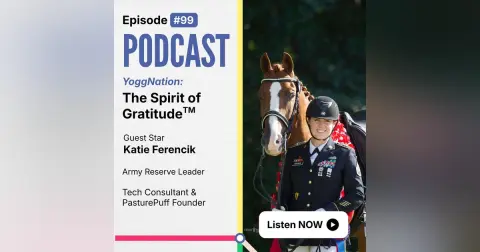


Nearly 26 years in the U.S. Army taught Katie Ferencik how to face uncertainty, lead under pressure, and keep moving when the stakes were high.
In this Veterans Day episode, Katie reflects on joining the military in 2001, learning about 9/11 during training, and serving in Iraq and Afghanistan. She shares the realities of deployment, building credibility as a woman in the military, and why adaptability and trust in your training can make all the difference.
But one experience in Afghanistan sparked a surprising new chapter involving Olympic-level dressage, horses, and an unexpected business venture.
🧠 What you will learn:
- The realities of military service and deployment
- How veterans develop resilience and leadership under pressure
- Why adaptability and controlling what you can matter
- What horses can teach us about trust and awareness
🔑 Key takeaways:
- Courage means showing up even when you're afraid
- Strong leaders know how to adapt when plans change
- Life's hardest moments can lead to unexpected purpose
- Service can take many forms, even beyond the uniform
Listen now to Katie Ferencik’s story of military service, leadership, resilience, and discovering a new mission after the Army.
Watch on YouTube or subscribe to YoggNation’s Spirit of Gratitude podcast for more conversations honoring service, courage, and personal growth.
00:00 - Soft-Skinned Trucks And IED Reality
00:35 - Welcome And Veterans Day Focus
02:20 - Joining Before 9/11 Hits Home
05:10 - Deployments And Living With Fear
10:40 - Leading Others Through Uncertainty
13:34 - Being A Woman In Uniform
16:42 - Finding Your Why And Sense Of Duty
21:45 - Afghanistan Wake-Up Call And Dressage
26:55 - Horses As Mirrors For Healing
32:17 - PasturePuff And Building Horse Mattresses
39:00 - Gratitude Ethos And Final Challenge
Soft-Skinned Trucks And IED Reality
SPEAKER_01We did not have armor on it when we first went in. We put sandbags uh in the bottom of them and on the dash to protect against IEDs. If not me, then who? Right? If I stand up and I don't go and do this, like I look at my brothers and my sisters, I look at my community and I say, Listen, I'll go do it for you. So you don't have to, you go live your life. The last time a soldier competed in the Olympics on behalf of the United States Army was in 1952. And in that moment, I went, I don't know if I'm gonna make it home alive.
Welcome And Veterans Day Focus
SPEAKER_00Welcome to the Yog Nation Spirit of Gratitude podcast. Hello, friends. My name is Joe Gash Patel, and this podcast explores how adversity shape itself through the lens of gratitude around courage, resilience, appreciation, awareness, and humility. Each week I sit down with high-profile guests who share their wisdom and perspective as we explore personal growth, purpose, and shared value. And hopefully you see a bit of yourself through their storytelling. Join the conversation. I appreciate you tuning in. On this special Veterans Day episode of the Spirit of Gratitude podcast, what happens when bravery meets purpose? My guest today has spent nearly 26 years serving our country, deployed in Iraq and Afghanistan, leading with adversity, and representing the U.S. Army as an accomplished dressage, equestrian, and national championship winner. How cool. But what I admire most about Katie Franchick isn't simply what she has accomplished, it's the spirit behind it. Her years of service shaped the values we talk about so often on the podcast. Humility, courage, awareness, resilience, and a willingness to step forward when something needs to be done. Her guiding beliefs as it best. If not me, then who? And that same spirit has shaped her lifelong love and care for horses, animals that have taught her about presence, authenticity, and emotional awareness. And through her story today, we'll explore what military service has taught her about bravery, resilience, and responsibility, and how those same lessons helped her turn compassion into action as an entrepreneur creating Pastor Puff. With gratitude, it is my honor to welcome a military veteran to the podcast. Thank you for your service, Katie.
SPEAKER_01Thank you for your support. I appreciate it.
SPEAKER_00Oh, absolutely. Again, it's my honor and pleasure. And uh thank you again for your service.
Joining Before 9/11 Hits Home
SPEAKER_00Well, curious. You joined the US Army in May 2001, just months before 9-11. How did that moment change what you thought you had signed up for?
SPEAKER_01Yeah, I mean, uh, it really certainly made it very real. Um it was kind of insane because I was actually in the middle of what we called our field training exercise, which is the culmination of all the training that you've done during basic training. Uh, you know, and you go out into the field and you're playing war games, right? And for me, I mean, there hadn't there hadn't been a war since the um uh since the Gulf War, right? For me. And so when that happened, um, we weren't allowed to see televisions. Of course, we were out in the field anywhere, there were no televisions, uh, but we had no idea that it had happened until the next day when one of our drill sergeants actually brought a newspaper and showed us a newspaper. And it wasn't really, I mean, it it I don't know that it really sunk in until the first anniversary. Because, you know, while everybody else can say, oh, I was here, I was there, and it was, and it was a really, really big deal. Uh, and it was a really big deal. Don't get me wrong, I'm saying that that that for me, it didn't really hit me until the first anniversary because that was really the first time that I was experiencing what everybody else had experienced the year before, um, which was insane. I remember driving down the road and they were playing the um, they were playing the the 911 calls, right? Uh of the people calling in about it. And I remember having to just pull over and absolutely losing it. Um, but during the rest of that field training exercise, you know, I went, oh man, like I'm going to war. I know that, right? Uh we we can't let something like that happen to our country and and just just take it and not do something about it. And and it really changed, you know, how I already had wanted to serve my country. It was very that's the reason why I joined the military was because I love my family, I love my country, I love my community, and that was the way. Yeah, right. Yeah, and so so I wanted to step up and do that service. And and I think it just um it just made the reality of what I had signed up for, you know, just a little bit bit a little bit clearer.
SPEAKER_00Uh, you know, so did you take more pride in representing the stars and stripes?
SPEAKER_01You know what? It's uh uh I I am always very proud uh to to be a soldier. Um I don't know if it if it increased my pride or not. I think it just increased the reality and and it changed my focus and my mindset to to going, okay, I need to be prepared for this.
SPEAKER_00Right. As I'm sure the others that were in basic training with you and as well as the other uh folks that happened to sign up or even after.
SPEAKER_01Sure. Yeah.
SPEAKER_00Yeah, yeah.
Deployments And Living With Fear
SPEAKER_00And then, of course, you deployed to Iraq and Afghanistan at different points in your life. And how did those experiences change the way you saw fear face to face, perhaps adversity, and what really mattered to you?
SPEAKER_01Well, what's interesting is that I didn't end up deploying to Iraq. We well, I I deployed in 2003, say until 2003, right? There was a bit of a gap between when 9-11 happened and then when I was I deployed. And it was one of the first times I'd ever really been outside of the country. I live, I live in Tucson. I am very close to Nogales, so I would go down to you know over the border on occasion, um, but it's not anywhere close to actually leaving your country and like being somewhere else. Um like, and certainly not somewhere like Iraq. Uh, and I was a truck driver as well, so I was all over that country. And it, you know, I think I had a bit of uh naivete, right? Um it was ended up being a really, really difficult job. Um and and as soon as I came home, I changed my my our we call it our MOS, our military occupational specialty. So that's our job. Uh I changed it pretty much immediately as soon as I came home because it was really terrible. Uh, you know, we when we first went into country, we were we were what was called soft-sided. So our vehicles, I drove the HET. It's the the heavy equipment transport, it's designed to hold the M1 tank. It is the largest truck in the military, and uh it has 40 tires.
SPEAKER_00How big are the tires? My goodness.
SPEAKER_0140 tires on the trailer, yeah. And and 10 uh six on the tractor. Massive, massive truck. And uh we didn't.
SPEAKER_00And you drove that.
SPEAKER_01No, we did not have armor on it when we first went in. We put sandbags uh in the bottom of them and on the dash um to protect against IEDs, you know, as much as we could. Uh, we actually had flak vests. So it was it was the the old Vietnam era flak vest. We didn't even have the new plates or anything like that until we were in country for a while. Now, um, of course, this all happened very rapidly for us. And um, the way that I was notified was very different for Iraq than Afghanistan. Afghanistan, I knew, gosh, close to a year in advance that I was going to be deploying there. Whereas Iraq, I literally got a phone call and they said, bring all of your stuff and be at the reserve center within the next, you know, several hours by one o'clock or whatever it was. And of course, you show up, you get all your stuff together, and they're like, you're deploying in two days. And what happened was I was 10, there's 10 of us that were pulled from our unit and put to a different unit. So here I am, I think it was 19 at the time, and uh, you know, brand spanking you in the army. Uh, I had just had my ears pierced for the first time ever, I think two weeks prior to that. There's a whole nother story uh related to that too. But um, but uh so yeah, so it was it was crazy, right? Because back then, I mean, I just had to drop everything and literally within a couple of days figure out, you know, hey, bye, bye, family, bye, I'm leaving, I'm gonna be gone. And they said, Oh, it'll be six months and then another six months and then another six months. And we ended up have being, I want to say it was 18 months from start to finish, which was insane. That's a really long time uh to be deployed.
SPEAKER_02Right.
SPEAKER_01And, you know, in subsequent deployments over time, they did shorten that. And in fact, when I went to Afghanistan in 2010, um, I was 12 months from start to finish. It was very uh, you know, it was like you knew you were only going there for a year from start to finish. So not even in country the entire time. And and what was interesting was that you know, the first go around in Iraq, that really it was a wake-up call to um uh, you know, to tug into reality. I think when you're a kid, like, I mean, you think you know everything. Sure. We think we know everything, uh, and and then we find out very quickly when life comes at you real fast that you don't know everything. Um, and uh and and it it it it taught me to, I think, handle fear a little bit differently. Uh, I think it did teach me a few things that maybe aren't so great for me, like disassociating. So um, you know, I tend to like put things in a little box, you know, and deal deal with it by not dealing with it. Um Afghanistan was interesting because I remember, you know, they're very similar types of countries. And of course, when you're deploying, it's a very similar type of environment. And and I felt more at ease. Of course, I had lived a little bit more life by then. And uh, and and I I was able to adapt much quicker to that. Um, and and also at that time too, I was one of those. Adapting to the fear, just adapting to the constant threat. Yeah, I mean, fear is part of it. Fear, fear is just you, you don't you you gotta put fear at the back of your mind, right? You gotta just you those are one of those things that goes in the box and you deal with hell later. Um, I what I adapted to was just the changing uh of things, right? Of I wasn't in control, right? Like I gave up control of my life to be able to go and do this. Um, I I you have to adapt to different conditions, um, where we were gonna be, what was gonna happen. Um, and I was one of the only people in my unit. There were only I think three of us total that had ever deployed before. And so uh, you know, I I I was able to step up into a leadership role having had that experience already, um, and help others to prepare, you know, as
Leading Others Through Uncertainty
SPEAKER_01more of the veteran at that point to prepare for um for what it might be like.
SPEAKER_00And so um what did you counsel the other members of your unit on these topics of fear and anxiety? And perhaps just yeah.
SPEAKER_01Uh we say we have a saying embrace the suck.
SPEAKER_00Okay.
SPEAKER_01Sometimes it's a little bit of that, right? It's it's like, hey, here's the reality of it. We we may not have showers. So let's figure out we were an engineer unit, so we could build showers, you know. We we may run out of water, we may run out of fuel, we may, we may uh take contact from the enemy, but these are all things that we have gotten lots and lots of training on. And so we always revert back to that. Funny enough, a lot of it, especially in the beginning, was just dealing with the paperwork that it takes and all the box checking that has to be done to send you into the country, you know. Um, but you know, for me, you know it was it was uh uh with some of the other women that were there because you know, it's a little bit more difficult for us, there's a lot more difficult for us to be out in the field and not wash ourselves properly, for example, for uh, you know, a few weeks. Um, that can cause quite a few problems, you know. And so um, so it's it's things like that. Um uh staying flexible. Um, there's it's interesting because one of the things, especially on my second deployment, my first deployment, I don't think I I noticed it. And I also didn't know any of these people, okay, on my first deployment. On my second deployment, I deployed with a team of people, the, you know, a whole company of people that I knew and I had been training with for years at this point. And what was really interesting was how the different people and their different personalities, how they responded to pressure, right? How they responded to uncertainty and to difficulty and to fear. And and um uh, you know, I I I'm sad to say that some people they just didn't handle it well, right? Some people fell apart um and and really, really struggled. Um, and and I don't know, I for me, I've just become very, very, very adaptable. I just roll with it, right? And and that has helped me tremendously because let me tell you something, life is crazy for all of us. We all have nutso things that happen, right? And uh and and so it it it being able to kind of have this baseline of just just all right, I'm gonna I'm gonna I'm gonna go with whatever is happening right now and not get stuck in it. Not getting stuck in the lows, not getting stuck in the highs, and then just doing what you were trained to do when it's time to do it.
SPEAKER_00Yeah, and I can see how that is also probably from my perspective a survival technique as well. Oh, absolutely not worried about the future, you're not worried about the past, you're just worried about what is in front of you.
SPEAKER_02Yeah, absolutely.
SPEAKER_00And that uh focuses your concentration on the task at hand. Yeah, I get that. Yeah, that's I can I can certainly
Being A Woman In Uniform
SPEAKER_00see that. And going back to you and the other women earlier, you know, you spent most of your career or much of your career in environments historically dominated by men, and respectfully asking Katie, do you ever feel or did you ever feel pressure to prove yourself differently because you were a woman?
SPEAKER_01I think what's interesting about having male counterparts is really it's it's from from my experience, I was um it's rising that they're physically stronger than we are, right? They're physically more capable than we are. Um, and and they there's a certain culture, like in the male dominate, especially in the military, you know, very hooa. Um and and uh and so I I I think really it was a matter of being able to be seen for the merits of who I am and how capable I am and what I can what I can do, you know. Um, and and not so much my sex, right? Um and and yeah, I think there is a little bit, you know. I I can definitely say I saw it in some of the other women that I worked with because, you know, we don't want to be seen as weak, right? We don't want to be seen as, oh, we need extra care and attention and feeding and that sort of thing. Like we're self-sufficient, we're uh, you know, um, but uh but I think that that it elevates you to some degree, you know. I was very lucky in most cases. I did there were a few bad apples, uh unfortunately, that I that I did come across in my early career. Um, but I was very fortunate.
SPEAKER_00I think that's in any organization and any culture you go to.
SPEAKER_01That is that is very true. That is very true. Yeah. Um, you know, but I was very fortunate to have had some really amazing men uh who who have um uh helped me elevate who I am. Um there are things that I noticed though, for example, like I speak with a little bit of a lower voice. And I do that. I I don't I don't I used to do it really intentionally, and now it's just it's like become how I speak, right? And so, so because when we when we have to be in charge and you know, we have to, you know, be able to yell out at people or whatever, uh, you know, you we naturally kind of bring our voices down. Um, you know, it's not something that that's uh it just kind of sticks with you. Um that's an interesting observation. I literally just made that observation right now, or I'm talking and I'm like, you know, uh uh thinking about how that that has influence. I'd like to say, no, it didn't influence me at all. And I was I was every bit a woman while I was out there, you know, and that is somewhat true because I did wear makeup all my during my deployment, uh, my second deployment. Um uh don't blame me for that.
SPEAKER_00Uh you know, but uh well you look good, you feel good, and you perform good.
SPEAKER_01Yeah. Uh and it's it's one of those things where like you can control what you can control. There's so much out of our control, you know, that I think I got through with what can I control today? You know.
SPEAKER_00Sure. Well, that leads me to
Finding Your Why And Sense Of Duty
SPEAKER_00my next question. That is, what would you tell a young woman who likes to dress up, right? Considering military service to today.
SPEAKER_01Um, you know what? Honestly, I think I would say, why do you want to join military service? Right. Um, interestingly enough, we do have uh a 16-year-old in our household that is um uh that that is considering joining the military. And um, I mean, I was 16 when I wanted to join the military. I did join when I was 17, so I was right in her shoes, and it's it's been some interesting conversations. And I will say that over my career, what I've seen, male or or female, doesn't matter, is you gotta know your why, right? Because the military is hard, it's not easy. Um, dealing with government paperwork, it's terrible. It's it's a mess, it's frustrating. It's also really wonderful and it's exhilarating, and you get you get a ton of uh uh leadership uh um opportunities early on in your career, right? Like right away, you're in charge of people and you're you're given uh control of different things uh to do and held accountable and you know, and you want to rise to the challenge. I think I think it matters less about what you like to do in life, how you are as a person, more of why are you doing this? Because the why is really what's gonna get you through those hard bits, inevitably, that happens. You know what I mean? If you join for the college money, when when when you are when you're getting shot at, do you know what I mean? Like you that that that is uh um I don't know that maybe it's strong enough for some people. I don't know. Who am I to judge? But um, but I think I think really having that solid why that you can lean on is probably the most important uh part of it.
SPEAKER_00What was your why besides love of country?
SPEAKER_01I did not have a why beside that, honestly. I I had um a recruiter came into my high school looking good in their uniform. Um and it I was really blown away by because they uh were were telling us that they joined because they love their community and they were telling us all these really awesome things they had an opportunity to do. Um and and for me, I mean, I'm telling you, I love my family. I love I have family tattooed on my arm, you know, the word of family is and I and my flag also on my arm. And and uh to me, they're one and the same. Um I I don't I I hate to disappoint you, but literally that's it.
SPEAKER_00No, and I think that doesn't need any further explanation than that because it's something that you just feel it in your soul.
SPEAKER_01Yes. Well, and it goes back to what we what you mentioned at the very beginning. I do live by, if not me, then who? Right? If I stand up and I don't go and do this, like I look at it, I look at my brothers and my sisters, I look at my community and I say, listen, I'll go do it for you. So you don't have to, you go live your life, right? I'm gonna have my life interrupted multiple times to go deploy and and go to drill and you know do all these things. I'm gonna do that, and I'm gonna make that sacrifice so that way you don't have to, right? But at the same time, I think if I don't, which one of you will, right? And I don't want to leave it to that. I I I just I just uh I have this sense of duty of just standing up and going, okay, I'm gonna take care of this, I'm gonna do this.
SPEAKER_00Wow. I mean, that's certainly thank you for that. Thank you. I just it's it's an honor for me to know people like you that are willing to defend people like us and make us sleep well at night, knowing that uh we have our backs protected.
SPEAKER_01Honestly, I hope we do sleep well at night. You know, I mean that's and we need we need more people like me who are willing to do that as well.
SPEAKER_00Yeah. Well, curious. I mean, on this Veterans Day uh week, what would you like to tell your fellow brothers and sisters that have worn the uniform?
SPEAKER_01I just want to say thank you. Uh, you know, it's it I know that it's not easy. Um and and uh that that you have sacrificed and it was worth it. Um, no matter what you've been through, no matter how difficult it's been, uh just the fact that you stood up and you volunteered to serve your country, even those who didn't volunteer, way older, you know, way long ago, and they were voluntole to join, you know. Uh I just to me, I have just as much gratitude to them as as as you have for me. Um they are they are my brothers and sisters too, right?
SPEAKER_00Absolutely. Yeah, that's again, there's a reason why I wanted to have you on the special episode, Katie. So thank you for sharing all of that you shared. Um transitioning now. That's kind of a hard thing to transition.
SPEAKER_01Anyway, leaving that behind.
SPEAKER_00Yeah, shame on me for not having a good transitionary sentence or paragraph.
SPEAKER_01Well, I have a transition for you here. This is this is a
Afghanistan Wake-Up Call And Dressage
SPEAKER_01this is a good one. Okay, are we gonna go into dressage? Would you like to go into dressage?
SPEAKER_00Yes, yes, US Army dressage. Tony S. Okay, okay.
SPEAKER_01So here's a great transition into that. Okay. Um, while I was in Afghanistan, uh I was in an We were building uh the fobs and the outposts, the cops, all that, all the way up. Um, we were in the middle of nowhere. We were across the street of the birthplace of the Taliban down in Kandahar in Housey Madadab. And we had the deadliest day for civilians. We lost six civilians that day on an attack. Uh we were constantly being attacked, but that day was that day was especially awful. It was really rough, really, really hard to go through. Um, you know, one of one of my buddies that I worked with had gotten a really bad injury uh to his face. Um, and you know, they're medevacking everybody out, and we're we are like at the ready, right? And in that moment, I went, I don't know if I'm gonna make it home alive, right? Um and and it talk about real talk about reality setting in, it really set in in that moment. And those are those are the moments though that like when when things happen, you just perform, you just do, and then you think about it later, right? Um and and I remember going, if I make it out of here, it's the strangest thing. If I make it out of here, if I make it home, I've always wanted to ride dressage. I I'm gonna go home and I'm gonna learn how to ride dressage. Apparently, that was a really like deep thing for me.
SPEAKER_00Um and uh And again, for the citizens of Yognation that are listening, what does dressage mean?
SPEAKER_01Yeah, well, so so dressage was one of the original uh Olympic sports, and the Olympics was originally for international military, right? Competitions, and um, you know, where they would come together as very diplomatic and all of that. Um, and so it's it's uh fancy prancing. It's the horse sport, which uh is where you're seeing the horses do these really fancy little movements. So not jumping or anything like that, but they're just doing the nice, pretty fancy movements, usually some music. Uh it's a very beautiful, elegant sport. The it's supposed to be like the rider is not uh, you know, the rider is influencing, but you really can't see that they're influencing. It's the way it's supposed to be anyway. Um, and the idea is that it is readying the horse for battle. So um uh essentially you are these you performing these different uh pieces that are meant to be like way back in the day when you would have one hand and a sword in the other, right? Your reins in one hand and sword in the other, like your horse would be able to perform these these things as military movements, and then they turned it into this really beautiful sport.
SPEAKER_02I see.
SPEAKER_01Um so I grew up riding Western, which is very different from dressage. And uh, and and of course, when I when I came home from deployment, that's the first thing I did is I went and got myself coach and I started learning. Um, while I was learning, actually, what's interesting is I did not know that connection to the military originally and um when I first started. And I think it was within the first year or something, I was reading the rule book, uh, and I saw that if you were a military, you could wear your military uniform. And I was like, that's interesting. So, of course, I started looking into it, and I discovered that uh the last time a soldier competed in the Olympics on behalf of the United States Army was in 1952. Because in 1946 to 48 thereabouts, the army became mechanized. They got rid of their horses and uh and and exchanged them for uh you know uh tanks and and things like that, um, Bradleys and and all that. So um uh so that was the last time we ever had a soldier compete internationally on behalf of the US Army. It was also the first time we'd had a civilian and a woman compete uh on behalf of uh the United States. And so that became my goal. Like, number one, I wanted to compete in my uniform. I wanted to showcase, and and maybe there's other people out there, there probably are other people out there that don't know the history of this sport. And I wanted to represent that, right? If not me, then who?
SPEAKER_00Or you're preserving tradition as well, right?
SPEAKER_01Yes, of course, of course. I mean, it's it's um it's it's really an amazing, it's a really difficult sport. Um, and it was a great opportunity to do that. And and so honestly, I just sort of started US Army dressage on my own. I created a social media page and I started posting. And um, pretty soon I was actually uh brought in to um compete and I was paid to compete. And so then officially the US Army did pick me up and say, Okay, fine, we really like what you're doing here. Uh, and they sanctioned it, you know, blessed me off and then allowed me to do that. So I did that um uh for for quite a while. Um one of the best, best, best times of my military career.
SPEAKER_00That's amazing. Congratulations on that.
SPEAKER_01Yeah, thank you.
SPEAKER_00I'm curious if you ever thought that horses provided that therapy, perhaps that you needed after you after you deployed.
SPEAKER_01Oh, absolutely. Um I think uh we were talking before that that you know, horses, they don't judge you, animals, they don't judge you. They just they just
Horses As Mirrors For Healing
SPEAKER_01take you as you are. You're kind to them, they're kind to you. Um they reflect back to you your own energy, which teaches you a lot about your own self because sometimes we get into our own heads and we don't recognize what we're doing to ourselves, right? We don't recognize maybe that we're angry, that we're frustrated, that we're afraid, that like like like remember I was saying that black box, like we compartmentalize that stuff and shove it away. Uh, you know, horses act as a as a that they they open that up and inside the box is a mirror as it cut as it turns out, and they mirror that back to you and they really teach you that uh, you know, more about yourselves, I think, than um for me than any different than than owning dogs or having dogs? For me, I would say yes. Um but but I also I mean I I spent more time around horses than dogs. I mean, I've always had dogs, uh, but I've had like one or two dogs, you know. And and I've had lots and lots and lots of horses, and I really got to understand horse language. Um and so I don't know. I think I don't know if they're just a little bit more sensitive that way. They do strike me as such. Dogs still have a lot of sensitivity about them as well. Um but uh I think for me, dogs have been more uh on the calming side of things, right? When I get animated and excited, usually I have Elsa, my little dog up in my face, going, Hey, calm down. Um, you know, where where is the horse?
SPEAKER_00Well, I think that's the part about the animal spirit that can teach us about the human spirit.
SPEAKER_01Oh, yeah, absolutely.
SPEAKER_00Yeah. That is really cool. Again, I've don't I'm not an animal caretaker. Yeah, but I do appreciate uh horses as they are are very beautiful creatures.
SPEAKER_01They really are.
SPEAKER_00That's cool. Um you mentioned going back again how uh animals in in general help you with alleviating some of that trauma. Why do you think that is? Is it just their natural energy that their spirit that transfers over to you?
SPEAKER_01Yeah, I mean, like I say, I think I think it is more about kind of that mirroring effect or or making you, I guess to put it another way, making you aware, right? Bringing that awareness. Um in for example, I'll just use Drasash, uh, since we were just talking about that. The goal is to really become one mind, right? With your horse. And and I with my competition, my own, he's retired now, uh, he's older. With my retired competition horse, it literally feels like I just think about what I want him to do, and he does it, you know? And we've developed this relationship where where it's just like water. I like I don't I it's it's hard, it transcends everything. Like it's it's it's really beautiful, it's really amazing, um, you know, because they are so pure, right? There's there's no there's no pretense there, right? They don't lie to you. What you see is what you get, you know, and and it makes things very clear. People are not like that. People you're constantly, you're constantly having to go, like, can I trust this person? Can I, you know, is this person being truthful? Is this, you know, and and with animals, it's it's it's not like that. And earning their trust, uh, once you have it, it's oh my gosh, it's like it's the best thing in the world. And you know you have it. Whereas with people, I think there's a little more nuance there, you know. And so I was just on a plane. Oh my gosh, I was just on a plane, um, uh not last night, but the night before. Um and I was sitting next to this former operator, this, this uh uh he was a special forces guy, super cool guy. And and we were talking, he he had a couple of dogs, he was a handler. Um, and his his dog that he had uh while he was employed, had passed away recently, and he was really upset about it. He's like, Man, I just, you know, I really just love dogs more than people. And I'm like, I get it, I get it, right? So much less complication there. Um, the relationship is so much easier to navigate and to deal with, right? And uh, and and I think there's a there's quite a lot of people out there that feel the same way.
SPEAKER_00Um, you know, so it is a common thing that you hear probably a lot of people in Washington, DC, because I think there's uh there's an old joke that says that if you want a friend, get a dog in DC. Or if you want to make a friend in Washington, DC, get a dog in there.
SPEAKER_01And that's exhaust. I don't know how I don't know how politicians do it, honestly, because that's exhausting to me. Yeah, deal with all of them.
SPEAKER_00They're a different breed altogether, in my opinion. But uh we'll save that for another topic. Uh speaking of other topics, uh again, as we wrap up this uh amazing podcast, again, thank you again, Katie, for uh what you shared earlier about uh if not me then who, right? In terms of your level of service and commitment to the United States and protecting its uh its citizens uh regardless of whether they believe they have the same belief system in you. I do want to transition into this into that animal spirit that you carry through your work at PasturePath.
PasturePuff And Building Horse Mattresses
SPEAKER_00So could you describe a little bit about what you do to service these beautiful creatures?
SPEAKER_01I can do more than describe it. Let me show you.
SPEAKER_00Oh, please. Yes.
SPEAKER_01So this is just a little miniature sample of what our we make we make mattresses for horses. Um yeah, and it it actually is uh like it's actually like a real uh uh memory foam mattress, like it's made by the same people who make Brooklyn bedding.
SPEAKER_00Oh wow, okay.
SPEAKER_01So um it's uh totally uh not something I was intending on doing. It's not like I was woke up one day and went, I'm gonna make a mattress for horses. Um it it was it was more I had a couple of ponies that I had um so I adopted uh my husband and I both uh adopted our girls. So that was actually one of the reasons why I I stepped away from my professional uh dressage career um because they came to us during that time while I was where I was transitioning um through that. And then of course that put this halt on everything so we could go through the adoption process or the foster and then adoption process and um totally took my life in a different direction. Well, of course, I have these two little girls that were fostered and adopted. So, of course, I I adopted two cute little ponies for them, as one does. And um uh these ponies had a really, really rough life before they ever came to us. And um, they they struggled from a very painful hoof condition called uh laminitis. It's similar to your the your nail. If your nail became inflamed underneath it, except for they stand on those, right? And it becomes inflamed and starts to kind of separate away from the hoof wall, it's extraordinarily painful. And so they spend a lot of time uh standing, trying to stand in comfort somewhere where they can be comfortable, or they lay down a lot. And what you have to do is provide very deep bedding to help support both the standing and the sleeping or the laying down, so that way they don't get bedding sores. And so that meant bags and bags and bags of shavings and then eventually rice holes. I really liked rice holes, but we had issues with pack rats, it was so expensive because uh every they were so they were so messy, pardon me, that that I every single week I was having to remove all of the bedding that I had just put in there. I have big 14 by 14 stalls, those are big stalls. Um, and so I was having to remove all of that bedding out was taking me a crazy amount of time. And I was like, man, there's gotta be something that is just simpler, easier, uh, you know, more affordable, cost-effective uh for me to be able to do for these ponies. And honestly, I had I had an older dog that had passed away a couple of years prior that when as she as she was aging, she would just lay in different spots around the house. So I had bought these orthopedic beds for her that I would just lay in those spots so that way she when she did lay down, uh you know, she would lay on one of those beds. And I was like, man, that's what I need for them. I need a big orthopedic dog bed for them, right? Um, and and so I just started playing around with that. And I I I made put cobbled something together, and it was not great, it was not pretty, and it, and it actually um it it it well, and in any case, I went through a lot of these. Uh, it did not last. Um, but they loved them and it immediately I was able to stop using all those shavings. It was so much easier. Um, and they they would stand on and they would sleep on it. And my farrier and my vet were like, this is crazy. They would come over and they're like, This is nuts. They see these ponies sleeping on it, dozing out in the sun, hanging out in a stall. And then they're like, You should make these, you should sell them. And I had no, no, no. I don't, that's one more thing I gotta add to my life. And and honestly, that if not you, then who? Because then I go, you know what? Yeah, nobody else is doing because when I was looking for a solution, I was looking for this, and it didn't exist. And and when I made it, oh, watching watching them use it, it was such a huge, huge relief to see them getting relief in that way. And uh, and so that that's where it started. So I started um doing a ton of research. I've put a lot of money into this company of my own to try to just get it going because turns out these are really, really difficult to make and also very expensive. Um, and so today we have a proprietary material, which is amazing. Uh, it is puncture proof and rick-proof, which is really cool. Um, and uh and and it's helping horses literally all over the world. I will tell you it's it's not been easy at all, like at all. But I actually had a friend a couple days ago who was like, why do you keep doing this? It's so difficult. And I was like, because every time I talk to a customer and they say, Thank you for making this, right? Right, and I haven't heard that over and over. Thank you for making this. And I'm like, I that that just sings to or like like my heart makes my heart sing so much because um like I know that relief, right?
SPEAKER_00I know the horse express their gratitude towards what you've done for them.
SPEAKER_01Oh they sigh, right? Or they go, they stand uh, they stand on, they sigh, they okay.
SPEAKER_00Oh yeah, they're very that's a sign that job well done.
SPEAKER_01Yes, the bit the big sigh, that's the best. When they lay down on it, the first time you see a horse dozing on one, it's just like it is the best feeling ever. It really is.
SPEAKER_00Maybe uh humans can also nap on those pods as well. I could, I could, I could trial and test it out for yourself as well.
SPEAKER_01Uh, you know, it's funny is that the girls, we we have one that the my kids will use when they have sleepovers. We take it with with us. We have we have smaller ones for miniature horses. Um, and so we we have one that we take to all of their sporting events, uh, and which is so cool because then you can sit on the ground and be super comfortable. Multi-purpose.
SPEAKER_00Awesome. Awesome. Well, Katie, again, thank you kindly for coming on the podcast, sharing your stories of the US Army and certainly what animals do to make us humans better individuals overall, and certainly your uh entrepreneurial endeavors as you move forward with the the success of Pastor Buff. I'll give you the final word, Katie. Is there anything that I missed on this podcast in terms of its theme of gratitude and its five core pillars around courage, resilience, appreciation, awareness, and humility that you'd like to share to the audience?
Gratitude Ethos And Final Challenge
SPEAKER_01Yeah, I mean, number one, thank you for having me on your podcast. I'm really grateful. I've been listening for a while, and you have some of the most amazing, incredible people on this podcast. If you are watching this for the first time, seriously, or listening to it, you need to go and listen to more because you will be so inspired. You know, um no matter how hard life gets, and life does get hard. Having a sense of gratitude is so incredibly important because um there are really, really wonderful things that come out of it. There are really wonderful connections, like you and I, right? We met we met through Pastor Falcon 10 West. Um, you know, and and there are incredible things that humans uh can do and have done in this world and uh that make all of our lives better, right? And uh I think I would like to leave you with if not you, then who?
SPEAKER_00Yeah. I'm not gonna say it's words to live by, uh, but certainly I think it's an ethos and a philosophy that we all should strive, whether it's and I think to me it speaks to how we can improve our communities.
SPEAKER_01Sure, absolutely.
SPEAKER_00I mean, whether that community is your house, your neighborhood, the school board that you and of course having it uh you know, that community that's called the United States of America. Or even now that we're global citizens, right?
SPEAKER_01Yeah.
SPEAKER_00Doesn't matter. Katie, thank you so much for your time.