Hard Times Change You. What Happens When Gratitude Leads the Way?
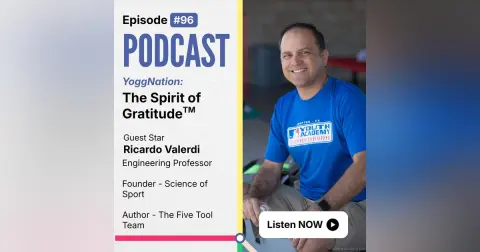
A strong team isn’t built by having the best people. It’s built by making better decisions together. Professor Ricardo Valerdi, engineer, sports scientist, and University of Arizona professor, shares how leadership, trust, and team culture shape decision making. Drawing from his book, The Five Tool Team, he explains why complementary strengths matter, how data and intuition work together, and what separates a group of people from a team that delivers results. We also explore his FLASH method ...


A strong team isn’t built by having the best people. It’s built by making better decisions together.
Professor Ricardo Valerdi, engineer, sports scientist, and University of Arizona professor, shares how leadership, trust, and team culture shape decision making. Drawing from his book, The Five Tool Team, he explains why complementary strengths matter, how data and intuition work together, and what separates a group of people from a team that delivers results.
We also explore his FLASH method for better decisions and how his nonprofit, Science of Sport, uses baseball to teach STEM skills and numeracy to students.
🧠 What you will learn:
- How to build teams with complementary strengths
- Why participation creates buy-in and accountability
- How to use the FLASH method for better decisions
- Why data needs human judgment to guide the future
🔑 Key takeaways:
- Trust grows through follow-through and honest communication
- Accountability means owning your decisions, even when outcomes are uncertain
- Learning from setbacks helps teams improve faster
- Better teamwork starts with understanding what each person brings
Listen now to Professor Ricardo Valerdi on leadership, teamwork, trust, and decision-making.
Watch on YouTube or subscribe to YoggNation’s Spirit of Gratitude podcast for more conversations that turn real-world challenges into practical lessons for growth.
00:00 - Why Groups Are Not Teams
02:33 - Lessons From MIT And West Point
05:45 - Values As The Skeleton Of Decisions
07:07 - Shared Vision Creates Real Buy In
09:43 - The Five Tool Team Explained
11:59 - Data Versus Gut And Why Both Matter
14:54 - Learning Loops Beat Perfection
16:36 - FLASH Decision Making Method
18:37 - Trust Means Candor And Follow Through
21:34 - Getting Comfortable With Failure Rates
22:38 - Adversity That Forces Leadership To Rise
25:17 - Universal Tools From Military To Sales
28:22 - Teaching Numeracy Through Baseball
35:21 - Luck Preparation And Final Takeaways
Why Groups Are Not Teams
SPEAKER_00Not every group is a team. Just because you have a group of people, it doesn't mean they meet the characteristics of a team. Hitting for power, hitting for average, running, fielding, and throwing. So those are the five tools that a baseball player gets evaluated under. You've heard the expression, sometimes you win, sometimes you lose. Let me give you my version of that is sometimes you win, sometimes you learn. 66% of the time you fail. Tell me what industry that's okay to do that. We are not just a product of our circumstances, we are a product of our decisions.
SPEAKER_01Welcome to the Yoge Nation, the Spirit of Gratitude Podcast. Hello, friends. My name is Yogesh Patel, and this podcast explores how adversity shapes success through the lens of gratitude around courage, resilience, appreciation, awareness, and humility. Each week I sit down with high-profile guests who share their wisdom and perspective as we explore personal growth, purpose, and shared values. And hopefully you see a bit of yourself through their storytelling. Join the conversation. I appreciate you tuning in. As a central theme of this podcast is how adversity shapes success, what happens in the middle between the adversity we all face and the success we hope to create when sometimes even the right decision doesn't lead to the outcome we hoped for. My guest today has spent much of his career studying exactly that and putting a process behind how we make decisions. Professor Ricardo Vallarti is an engineer, sports scientist, professor at the University of Arizona, and former faculty member at MIT, who has also taught at the United States Military Academy at West Point. His work has taken him inside organizations ranging from SpaceX, the U.S. Army, Major League Baseball, and the NCAA, studying how individuals and teams make better decisions. And now he's taken these experiences and putting them into his new book, The Five Tool Team. Is that a Home Depot reference? Maybe it is. Stand by. Okay. Well, beyond his work as an author, Ricardo has turned his lifelong passion of baseball into something with an even bigger purpose. He founded the nonprofit science of sport, reaching over 700,000 students to date, teaching them about STEM, science, technology, engineering, and math. And at first glance, teaching, decision making, and baseball may seem like three different worlds, but for Professor Valerity, they blend together nicely. And today we will understand where they intersect. And with gratitude, it is an honor to welcome you to the podcast, Professor. Thank you for having me. Absolutely, my pleasure.
Lessons From MIT And West Point
SPEAKER_01So I'm curious, what were some of the life lessons you learned as a professor at MIT and West Point? Taking a step back.
SPEAKER_00That's right. Well, thanks for having me, first of all. And uh I love the double G, by the way. I'm a fan of the double G. You know what that stands for, right? Yeah, gratitude and gangster. There you go. Yeah, all right. Yeah. Yog Nation. Uh so I let me answer at each place because it's they're very different places. So um MIT is primarily a STEM institution, private, uh, small, and and uh engineering is king there. And what I learned from there is the kind of people that are attracted to that institution, on the faculty and student and even the staff, are the kind of people that want to change the world. And that's extremely exciting, scary, intimidating, all of those things. But when you learn to run on a treadmill that is going 100 miles an hour, that just becomes your normal. And it was amazing. And it's for like an engineer, it's like uh being at Toys Are Us, right? And and and that really set me up for a lot of the things that I did in my career. That was my first academic job, if you can imagine that. So learn to run at 100 miles an hour.
SPEAKER_01And you were in your mid-20s?
SPEAKER_00Yeah. Wow.
SPEAKER_01Yeah, amazing.
SPEAKER_00I ended up at uh West Point uh probably a decade later. And for under very different circumstances, I was already living here in Arizona and I was on sabbatical, so I was only at West Point for a semester. But I learned a lot of interesting things about the army. So I I've I'm not in the military. My family is not a military family. So that was really one of my first exposures behind the scenes. What is the military really all about? And what I learned from uh that experience is that the type of student who wants to become a cadet is somebody who understands that they're gonna be bigger, they're gonna be part of something bigger than themselves. Sure. Because everything you do in the military is done as a team. Yes, they give out medals and there's they call them heroes, but they don't get there by themselves. And that's not their goal, by the way. Their goal is to accomplish big things, and those big things have to be done as a team. And you see that front and center at West Point, and it's the same at the other military academies, the Air Force Academy and at the Naval Academy. And and the students that graduate from those programs, the cadets, um they become leaders immediately. They become officers in the Army, second lieutenants. And so you can imagine the responsibility that comes with that. Um, and and that was extremely motivating and inspiring for me to help shape some of those cadets who are now in in uh leading uh their own units and divisions and brigades and battalions in the army. Um, that was a huge privilege. Right.
Values As The Skeleton Of Decisions
SPEAKER_01Well, I'm curious, how did you contribute to the culture from the from your Mexican roots, if I understand that correctly?
SPEAKER_00Well, uh you we come from different places, and every place we come from shapes who we are and the values that we carry. Yep. Uh so uh not just uh being trilingual, so I speak Spanish, English, and Spanglish. So it's not just that heritage, it's the culture, it's it's the values uh that are instilled in you by parents, aunts, uncles, grandparents, nannies, you name it. Uh and that ultimately drives how you make decisions. Because that is the skeleton behind a decision is what are your values? And and I always remember that and I always pay attention to that. And and ultimately, if you don't know what your values are or they're not clear, you you're making decisions that are disconnected from who you are.
SPEAKER_01I think I can take it a little step further. Beyond the values, it's your beliefs, it's your environment, which shape into your values. And that's the central part of what you just mentioned about how to improve decision making, uh, the decision-making analysis. When you're working with a team, again, it's broader than that.
Shared Vision Creates Real Buy In
SPEAKER_01How do you then get everyone on board focusing on the same vision?
SPEAKER_00Let me start out by saying that not every group is a team. Just because you have a group of people, it doesn't mean they meet the characteristics of a team. And and to me, the more formality of having a team is one who has a shared vision and who has a common goal and who's bought in to those objectives, right? That's when a group becomes a team. Okay. Now, when you have a team, there are decisions that are made either in by consensus or maybe the leader makes a decision. But at the end of the day, when you switch from the decision-making processes that you're following, from there you switch to implementation or execution. That's an important step and an important progression where alignment is critical. If you don't have alignment, if you don't have shared vision that everybody's bought into what's going on, then you have a bunch of skeptical supporters.
SPEAKER_01And that can apply to even the family dynamics within a household. Absolutely.
SPEAKER_00And the biggest lesson, whether you're the leader of a family or the leader of a military unit or the leader of a company, the most important thing to remember is that people support things that they helped create. So if they help influence the decision, if they help provide information or data to drive that decision, there's gonna be buy-in. In contrast, think of the opposite situation where they were just told what the decision was, right? And they had no input and they were not allowed to ask questions or provide opinions. Collaboration is key then. That's right. In the absence of that collaboration, you don't have buy-in. Right. What where does accountability factor in? Uh the accountability is a very important ingredient in this whole thing because whoever makes the decision, whether it's the leader, whether it's uh the the parent, whether it's the manager, that person has to own the decision and they have to own the outcome. They have to own both. Even though the decision is what they control, the outcome they do not control. Yet they have to own whatever happens. That's real leadership. And these are principles you've applied in this book here.
The Five Tool Team Explained
SPEAKER_00Absolutely. So the five tool team really is about the fundamentals of decision making. And I've been very kind of starting about hammers and screwdrivers. It's not, it's not Home Depot. Now I get your joke. Yeah.
SPEAKER_01Sorry.
SPEAKER_00Uh it took me 10 minutes, but the it's really about the the tools. The name actually comes from baseball. So it's the tools of a baseball player. And and I borrowed that metaphor of what are the important tools for baseball? Which they happen to be hitting for power, hitting for average, running, fielding, and throwing. So those are the five tools that a baseball player gets evaluated under. And and I is that for any position? Uh everybody except pitchers. Okay. So any position player. So uh feel their own.
SPEAKER_01From a pitching standpoint. But please go ahead.
SPEAKER_00So so if you think about the five tools, they're really to me the most fundamental things that every person needs to be at least aware of, yeah. And and maybe even work towards, right? And and what I talk about in in the book is not just applying those five tools, but also acknowledging that we try to make good decisions, and that's the only thing that we can control. We don't control the outcomes. So to quote I think that's an important reminder. It's a critical thing. And so to quote uh coach Mike Kandrea, who I know you had on your podcast, he loves to say, control the controllables. Right. And the way I'm in applying that to decision making is you can control the quality of the decisions that you make. You expect and you hope for good outcomes, but you don't control the universe, you don't control the weather, you don't control the stock market, you don't control what other people are going to do because the outcomes depend on them, on what other people are gonna do.
SPEAKER_01Right.
SPEAKER_00Uh but as long as you have a good process, as long as you have a disciplined process, then you can expect that in the long run you're gonna have good outcomes.
SPEAKER_01It seems counterintuitive because partially, of course, because there's that moment in time where it's that gut that tells that tells you to, okay, let's let's move forward.
Data Versus Gut And Why Both Matter
SPEAKER_00Explain that. There's always this perceived tension between uh the data and your intuition or your gut, right? And I think the way people think about it is you can only have one or the other. Uh I like to think about the combination of the two. And there's always a balance because data certainly has its importance and its relevance, but it also has its limitations. Uh, let me give you an example. If you're the manager of a sports team, you're going to do all the scouting, you're going to do all the film analysis. That's all data that you're going to use, but that's all data about the past, about things that have already happened. Right. Right. So you can see where the limitations are. Now, as the decision maker, you have to determine how much you're willing to extrapolate into the future from data set that only tells you something about the past. So that's where intuition is important, is because you need to then connect those dots and make decisions about something that will happen in the future.
SPEAKER_01So is intuition different than taking a leap of faith, or are they cousins or the same side of the coin?
SPEAKER_00I think they're cousins. Uh, I would say leap of faith maybe um requires less overthinking and less agony, and you're just going to try it and see what happens. Um I think looking into the future different depending on what field you're in, it might mean um exposing financial risk. It might mean exposing reputation. Uh, it may be exposing um, you know, other people's times and resources. So so it can depend on on what your field is. Like if you're if you're uh you know very religious and you're thinking, okay, I'm gonna take a leap of faith, that's gonna mean something very different to you than if you're a gambler at a casino.
SPEAKER_01Right. Yeah. Oh boy. That's that's a lot to uh to to unload and unpack. Yeah. No, it's great because again, as I'm thinking about decision making, even for my own personal life, I mean, uh, forget the team aspect. It's just an element of what I can do to improve the situation that I want to have for myself and for my family around financial goals, the worry, anxiety. Um, you know, still dealing with simple ink, not as an adult, but I could see it in others. How does this book apply to the practical applications of what an individual has to go through? Again, when I mentioned before, it's what happens in the middle when you turn, when you go from adversity to success. What is that like if you can speak at the individual level around this decision-making process?
Learning Loops Beat Perfection
SPEAKER_00I think the important elements that individuals need to remember is that uh perfection is not possible. Even though you try to make as good decisions as you can, the ball is not going to bounce your way every time. But here's the important part that sometimes people forget about is there has to be a feedback loop of learning. You observe what the outcome was, and you make then corrections for the next decision that you make that relates from the input of others. Either from the input of others or just from what you observed that occurred. Okay, right. Because the definition of insanity is doing the same thing over and over and expecting a different result, right? So let's not do that. Instead, observe what the result is and then pivot, adjust accordingly. Maybe it's a small adjustment, a 1% adjustment, but still that requires a feedback loop to occur, a feedback loop of learning.
SPEAKER_01Yeah, I can I can see that even in myself.
SPEAKER_00You've heard the expression sometimes you win, sometimes you lose. Yeah. Right. So um, let me give you my version of that is sometimes you win, sometimes you learn. Ooh.
SPEAKER_01That's a great way to make sure that it doesn't losing becomes doesn't become a stressful thing.
SPEAKER_00You learn more from the losses than you do from the wins.
SPEAKER_01Yeah.
SPEAKER_00Yeah. And but you have to be ready to take that input though. Right. Yes, you can be upset for just a few moments once it doesn't go your way, but then you have to pick yourself back up and ask, well, what did I learn from that?
SPEAKER_01And on that note, the process, you've identified it as FLASH.
FLASH Decision Making Method
SPEAKER_01It's a methodology. Can you explain to the citizens of Yog Nation what the acronym FLASH means?
SPEAKER_00Certainly. The the book, the five tool team, has those five elements that are important for all decision makers. And the FLASH acronym are those five elements to focus, look, analyze, scrutinize, and humanize.
SPEAKER_01And to take it a step further with the notes that I've got, I mean, I am talking to a professor here, by the way, to further expand upon that is focusing on the questions, looking at the data, analyzing the consequences, scrutinizing the options, then humanizing the decision-making approach. That's right.
SPEAKER_00And I feel like those five elements are they form a complete set, if you will. Like if you build a team that contains those attributes, you're gonna make very, very good decisions and you're gonna have very good outcomes. There is a small overlap between them, which is perfectly fine, but they reinforce each other. So if you start working on improving yourself in one tool, you're gonna see some benefits in another tool. Sure. But the message at the end of the day is that the individual decision maker doesn't have to be an expert in all of those five. Okay. So that's why it's the five tool team. Got it. So it takes the pressure off that the individual doesn't have to be the master at the five. What the individual needs to find is a team where those five attributes exist. So it might be you, me, and a third person who we consider to be a mentor, but maybe complements our strengths. And amongst the three of us, the five tools exist.
SPEAKER_01Okay. That makes it much more clear. Because again, what I'm thinking is a practical application of the team, the individual in this decision-making analysis.
Trust Means Candor And Follow Through
SPEAKER_01Where does communication come into play? Because I think communication is central to making sure that the team understands the direction they setting the tone and executing.
SPEAKER_00Well, communication, I'm gonna plug that into uh one of the uh ingredients of good decisions and good decision making, which is trust, right? Yes and you're and let me give you the definition of trust that I'm using in this situation, you're gonna see where communication plays in. So trust is to do what you say you're going to do. Okay. That's part one. Part two is if you can't, bad news early is better than bad news late. Right. Okay. So let's unpack that. Candor. Absolutely. Yeah. Absolutely. So the first part it is not controversial. It's pretty easy to understand. To do what you say you're going to do. Okay.
SPEAKER_01Do what you say, say what you do.
SPEAKER_00That's right. But but also you have to be cautious to like not over-promise, not overcommit. Right. Yeah. Instead, like I think a good strategy is to under-promise and undercommit and over-deliver. That's sales 101 for me. That's right.
SPEAKER_01Underpromise, overdeliver on the quota. That's right.
SPEAKER_00So there's part one. Okay. Part two is okay, look, uh, you make good decisions. Sometimes things don't play out how you were hoping. Yeah. You you have like a less than favorable outcome. So part two of the trust definition is well, when you can't deliver what you said you're going to, bad news early is better than bad news late. Right. And it's not that you walk in with excuses like, oh, I I couldn't do it for whatever reason. No, it's like you understand that you don't control the outcomes. But you you made the best effort possible to get there, right? Perfection is not possible.
SPEAKER_01So taking a step forward, how do you silence the inner critic when you've done all the right things, right? It still doesn't work out in your favor. And you and you dwell on it, you analyze it, you become your own worst enemy.
SPEAKER_00I'm gonna go back to what I said earlier about the learning, yeah, having to be there, because then that's going to improve your chances the next time. But also, like psychologically, you have to accept that you have to tolerate, be able to tolerate bad outcomes because perfection is not possible.
SPEAKER_01Sure.
SPEAKER_00Right? And not just in ourselves, but also in others. Like we have expectations of others and they that they're going to deliver, right? Yes. Uh, and sometimes they're not able to. Very much so. And it's not just like just being kind and understanding, it's like, hey, I realize you tried your best. So as long as I know that you have a sound process and you put effort into it and you were not being reckless, yeah, like I'm gonna trust that you're gonna make good decisions in the future. Let me put it to you in a sports context.
Getting Comfortable With Failure Rates
SPEAKER_00Do you know what a good batting average is in baseball? 333. Yeah. That means how many times you fail. Right. Like 66% of the time you fail. Like, tell me what industry that's okay to do that. You fail 66%.
SPEAKER_01Or even tennis when Roger Federer had this commencement speech. That's right. Said that he only wins 50, what? 52% of his games.
SPEAKER_00Exactly, just barely over 500. Yeah. Right. Um Um and so maybe that's an extreme example, but but even like in in basketball, like the best free throw shooters miss five to ten percent of the time. Right. And it's called the charity stripe for a reason, because nobody's guarding you. Unless you're Steve Nash or Don Johnston. Yeah, yeah, I get it. I get it. I get it. Uh but you see perfection is not possible. But what do you learn from from the mistakes? And then then you start to close that gap between performance and potential.
SPEAKER_01Well, what I really like about this particular subject that we're on is on page 109, you say it brilliantly.
Adversity That Forces Leadership To Rise
SPEAKER_01Sometimes adversity strips away comfort and forces people to rise. When they do, it creates a contagious sense of pride.
SPEAKER_00And am I remembering correctly, that was the Air Force Academy story?
SPEAKER_01I don't recall.
SPEAKER_00Yeah, I'm pretty sure it was. And what happened there is during COVID, they uh they lost their coach and they weren't able to uh to to have an adult coach them, right? Sure. Um and no, sorry, it wasn't during COVID, it was during the uh government shutdown. Pardon me. So during the government shutdown, there were certain positions uh in the federal government that were deemed not critical, right? So not related to public safety. Right. Most positions in the military are related to public safety, except if you're a sports coach at a military academy. It just didn't quite make the cut. Yeah. Uh and so those coaches were not allowed to work during the government shutdown. Right. So the consequence of that is the soccer, the women's soccer team at the Air Force Academy didn't have a coach. And that didn't stop them. The cadets got together and they said, you know what? We don't need a coach. We we are gonna hold each other accountable. We're gonna create that leadership that's needed. And they had the best run uh record-wise in that short window of within that season. Uh, that the best run that they had, I think they had like a 75% winning percentage, something right. And and and the takeaway is the quote that you just read, which is they had adversity, they could have just folded, right? But they decided to do the opposite is no, we're not gonna fold. This is actually make gonna make us stronger, right?
SPEAKER_01And that's where trust, collaboration all come in together, accountability as well, all of those things.
SPEAKER_00Yeah, and and that essentially breeds the culture for good decision making.
SPEAKER_01We talked about decision making, we talked about to a degree baseball, right? Or the book, the book, decision making, baseball. Where does that come into having all of these three themes come together in terms of what you project as an individual?
SPEAKER_00Yeah, this is uh an amazing uh integration of the different worlds that I live in, being an engineer, uh, being a sports guy, uh, but also having spent a lot of time not just teaching uh cadets, but also interviewing people in the military, visiting like the uh Fort Bragg, North Carolina, where the 82nd Airborne is.
Universal Tools From Military To Sales
SPEAKER_00I spent a lot of time there. And and I just wanted to be a sponge about how the military make decisions in these like high pressure environments. And when I started looking across all of these contexts, high-pressure environments are everywhere, and the tools that they use for decision making are the same. Right. They are universal. And I wanted to write a book that gave people that insight, and and I've I'm almost always. It's a great book, yeah.
SPEAKER_01It's a great book, by the way.
SPEAKER_00And which what really blows my mind is that when people read it and they are outside of those military or tech or sports contexts and and pick a different context that's unrelated, they see the relevance, and then that's when I know I hit the nail on the head, right? So I'll I'll give you an example. There was a a gentleman who runs a CPA firm. Okay, and uh he got a hold of the book and got a hold of me and said, you know, all of these tools that you're talking about in the book, they apply to accounting. And I'm thinking to myself, oh my gosh, I didn't, I wasn't thinking of accountants when I was reading writing the book, right? But holy smokes, thank you. And it's wonderful to see the relevancy. And so I want to observe how this book does in the wild in those different contexts, so that I can improve it, sharpen the song, yeah, work on the next book.
SPEAKER_01Again, it was relevant to me from all the questions that were really sales focused. I'm like, this is exactly what I ask in terms of finding out uh the organization in terms of who has the money, who's got the pain, who's got the power to make that critical decision based on Flash to move forward. I think the most important element from a sales standpoint is humanizing the decision-making process, given the different personalities. Um I would say the the importance of let me take a step back. It's it's the personalities, but it's what that decision would mean to the to them to their business, right? Or to themselves. So that's what I picked up on it.
SPEAKER_00I love it. And and I think that's refreshing to hear that these tools are relevant to you because the idea is as a salesperson, and we we're all selling something, by the way. And yeah, I'm selling ideas, right? Right. And I'm selling a podcast. There you go. And and the the relevancy here is like whatever you are selling, yeah, whether it's widgets or ideas or anything else, if you're asking the right questions, your decision making is gonna be laser sharp. Right. Because without asking those necessary questions, you're really just flapping in the wind. Sure. And and you don't have a compass, you don't even have a direction, right? And so that that's what I felt really refreshing in the universality of this thing.
Teaching Numeracy Through Baseball
SPEAKER_01Well, what I like about the compass and the direction is what you have started and created with the science of sport. It's amazing what you've done. Tell us more about that.
SPEAKER_00That's the ultimate passion project that became a side hustle. And it's about 14 years ago, 15 years ago or so, uh, the book Moneyball came out. Yeah. And somebody handed me a copy and said, You need to read this book. And sure enough, I from the first page I knew exactly why they had told that to me. And that also lit uh an idea in in my mind. And the idea was as an educator, can we use baseball as a lens to help young minds see the relevancy and the real world application of the topics they're learning in school?
SPEAKER_01So respectfully asking, why do you care?
SPEAKER_00I care because that's the future of our society. If we want if we want the young boys and girls to grow up and make the world a better place, we need to give them the tools to do so. And and I don't necessarily intend everybody to be wanting to be an engineer. Sure. But my goal is I want everybody to be really good at numeracy. And numeracy is is the uh analog to literacy. People don't talk about numeracy as much. So here's my moment to talk about numeracy. And what does numeracy mean? Numeracy means making good decisions with data.
SPEAKER_01Ah, that's the connection. Yes, I get it now.
SPEAKER_00The light bulb goes on the head. So if you're um a middle school student or high school student, yeah, and you need to learn about personal finances.
SPEAKER_01Sure.
SPEAKER_00You need to learn about um, you need to be a smart consumer.
SPEAKER_01Right.
SPEAKER_00Uh you need to manage uh your life, your career. And you have to make these decisions understanding how numbers work. And if you don't, you're gonna make some very uninformed decisions. Right. You see that you see the problem there, right? Yep, and the connection. The connection.
SPEAKER_01Yeah.
SPEAKER_00And and my goal, um, you know, sort of thinking of this uh as a system is you can, if you look at the K-12 system as a pipeline, the earlier that you work in that system, the more kids that you can influence. Right. Because of dropout rates.
SPEAKER_01Yes.
SPEAKER_00But also, the earlier that you influence them, the sooner that you can convince them that numeracy is important and it's relevant to them before they get to middle school, and at that point they might be too cool to even talk to you, or they have a phone in their hand and it's too late. Right. So, really, our focus is elementary school because the earlier that you get somebody hooked, then you've changed their trajectory for life. That's the real prize.
SPEAKER_01And what you apply in the science of sport is inviting kids to a baseball diamond and having them teach sports or the angles and how a ball moves. And tell me about that, because I think uh because I think that's where I can see the kids' eyes light up. It's like, wow, this is so cool to apply the angles and engineering and math and baseball and apply it to everyday learning. Hopefully they get better grades.
SPEAKER_00Yeah, that's the goal. Well, at least they appreciate the the usefulness of it, which then would translate to better grades or just engagement. Sure. Right? Like prevent somebody from dropping out, get them engaged. Uh, think of the obvious connections between um STEM and sports. There's geometry, sure, there's statistics, there's physics, there's physiology, even, right, right? Um, and what we did initially is just address the low-hanging fruit. Like, what are the obvious connections between um, let's say triangles and geometric shapes and squares and and circles and baseball. Okay, you can see all of those shapes on a baseball diamond, right? See, diamond is another shape. Um, that was sort of phase one of the science of baseball. Phase two, we got a little bit more into the weeds because if you're really going to move the needle on education, you have to help people with the part that they're struggling the most. So we actually looked at standardized test scores at different um uh educ uh at different uh uh school districts around the country, right? Uh so we started here in Arizona, we went to California, we went to Texas and Georgia, and we found the trend is that a lot of students in elementary school struggle with a very specific area of mathematics, which is expressions and equations. Yes. The geometry they actually don't struggle with as much because it's visual. It's a very important thing.
SPEAKER_01I never knew the real world, I never knew the real world examples of equations. Expressions and equations b squared equals C squared. That's not obvious.
SPEAKER_00But but think about it. Like if you were to put your finger on where do people need the most help, right? It's expressions and equations. It's not geometry. Okay. So why are we spending energy on teaching geometry through the science of baseball? We're working on the wrong problem. The area we should be working on is expressions and equations. So we pivoted the curriculum to focus on the part that students struggle with the most because then you can move the needle. Can that be proven on the baseball diamond? Well, it depends uh which team you're a fan of.
SPEAKER_01The Diamondbacks or the Giants for me, being a product of the Bay Area.
SPEAKER_00But here's here's the real uh prize is that I've been doing this for over a decade. Yeah. And I'm already seeing students who went through our program as elementary school kids uh go into college and dis and choose to study engineering. Wow. And there's one kid in particular who went through the engineering um program and then got a job at uh NASA.
SPEAKER_01Amazing.
SPEAKER_00Right? Yeah, and uh I'd like to take complete credit for that. Can I? Do you give me permission? Thank you.
SPEAKER_01That was one of my questions, actually. It's uh it says, uh no joke here, describe the feeling when kids have the aha moment as they learn a science concept through baseball.
SPEAKER_00There it is. When I hear students say, Ooh, that launch angle is too high, it's probably gonna be a pop fly. Yeah. I'm like, perfect, I got it. They think they're just talking about sports, but they just applied geometry to that statement. Yeah. And then the prize is seeing them succeed in high school and college and then enter the workforce better prepared, right? And that that to me, that's my why.
SPEAKER_01Love it,
Luck Preparation And Final Takeaways
SPEAKER_01love it. And kind of going back to the baseball terminology, you mentioned the five tool player around those statistical averages outside the pit outside the pitcher. Do you know what a FAPAM is? I don't. First pitch outmade. First pitch out made. Outmade. So it could rely on the strength of the pitcher in terms of how he sees the player to get that out in the first pitch. Or it could be the batter himself, herself is gonna come next, seeing the angle, seeing where the ball is hitting, and it's like, okay, you need to improve your hand-eye coordination.
SPEAKER_00Love it. Perhaps I love it. Well, and let me go back to the batting average question I asked you earlier. What's a good batting average, right? Yeah. And you said 333. Yeah, that that's that's a good answer. 333 would get you into the Hall of Fame, actually. It's it's really a really good batting average. Yeah, yeah, yeah. Absolutely. Okay. Uh it but here's the thing about good hitters is good hitters learn from their mistakes. You want to know what great hitters do? They learn from other people's mistakes.
SPEAKER_01Ooh. That's you can apply that to many different uh areas. Right. Observation, awareness, yeah, right. In fact, awareness and humility are one of the two principles that you've outlined in the book. And that goes with my five core pillars around the spirit of gratitude. So again, it's appreciation, awareness, humility, courage, and resilience.
SPEAKER_00Love it.
SPEAKER_01Yeah, thank you. And again, I think what the book speaks to from a gratitude perspective, right, is applying the knowledge in this book so you become successful in whatever that and how you define and measure success. Love it. Curious, what role does luck play? And I'm I'm not gonna say well, but is there mathematical formula for how you factor in luck?
SPEAKER_00In decision making, uh uncertainty plays a huge role. Yes. And sometimes the ball bounces your way, sometimes it bounces not your way, right, and in in an unfavorable way. But I'll tell you, you can certainly tilt the probabilities in your favor with preparation. Sure. It's not a leap of faith per se, but it's preparation. It's all the scouting, all the analysis, all the thinking that you put into it before the event happens. And then when it's actually showtime, if you prepared yourself well, that's where preparation meets opportunity. Right.
SPEAKER_01I guess in uh in black belt, as a taekwondo martial artist myself, never got to black belt itself, but uh it's the adage of black belt preparate black belt confidence comes from black belt preparation. That's right. Yeah. So I totally agree with that. Yes. And uh final marks, uh Ricardo, is there anything that I missed in this podcast theme that you would like to share to the audience?
SPEAKER_00Yeah, I I do want to leave with one important message, which is all of this that we've talked about in terms of decisions and how they they play in our lives. I always want to remind everybody, and and I live by this philosophy myself, that we are not just a product of our circumstances, we are a product of our decisions.
SPEAKER_01Great way to end the note segment. Well, actually, there's also one more. Here's the other zinger. Okay. All right. So we are in the baseball playoffs. Yes. Right. And what does this remind you of? As a as imagine yourself as a kid, being 15, 16 years old and hearing this. Baseball tonight. There you go. Professor Ricardo Valerdi, it's an honor and pleasure to have you on the podcast. Thank you for your time.
SPEAKER_00Thank you so much. And uh let me express my gratitude for uh the the time that uh we spent together and and also all the great questions uh that hopefully we'll I just tried to keep up. They'll hopefully trigger ideas and tools for your listeners to make better decisions.
SPEAKER_01Absolutely. Thank you.