Want Young Men to Succeed? Start With Vision and Values
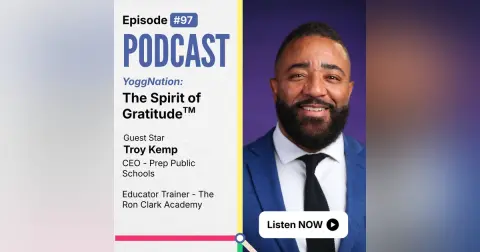
Why do some boys thrive while others struggle to find their way? Troy Kemp, CEO of Prep Public Schools, shares how his journey from migrant worker to education leader shaped his approach to raising resilient young men. He explains why trust, accountability, and belonging matter more than simply telling boys what to do, and what parents and educators often overlook. From mentorship and faith to social media and the power of second chances, Troy challenges us to rethink how we help boys grow in...


Why do some boys thrive while others struggle to find their way?
Troy Kemp, CEO of Prep Public Schools, shares how his journey from migrant worker to education leader shaped his approach to raising resilient young men. He explains why trust, accountability, and belonging matter more than simply telling boys what to do, and what parents and educators often overlook.
From mentorship and faith to social media and the power of second chances, Troy challenges us to rethink how we help boys grow into confident leaders.
🧠 What you will learn:
- How mentorship shapes young men
- Why belonging builds trust and accountability
- How to help boys navigate distractions and failure
- Why purpose matters more than motivation alone
🔑 Key takeaways:
- Strong relationships create lasting change
- Boys need clear standards and people who believe in them
- Failure can become a turning point
- Sometimes, one second chance changes everything
Listen now to Troy Kemp on leadership, mentorship, and raising resilient young men.
Watch on YouTube or subscribe to YoggNation’s Spirit of Gratitude podcast for more conversations about growth, character, and resilience.
00:00 - Cold Open And Podcast Welcome
02:09 - From Pre Med To Education Leader
05:50 - Earn Your Haters And Left Lane
08:54 - Vision Values Faith And Mentors
12:41 - Trust Hope Gap And Tech Balance
22:00 - Belonging Accountability And High Standards
30:44 - Gratitude Story And Second Chances
37:40 - Safe Failure And Closing Advice
Cold Open And Podcast Welcome
SPEAKER_02Boys don't respond to smoke. They only respond to fire. So if I say I'm gonna do it, I have to do it. You weren't thinking about yourself. You're thinking about the next person.
SPEAKER_01I learned in life you gotta earn your haters. If you don't have enough haters, you're not working hard enough.
SPEAKER_02Where did your gift of communication come from?
SPEAKER_01How much gas do I have in my? I'm just gonna drive until I run out and just get a job right here. I ain't even. I cannot go home. I cannot go home as a it failed my family. I didn't just fail myself, I failed everybody who believed in me. Everyone.
SPEAKER_02Welcome to the Yoga Nation, the Spirit of Gratitude Podcast. Hello, friends. My name is Yogac Patel. And this podcast explores how adversity shapes success through the lens of gratitude around courage, resiliency, appreciation, awareness, and humility. Each week I sit down with high-profile guests who share their wisdom and perspective as we explore personal growth, purpose, and shared values. And hopefully you see a bit of yourself through their storytelling. Join the conversation. I appreciate you tuning in. My next guest is Troy Kemp, CEO of Prep Public Schools, a network of all-boys public charter schools dedicated to helping young men realize their potential through education, character, and leadership. Raised by a single mother in a household of six children without a father present, Troy witnessed how the same upbringing could lead to very different paths. While some of his siblings were drawn into the streets, education opened doors that would ultimately shape his life's purpose. Today, his philosophy centers around two powerful principles, vision and values. Having the vision to see beyond your circumstances and the values to anchor you when life takes an unexpected turn. And at the heart of Troy's journey is a belief that guides how he leads and inspires others. Look for the light in people, and boy, I love that. And his life has certainly been shaped by adversity, which you'll hear today. Guided by purpose and above all, powered by gratitude, as he likes to say. And with gratitude, it is an honor to welcome you to the podcast, Troy.
SPEAKER_00Thank you. Thank you. I appreciate the opportunity. Um I love to share things that hopefully will lift others.
SPEAKER_02Absolutely.
From Pre Med To Education Leader
SPEAKER_02Yes. Well, let's start somewhat from the beginning. Uh, you wanted to be a doctor, and you were you you uh you were accepted at prestigious universities like Johns Hopkins, um, Brown, Princeton. What made you decide to change careers?
SPEAKER_01So um, yeah, I wanted number one, I wanted to be a doctor because I didn't know any, and it was such a prestigious job. And I was actually really good in the sciences and in math in the school. And so, you know, people were suggesting you would be a great surgeon. Um, when it was time to go to college, uh, I'd gotten some interest in football and so forth. And I looked at several schools. Johns Hopkins was the most interesting one because there was a six-year intensive program where you you could get in undergrad and you're in medical school. So six years, you're good, you're done. But one of the things I said to myself, I said, What if I don't want to be a doctor about halfway through? I was thinking about my options. And I also thought about if I went to undergrad someone I could where I could go to med school later. The other piece was I wanted to play sports as well. I wasn't going to college to be a pro professional athlete, but I also knew that it provided the kind of balance and the lessons learned and the camaraderie that I needed. So I veered from even when I went to Colgate, I was pre-med. But what happens is a conflict between the labs that we had to take and um uh spring practice. Spring practice was the same time as bio labs. I said, I'm doing spring practice for a thousand, Jack, because I'll end up being a math major. Because I was like, I'm not doing it, because that's when you earn your position in college. So, so yeah, playing sports meant a lot to me. It was part of my experience, and I wasn't gonna give it up for anything. And I could have gone on to be a doctor, you know, after graduate, after undergrad.
SPEAKER_02Interesting. And then you had an epiphany moment when you decided to take a chance on attending a school just to check it out. Tell me, tell us about that.
SPEAKER_01Yeah, so it you know, I grew up as a migrant worker. And, you know, first of all, most people were either first generation college students or they went to the military. That was sort of the path that most people took when I grew up. It was just whatever way is out of riverhead, it's which way you go. And um, for me, when I was looking at colleges, the first thing I said was, you know, my guidance counselor said, You could go anywhere in the country. Where do you want to go? I said, Where's the 70 degrees? Right. I was looking for the weather, man. I was tired of that cold in New York. So it's Arizona State and Miami. I thought about those two. But then after these colleges started recruiting me and everything, I, you know, Colgate, I never forget, I wasn't even looking at Colgate. And I went to a college fair and I saw a bunch of people crowding around the table and I saw this brochure with this football player on and all this. I said, What is this? And they said, Colgate. And I was like wondering why it was in New York, of course. A lot of people love the school. And I realized that I could have, I could work hard and play hard. I can have a great academic experience with a very great athletic experience. But the one caveat was this. They said, Colgate's a one-light town. There are not many black people up there, not many poor people. You're gonna be one of one up there if you go up there. A lot of people in my town said, you're gonna be miserable up there, cold and just different. And I said, Well, you know what? I'm gonna take a visit because it was recruiting trips. And when I went up, I had the best time of my life. I was like, I never met so many genuine people and just excited, and it was liberal arts and it was great football and all the things. And if I hadn't gone and taken that trip and saw it for myself and just listened to what the naysayers said, then I would have never had that experience. So the moral of the story is see things for yourself, especially, you know, don't turn ever turn down a job you haven't been offered.
SPEAKER_02Right. Well, kind of going back to the what you mentioned about the naysayers, I think that's a very societal thing that uh people unfortunately do listen to the naysayers, and that I think brings them not necessarily down, but they don't realize their potential. And I think that's
Earn Your Haters And Left Lane
SPEAKER_02what you also that's one of your core philosophies.
SPEAKER_01Yes, sir. We we call them haters in my neighborhood, haters. Naysayers was the proper name for a hater. I learned in life you gotta earn your haters. If you don't have enough haters, you're not working hard enough.
SPEAKER_02Ooh. Because they make you jealous.
SPEAKER_01Because yeah, well, if you if you do a really good job, somebody's gonna try to dim your light. They're just gonna, they're out there, right? 20% of the people don't agree with you no matter what you do. And so you have to earn your haters. That means you if you're moving at a certain velocity and a certain pace, somebody's gonna always feel like you left them behind or you think you're too good for them, or they just want to dim your shine because their light doesn't feel as bright. So that's gonna happen. So if you're a thousand-watt bulb, that means your light is bright. So you earned your haters. You've done what you had to do to elevate, um, and and that's not your fault. So keep it moving. And that's why sometimes to be great at something, you have to walk alone for a little bit of the journey because there are not many people who uh want to play at that altitude. And it's okay. But I think a lot of people will um degrade themselves and lower their standards because it's easier to walk than fly.
SPEAKER_02You know, you bring up a very good point in reference to the altitude. And I think it's something that you also have put on your website, and that is I would love to help you move into the left lane of life. What is that left lane and in relation to the altitude that you just speak of?
SPEAKER_01Well, I think that's the thing about it, is the left lane in most highways, you know, that's the passing lane. And you're not supposed to drive in the last left lane unless you're intentional about passing someone. And in the left left lane is the HOV lane. So you got two. And the HOV lane means that you're not by yourself. If you really want to get in the ultimate left lane, that's the HOV lane, which means serve, serve others, carry others, help others. Now you're not by yourself. So when you're driving, I always have a backseat. I got an I got a car, a sports car, and I made sure I had a backseat because I have some grandsons and somebody might need a ride. So I think that left lane is how do you get to the side of the street where it's the passing lane? I'm not pulling over, I'm moving because I don't know how much time I have on the clock. So I'm gonna play as hard as I can. So I'm trying to help people get to that left lane because that's the that's the fast lane. That's how you move a little faster.
SPEAKER_02You know, it reminds me of a book that I read by Ricky Minor, who was the music producer for the Jay Leonard show and American Idol. And he wrote a book called Um There Is No Traffic on the Extra Mile.
SPEAKER_01That's it. That's it. In the rare air, there's not many birds up there. And, you know, you got plenty of space, but I think that's one of the challenges with a lot of people is they want to they want to stay within someone else's limit, and that's where the traffic is. You get in that left lane, especially the HOV. If you're not driving with a passenger, you're not in the lane. It's illegal. And so most people, what? Most people are in the other three lanes. That's because they're driving by themselves. And sometimes the metaphor is that a lot of people just thinking about what they need to do, and they're not worried about who they're carrying and their destination and how that's going to change the lives of other people. So that HOV thing is real.
SPEAKER_02How does this be reflective in terms of the students that are under your charter? No
Vision Values Faith And Mentors
SPEAKER_02pun intended, of course.
SPEAKER_01Well, I think the big thing is uh, you know, boys in particular, they have to have mentors and they have to have opportunity to be meant to be mentors. And so there's two things. When they have mentors, mentors help boys better understand the standard, right? And it takes us all a while to get to a certain point. So as usually the mentor is older, and so that means that their brain is more developed, so that prefrontal cortex, their decision making is better. But they've also accomplished some things and worked through some challenges that they can share with their mentee. The other thing is they can have a vision. You know, my mentors had a vision for me while I was just focusing on what I saw. That sight is limited and vision is is is uh undefeated, right? And so that's a piece.
SPEAKER_02Wait, sight is limited, vision is undefeated.
SPEAKER_01Could you so vision is their vision is it doesn't matter how many turns there are. Sight is what you see, it's how you feel. Sight is like emotions. Emotions only last about 90 seconds. So sight can slow you down. Sight can say, I don't have any money, there's no reason to get out of bed, teachers don't care about me. Um, I'm not gonna be anything. Vision says, I have a destination, and it's not a right around the corner. Vision is a team that steps on the field and they ask you, Are you gonna win? You say, That's what I plan on doing. You haven't seen a scoreboard, but you believe. Vision is based on what you believe, sight is based on what you see. So your belief is always stronger because it says what's possible. It's like hope. Hope is not a plan.
SPEAKER_02How much does faith come into the vision part?
SPEAKER_01So that's been the ultimate vision, right? You know, when I was a kid growing up to decide from everything from doing what's right to serving others, I think faith has been the biggest anchor because it was a thing that was consistent. You know, I grew up in a in a in a Christian uh faith, and Baptists in particular, you probably tell that, but the point is, um, it was always about God, the Father, you know, his Father and Holy Spirit. So even a person that doesn't have a father at home has got a father in heaven. And so for me, it's always been who am I trying to please ultimately? What am I trying to do? What are the values that anchor me from the Ten Commandments to whatever your faith might be? It's like these are your values that'll keep you in the road when nobody's around. Because that faith, again, it's like your vision. The vision will keep me in the road when all the stuff around me says traffic, traffic, track, traffic, vision says destination. Get through the traffic to get to the destination. That's so I ignore the traffic. Vision allows me to ignore. Faith allows me to ignore the temptations of certain things. Now, nobody's perfect, but it also with faith, faith it also talks about grace and forgiveness, man. That's what changed my life the most, is that you don't have to be perfect. You just have to be trying, right? And you have to be trying to improve yourself. And more importantly, the more you try to improve other people, the better things get in life. To be unselfish, to be selfless is everything. Now, of course, you have to think about yourself and be, you know, you have to eat, you know, put your oxygen mask on first before you put somebody else's on. But it's just, you know, it's the difference between reacting and responding. Your reaction is emotions. Responding is start thinking about how it impacts the people around you before you make a move or say something. That's just being thoughtful. So faith was all about context. It was like, it's bigger than me.
SPEAKER_02Right. Boy, would I have loved to have been a student uh as you were a math teacher back in the day. What do you see in your students today in terms of perhaps the adversity that they have that uh led them to your path and you know, different backgrounds to economic status? What do you see in today's kids and what do you see their potential like um as they go through some of uh the teachers and and perhaps the curriculum?
SPEAKER_01Yeah, I
Trust Hope Gap And Tech Balance
SPEAKER_01so so the real question is what's what's different and what's what's the same? I think the same, the thing that's the same is um you know, every child wants to feel safe. They want to feel like they belong, uh, they want to feel um included. And that's never changed. And people have found different ways of doing it, right? You know, you join a gang to get all three of those things in some ways and not necessarily be the right thing. But so when I look at the kids today, um I don't look at the fuel, I look at the friction. And what I mean by that is You don't look at the what, I'm sorry? The fuel, the fuel, F-E-L-U-L, right? F-U-E-L, the fuel. So um it, I don't look at the fuel, I look at the friction. So fuel is how do you motivate kids to be successful? Friction is what do you really need, what is preventing them from being successful? This is very important because if you're in a traffic jam, like you can have the best car with the most gas, you know, full of gas and all the things. But if you're behind a car that's stopped, you're stopped. That's the friction. I can't motivate you past that car. I have to remove that car for you to move. The same thing when you talk about friction, the number one form of friction that kids have is trust, lack of trust. See, there's a literacy gap and there's a math gap, but there's a bigger gap, it's called the hope gap, which hope is connected directly to trust. And trust, the oxytocin is the bonding chemical, is the trust chemical. Kids who are not members have a lower level oxytocin. They don't espouse the values, they don't buy into the values. When you belong, you buy into the values. Kids will chase a football in 95 degree heat, but they won't read in their air conditioner. Right? Unless the coach has a book group. Now they're reading every day. So why is that? Because they belong, because they value, they will, whatever the value that the coach has, they want to be a member of that tribe, of that crew. So with these boys, what I'm seeing with students today is once you establish the membership, I think when COVID happened, it really showed a big, bigger gap in that deficit when kids were not connected. Now they all want to use it as a buzzword, but it's always been true. I've been in all boys' schools all my life. The number one thing you can have a boy do is not be afraid of raising his hand in class.
unknownRight.
SPEAKER_01If he's not afraid to raise his hand, he's gonna take the shot, just like he was in basketball. That's like a basketball player being afraid to shoot in practice. That is the equivalent. So if you could create psychological safety for young men and also help model what it means to be a man, and not in terms of the bravado that you have, but in terms of the empathy that you have, the communication skills you have, the patience that you have, um, those are the things. So when I look at kids today, here's the deal the biggest thing is that that gap is wider. And also because kids are doing more on electronics than they are in person, um, their socialemotional skills, their ability to read the room, their ability to be empathetic, the ability to anticipate the the and understand the context of the environment around them is more difficult for them. And therefore they keep running in the walls. So I think the biggest thing is, you know, for Is that because of social media or I think because, yeah, and it's you know, people will say, well, first of all, social media is is designed to be addictive, right? So it's not it, there's messages that are embedded in social media, but the number one challenges what they're not doing. If I sit there and death scroll for an hour, then I'm not outside playing, right? Right. And then the other thing about social media is people have too much access. You know what everybody's doing. You're in, and then a lot of people are faking what they're doing, and so your self-esteem and your identity is getting formed in the context of false narratives. Right? You have a birthday party, I don't get invited. If I didn't know you didn't have a birthday party, I don't feel any some kind of way. But you show me all the people at your party, now I'm gonna feel some kind of way about it. So now I am feeling excluded. So now I have a barrier, more friction when everybody shows up to school on Monday. I don't need that. So what I'm saying is it's already hard enough to be a kid because of the information explosion, right? They know more things, they have access to more things, it's AI and the rest. It's almost like, man, we got to simplify this thing. And you know what I love about sports? It's simplified. You can't bring your cell phone on a football field or basketball court. You have to leave it on the side. You can't bring it in baseball, you can't bring it on soccer field. And so they have peace of mind, but they're also learning in the context of how do I fit in this grand scheme of things.
SPEAKER_02So, what is social media's role when it comes to development of young men in your particular instance?
SPEAKER_01I think what social media does is it's like if it's using it right way, okay? If I look at what I follow, I follow people like yourself. I'll follow people who are share nation.
SPEAKER_02You're part of Yoge Nation.
SPEAKER_01Yoge Nation, right. I follow people that are gonna add value. I follow education. You know, I have some couple shopping things that I like, but I try to follow people that are gonna add value. So you do have the opportunity to create an algorithm or a channel that's gonna serve you more research on your education. Now you have to go out and verify it. But you still can get a channel of unlimited, it's like your favorite song playing all day. Ain't nothing wrong with your favorite song playing all day or your favorite songs. There's nothing wrong with that. I think too much of anything is bad for you. So, for example, if I'm only listening and watching social media and I don't just turn on the news, the news is gonna, even though that has its own spin in some ways, but it still gives you more of a variety than what you would in a straight feed from your algorithm. So I so I think the role is you do have access to some things that, and people, if you really wanted to, I can reach some star that's doing some work with boys and I could just DM them, and all of a sudden they might respond and say, Hey, I never knew um that you're interested in that. Let's collaborate on something. And now we amplify a message that reaches more kids. So the ability to collaborate is exponential, right? But I think the challenge is we might um over-prescribe to one thing. And they say, again, too much of anything is bad for you, even oxygen.
SPEAKER_02Too much of anything. Even oxygen.
SPEAKER_01Yeah, if you take straight oxygen, you're not gonna survive it.
unknownYeah.
SPEAKER_01Oh, right. So yeah, yeah. You can't, yeah, too much of anything. So I think it's it's a the word is balance. And I think that's the thing when we look at our young men, when we look at kids today, how do you create balance in a world that could easily be um isolating in a lot of ways?
SPEAKER_02I think a lot of that comes down to also emotional intelligence as well.
SPEAKER_01Yes, yes. Yeah, but again, you know, uh, if you don't feel safe, you're gonna isolate. You're gonna go to where you feel safest. A lot of kids will go to video games. You know, it's one thing you're talking about social media. There's video games, that's another side of it. And those video games, you know, they'll sit there for hours and hours. They won't even go to the restroom, they won't eat. They'll sit there and play um uh I forget the name of Roadblocks.
SPEAKER_02But let me let me uh play devil's advocate there. It there's a sense of community when you do play a video game.
SPEAKER_01Uh so a sense of community, well, there's not a sense of value. There might be common values in some way, but it's but it's sort of um on um they're making friendships online with the.
SPEAKER_02But they're making friendships somewhere.
SPEAKER_01What do they say? Show me your friends, I'll show you your future, right? And when you talk about friends online, you're talking about uh uh the the ability to really discern who they really are is you don't know. And that's the number one truly you don't know what those people truly value. You don't see them in an everyday context. You don't see them when they're off duty. You see the image that they want to create for you. That's the challenge. And because these games, these adults have access to kids, that's always dangerous in the first place. So I just think that once they added the headsets and the community, right? Because they're like kids need a community. That's why they're not going outside and play now, because they have a headset on and they're sitting down the whole evening. So I think as a parent, there's a unique challenge. You know, I don't tell my I have grandsons and I don't tell them that video games are evil. I just say, hey, we're gonna do a one-to-one, you're gonna read for an hour, you can play for an hour. Just balance it. Read for an hour, play for an hour. Right. And then go play the video game for an hour. So you got three things that you're doing. You're gonna get your physical exercise, you're gonna get out here and you're gonna read, and then you go play the game. It's not bad. Now, if you played the game for three hours, now you you didn't read and you didn't get the social uh context of playing with other people that that you get from just jumping on the trampoline with your brothers or throwing a ball with your brothers. So how do we amplify your message?
SPEAKER_02I mean, this is this is beautiful because this is where I think society needs to be elevated in terms of the guiding principles that you just shared. And there's a few more that I want to talk to you about, but this is brilliant, uh Troy. I mean, how do we how of course you coming on this podcast is one thing to help amplify your voice, your philosophy that gets people to be reminded of who they are, really.
SPEAKER_01Yeah, and I and I think I think, like I said, thank you for for shedding light on this because you know, for a lot of people, they're looking for the one thing or the two things. What is it that they can practically do, right? What are the things they need to think about? Because you know, you can hear people talking about social media is terrible and video games are terrible, but it's really what is it replacing? And as long as you are I played video games. We had Atari, I mean, when it first came out, we played that thing until we were blue in the face. And we had to wait until it was our turn and all the things like that. But we played pick up basketball, baseball, football, two hand touch. We did all those things. So we balanced it out and we're whole. I just think if your identity is only what you have online, then there's something to be challenged about. So I think.
Belonging Accountability And High Standards
SPEAKER_01I think free play, getting them involved with activities where they're part of something bigger than themselves. That's the biggest thing with Chat Prep where I am now, is that these kids know when they walk in the door that they're part of something larger than themselves. We have a house system like the Ron Clark Academy, and they belong to these tribes. And here, we took the big group of 530 boys and made it into smaller groups of about 60 boys apiece. And they have their different colors and they have different themes and their different chants and different celebrations. But we realize that they just want to be included. And for boys, oftentimes, they're like treated like dysfunctional girls. I'm just gonna say it. That they don't sit still, that means there's something wrong with them. There are plenty of girls that don't sit still. But the boys, if they don't sit still, you don't want to learn. No, your lesson is boring. Let's figure out a way to incorporate movement in the lesson.
SPEAKER_02Where does accountability come in?
SPEAKER_01Accountability is essential. And I think uh this is a big piece. This is why having boys be a part of something bigger than themselves, the accountability is greater. Um, for example, if I had a student that of a lacrosse player that was late for practice, I just run the team instead of the student. I might run him once, but I run the whole team one time. Anybody that's late, we're gonna take a lap for every person. So, okay, now the guys are never late again. If I run the one player, oh, he might be late again because he's like, Well, I'm a little tired, but uh, you know, I'll take my punishment. But what he doesn't want to do is let the others down. And so the accountability thing is as soon as you can link outcomes, if somebody needs you, you move very differently. And it's the reason why, for example, you know, my son, no kidding, my son would literally not wake up in the morning every morning. I go down to this room and I go, This guy, I'm turning off his alarm and I'm waking him up. I used to be so upset. I go, he's up all night just looking at his computer. First of all, I would never have technology in the bedroom after 10 o'clock p.m. If you want to watch it, play with your phone, go out here and charge it out here. But anyway, he's up there watching, he'd fall asleep with his computer on his chest, like looking at YouTube videos because he was learning lacrosse and all this. So in the morning, I wake him up and I'm going, man, I'm tired of waking you up. So one day I said, I'm gonna put a cup of water right next to your bed and I'm gonna dump it on you. If you don't wake up, I'm telling you, I'm not. And so, you know, my wife was like, Why are you doing that? And I said, Boys don't respond to smoke, they only respond to fire. So if I say I'm gonna do it, I have to do it. So I go in his room, sure enough, next day, splash, he goes, Dad, what are you doing? You wet my bed up. I said, first of all, you got it wrong. It's not your bed. We paid for that bed. And then the second thing I said, I said, he said, Dad, you know, you you uh you got me wet. I said, I just started to shower. Go grab the soap and keep going. Now, that was day one. He moves into the dormitory on campus. We lived on campus at a school. He lives in the dormitory, and I was terrified because I was like, his senior year, he's gonna not wake up and get kicked out of school. He's gonna be late to class. How about he wakes up every day on time? I said, How did he wake up every day on time? And I had to physically go get him in his own bedroom. And nobody told me, he said, Dad, my roommate needed me to wake him up. Somebody needed him. He was counting on me to wake him up, and that was more powerful, letting him down. So boys have an innate, right? That testosterone that, that, that, that um need to uh build confidence to be the warrior and the poet. I'm gonna be the warrior, I'm gonna do something hard, and then I'm gonna be the poet, I'm gonna talk about it.
unknownI need to.
SPEAKER_02It kind of reminds me of what you mentioned earlier about the HOV lane, right? It's not one, but two plus. And they moved up.
SPEAKER_01And so one of the things I try to quickly do at Chat Prep when the kids graduated, that was my first message.
SPEAKER_02And again, Chat Prep is Chattanooga Chattanooga Preparatory School.
SPEAKER_01And then I'm sorry, Chattanooga Preparatory School. So the Knoxville campus, we actually had to close it because it just got off to a slow start. And when I came in, it was like the fourth quarter of a game with two minutes left on the clock. And we tried to save both, but the market was not strong enough. So Chattanooga Prep had already been here eight years, so the school had already kind of run the cycle. But we had to do some things here as well. But what I'm saying, what I said to the graduates, I said, you know, you have a legacy now. Like you built this, you made it through here, you made it through all the years from sixth grade to 12th grade. And now you're not only by, you're not by yourself. No matter where you are, you're not alone. We're with you. You can always come back here. But remember, you're carrying something with you. Every one of these boys that comes behind you, imagine that they're in the backseat, someone that you love is in the backseat. You will drive differently. You will make different choices in life if you know you have a passenger that you care for. That's why boys need to be mentors, because they develop empathy, because they have to take care of someone, hopefully, take care of something or someone who's more vulnerable than they are. They have to be able to get on their level, not just explain something. I have to find out how you feel.
SPEAKER_02Yeah, that's one of the other principles you also mentioned on the pre-planning call is how to be how to be great, to be reliable, and to be relatable.
SPEAKER_01Relatable and reliable. Those are the big two. And, you know, again, life will help you become relatable. You know, the stories that you have, the things that I was embarrassed by are the number one topics on podcasts because they can't believe it. They're like, wait a minute, you live where? You did what? You picked what? And they're looking at the suit. And I said, don't let it fool you. Because usually when I talk to audiences, I'll do a little quiz about things about me that they may not know. And as soon as I reveal them, it helps me connect with the person who's maybe having some kind of pain right now or in the middle of a process right now. And then the reliable part is, you know, I did the work, right? I got the receipts. I went to school. I learned the things. I'm constantly researching. And reliable says, Do you have receipts for what you're talking about? Do you have actions? Do you have proof? Don't say you're a leader. Tell me how you led. Give me an example. That was the number one thing I learned back in the day. I almost worked for Procter and Gamble in the interview. It was the most grueling interview I've ever had. And but I got a word of advice that says, buddy, you're going to be great one day. That's what the guy said to me on the side. He says, I got one tip for you. Anything you say, make sure you quantify it. If you say it, make sure you have a story that goes with it. And I stuck with that for my whole life. And even when I speak now, there's a story that goes with it that makes it relatable and reliable.
SPEAKER_02Where did your gift of communication come from?
SPEAKER_01I'm trying to figure it out.
SPEAKER_02I know. I think there's this beyond just eloquent, the ability to string the right thoughts and words together with some of the questions I've asked. Well, I think a learned skill, or is it God-given?
SPEAKER_01So there's a couple things. I think you have a gift and you have a talent, right? Your talent is sort of what you've learned. Your gift is how you were born. And I think it's a combination of the two things. And I think also the experience that I've had as a child, you know, growing up without a radio with batteries, you got to talk more, right? You know, and I have a grandfather. I think there are quite a few people in my family who are very persuasive in nature, particularly the men. They're very, very persuasive because they had to get people to do migrant work. So you're doing the worst work ever, but you got to talk about it like it's three hots in the cot. I got it for you, right? Find a way. Don't lighten up, tighten up. And also growing up in a church. You know, when you grow up in a church, there's all kinds of metaphors. Here's the word, but then this is how to make the word connect to who you are in everyday life. And then also being a teacher. Over time, when you're teaching math, which some kids think grow up thinking they're allergic to, you have to find a way to explain something that might not feel safe in a safe way that is relatable to their lives, has novelty, relevance, and competition. So they don't even think about it's hard. And now the next thing you know, they want to do a tougher one. So, and then coaching lacrosse, I mean, I grew up as a football player, a basketball player. They put me in lacrosse and I said, okay, well, let me figure this game out. And it wasn't about the sport, it was about the kids. Build a high trust environment. Work your tail off to make sure that you're adding value every second they're on the field, every person. Do that. You owe that to them. And so for me, I think the other thing that makes it easier to speak is that I'm just telling the truth, man. If I asked somebody, says, How do you speak like that? I said, if somebody asked you to talk about your favorite, favorite uh pit, could you talk about your pet? They said, Yeah, I can talk all day about my pet. And I said, Well, I'm just talking about something I care about that I believe in, something that changed my life, something that's changing other people's lives. So that's why it's a lot of people.
SPEAKER_02Well, you certainly uh you certainly inspired me because I think for what I like to feel on every episode is that warm and fuzzy feeling in the heart from what the guest shares. And no kidding, I felt that in minute three. So thank you. Thank you.
SPEAKER_01That warms my heart, man, because you know you gotta do that one thing. At least what they say write down three things that you're grateful for. Um do one and random act of kindness, and you know, spend about five, ten minutes just meditating, being still for a second, and you'll be fine.
SPEAKER_02That's kind of you know that where does gratitude come in?
SPEAKER_01So,
Gratitude Story And Second Chances
SPEAKER_01gratitude is is I I think it's everything. I think gratitude, um I think I told you the story of how I almost failed out of college, and I just went to go say thank you to the dean. I I missed my exam. I woke up too late, and I go to the dean's office and I said, um, in the name of Susan, I said, I just want to thank you for taking a chance on a kid like me. I said, I know I'm probably an outlier in a lot of ways, but thank you for giving me an opportunity. Um, but I just don't want it to prevent another.
SPEAKER_02Wait, I'm sorry, is this in college?
SPEAKER_01This is in college, yeah. So I was at Cobra. So I was a I was a straight A student, you know, coming out of high school, playing football. I was just like all world. Everybody's like, oh, you're gonna be the next president of the United States. So I go out to college, and after my first semester, you know, I'm trying to figure it out. I didn't start on the football team, so that was the first knock. And then I was this, and I was trying to figure out, and I ended up being a mathematics major. So I took biology because again, I was thinking about going to be a pre-med. So I'm in biology and I'm cramming for my exam because you know, all that stuff comes at you at the last minute. And also, I was overestimating my ability and underestimated the situation. So I study, I'm staying up all night. Next thing you know, I wake up in the morning at nine o'clock. The exam started at eight. I said, Oh my gosh. So I run over to the exam. I don't even know if I had all my stuff. I just took off. So I go in there and the professor says, sorry, you can't take the exam, it's already started. And here's I here I am, leaving home on a parade, all the articles in the newspaper. Troy Kemp is the savior, the messiah of Riverhead, New York. I'm the guy. And here I am going back to my room, going, I'm a failing out, I'm failing out of college. If I don't, if I don't take the exam, I'm getting a zero. I'm failing out of college right now. This is before cell phones or anything. So I was like, I don't even want to talk to you about it. I'm so embarrassed. So I'm thinking, let me just go down to the dean's office and tell her thank you. Thank you so much. Just taking a chance on me. I said, I'm I'm sorry, I apologize. I underestimated. And see, I didn't come in in the summer bridge program because my test scores were high and my grades were high. So they didn't give me that six-week or four-week summer program that they did for some of the at-risk kids. So I came in, you know, you're smart, man. You can do it. Yeah, smart enough to almost fell out. So all of a sudden I go to uh to the dean's office and I, I'm sorry, you know, I really do appreciate the opportunity. And I'm just sorry that this happened to me. He said, What happened? I said, I couldn't take my biology exam. I woke up too late, but that's my fault. I said, I just want to say thank you. And don't, please don't let this prevent another child like me from attending this school. Please, please don't, because it, because he's gonna need it or she's gonna need it.
SPEAKER_02You weren't thinking about yourself, you're thinking about it. I wasn't thinking about it.
SPEAKER_01I literally was. I just said, please don't. And so she said, Where are you going? I said, I'm going up my room. So I'm getting my stuff and I'm crying, man. I'm crying my eyes out. And I honestly am thinking like this: how much gas do I have in my car? I'm just gonna drive until I run out and just get a job right there. I ain't even going home. I cannot go home. I cannot go home as a it failed my family. I didn't just fail myself. I failed everybody who believed in me, everyone. I'm so embarrassed. I don't know what to do. Embarrassment. So I'm embarrassed and I'm packing my stuff up and I close my trunk and she's right there, and she says, You're in luck. He says, if you go over there right now, you can take the exam. Buddy, I said, What about my car? She said, Leave it here, we'll take care of it. I ran over there. I took the exam. I think I ended up with a 2.3 GPA, and I've never seen one that low ever in my life again. Because I and so what I tell, you know, when I talk to students, I say, you know, don't let the moment determine who you are. I was at my lowest moment, but it doesn't change my character. Being grateful, you can be grateful for just an opportunity to do something. You don't have to get the prize. You had a chance. I was grateful for the fact that this kid out of Riverhead, New York, this migrant worker kid who probably has a 0.1% chance of even graduating high school, that if you look at any of the data, we're the least likely, right, to have the biggest opportunity and to go to school for free. And all I had to do is study and wake up on time. And so I sat there and I said to myself, man, I cannot believe it. Because I just thought I was counting too much on how smart I was. I worked hard as a student, but I still tried to outsmart the system. And I lost on the bet. But ultimately, you know what? You just go thank these people. And that's a value that my mama, my mama wouldn't have, I don't think my mom would have told me to go through a school.
SPEAKER_02I was gonna say, how did you learn the principle?
SPEAKER_01I just felt like it was right to do. I was just like, look here, somebody else is coming after me. I don't want this to like, I'm sorry, I messed this up, but I want you to know, please don't let this, because I know what the chances are for me to go to a school like that. The school's not full of kids like me. And then even the fact that I played football on top of it, I was a pretty good ball player, but but even then I got recruited late. So, so again, how many kids have the chance that I have? And if that conversation that I had with her will allow her to reconsider somebody who they may have turned down, then that was enough. So I was done with it. I was like, you know, thank you. I've got to figure out what I'm gonna do with my life. I didn't even tell her. She said, What are you gonna do? I you know, I would have probably gone. Who knows if I'd have gone back to school? I think I would have, but but I don't think I could have gone home. I don't think my mom didn't. You know my mom doesn't know this story? Really? No. The only way she'd know this story is if I told her on a podcast, if she heard this podcast.
unknownOh my gosh.
SPEAKER_01She'd never no, my mom don't know a lot of my stories. Because it's what we did. Like, like, like they always thought I was gonna always do it right, do it perfect. So, you know, high expectations, I will say, are a big piece of this too. We have high expectations for our kids. My whole career, coaching, math class, I have high expectations. That just means I have a belief in the kids. And I'm gonna ride with them until they're gonna tap out before I do. I'm not giving up. And even when I got caught up at school, it's still high expectations for who you're gonna be as a person. And that doesn't make me any better than anybody else. It just makes me say, you know what, that didn't take anything. But it changed everything. Changed everything. So forever, when I tell that story to students, I'm glad it happened to me because if it changes the life and saves somebody got to attend the school, but when I speak to students sometimes, and when I share that, it makes it reminds them that I'm mad, but I can still be grateful. That doesn't change why. Wonderful story.
SPEAKER_02Yeah, and I think what you just covered again is how your adsity shaped your success and being relatable and reliable to the students from this example that you just shared on the podcast. So thank you. Um and again, with this podcast theme, centered on gratitude and its five core pillars around courage, resilience, appreciation, awareness, and humility. What are your final thoughts to perhaps a parent listening to this episode, or perhaps even a young adolescent hearing your wisdom and perspective? I'll
Safe Failure And Closing Advice
SPEAKER_02give you the final word.
SPEAKER_01I think the the when you mention those five pillars, I think the common denominator is failure. They have to have a safe place to fail. They have to, you know, courage is about risking maybe I might fail, maybe I might not be successful, you know, to control your fear enough to do what you got to do. Humility, you you often become more humble when you fail. Being willing to fail, not it, not not thinking you know all the answers to everything. Um, when you think about those things and you look at empathy and so forth, some of it is that, you know, people develop empathy because they spend time with people that are different than they are. They kind of have to be vulnerable in a way. I don't know all the things. So being not necessarily always failing, but being willing to fail in order to develop. So, as a parent, putting kids in a situation where whatever they are part of is bigger than themselves, especially things that they volunteer to do that are difficult. Don't ever take them off of that. For example, kid plays football, but his grades drop. Don't take them off the team, take them off the field. Keep them on the team because the team is practice, the team is standards, the field is the candy, they get the play. But keep them involved in something where that note that they play in the band, if it's not right, it's not gonna sound right to the group. So anytime collectively, they can be a part of something bigger than themselves. Essentially, what they have to do is learn how to drive in traffic without getting in the car. They have to be in a place in traffic, you have to read the rules of the road, you have to adapt to the weather, you have to respond to the people who are next to you, whether they're happy or sad, you have to make sure that you're patient. All the things that help you develop a great leader, those things all are bundled. And all the things that you mentioned, um gratitude is that when you can't control everything, be grateful for what you have in your life and do the best what you can when you can control what you choose to do with those things. But I think understanding that it's bigger than you and being as parents, getting kids a part of something that's bigger than them, whether it's their faith, whether it's their sport team, putting them in the context of others is the best thing you can ever do, even if they fail, which is probably the best thing that can happen as long as it's safe.
SPEAKER_02Beautifully stated. Troy, thank you for coming on the Yog Nations for the Gratitude Podcast.
SPEAKER_01Thank you, man. This was, you know, I love doing this kind of thing because I too it allows me to it allows me to reflect on what really matters. And, you know, it helps me clarify because you know, when I walk out the door, um I I love listening to what other people. So your questions actually were the greatest part. I know I had a certain response, but it was really your questions because I think a great leader is a great questioner, a person that really is great.
SPEAKER_02Well, I try. I mean, being that of a technology sales uh executive, it's asking the right questions that lead the prospect to open up to understand their problems and challenges and see how your product or service could help address that. So thank you. I appreciate it.
SPEAKER_01You're doing a fantastic job, man. You you you made me feel comfortable and hopefully I added the kind of value that you oh in spades, in spades. My man. Right, take care.