What Skills Will Keep You Relevant in an AI World?
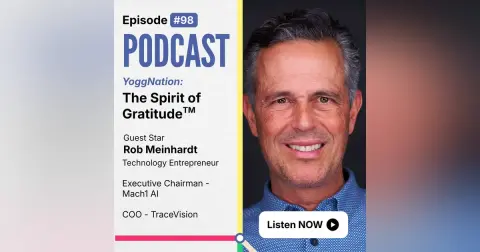
AI is changing the future of work, but how do you stay ahead without getting caught up in the fear? Silicon Valley entrepreneur and venture capitalist Rob Meinhardt joins us to explore how artificial intelligence is reshaping careers, education, and opportunity. He shares his perspective on the coming changes in higher education, the skills worth developing, and why adaptability matters more than ever. We also get into gratitude, meditation, parenting, and how small daily habits can stren...


AI is changing the future of work, but how do you stay ahead without getting caught up in the fear?
Silicon Valley entrepreneur and venture capitalist Rob Meinhardt joins us to explore how artificial intelligence is reshaping careers, education, and opportunity. He shares his perspective on the coming changes in higher education, the skills worth developing, and why adaptability matters more than ever.
We also get into gratitude, meditation, parenting, and how small daily habits can strengthen your mindset when the future feels uncertain.
🧠 What you will learn:
- How AI could reshape jobs and higher education
- Why adaptability and human skills will matter
- How meditation and gratitude build resilience
- How to protect your focus in a world full of distractions
🔑 Key takeaways:
- Don't let fear dictate your next move
- Stay curious and keep building new skills
- Gratitude can change how you handle pressure
- Use technology wisely without losing your humanity
Listen now to Rob Meinhardt on AI, the future of work, gratitude, and staying adaptable through change.
Watch on YouTube or subscribe to YoggNation’s Spirit of Gratitude podcast for more conversations that turn uncertainty into opportunities for growth.
00:00 - Cold Open On Failure Points
00:37 - Welcome And The AI Anxiety
02:27 - Rob’s Silicon Valley Origin Story
04:36 - Balance, Optimism, And Confidence
07:07 - Gratitude For Mundane Daily Wins
09:38 - Marriage And The Whole Package
13:39 - Parenting Standards And Screen Boundaries
19:13 - Designing Culture At Case Networks
20:45 - Michael Dell And Quiet Leadership
27:43 - AI Abundance And College Upheaval
34:55 - Technology, Ethics, And Losing Humanity
37:22 - Stop Running The Fear Program
39:54 - Final Reflections And Farewell
Cold Open On Failure Points
SPEAKER_01Everyone's gonna have failure modes and failure points, and these are the people that we choose to love and be around uh a lot.
SPEAKER_00How important is a college degree in today's AI-driven society?
SPEAKER_01The only balance I had was, you know, was it gonna work more or work more?
SPEAKER_00Don't judge a book by its cover, but judge a person by their character, the way that they treat others, their kindness and empathy.
SPEAKER_01Michael Dow, I think he literally called me, my phone rang on my desk. He's like, hey Rob, you know, I've been doing a lot of research, and I found the best doctor in the world, literally, who's studying this disease, and I I got Mike an appointment to go see him.
Welcome And The AI Anxiety
SPEAKER_00Welcome to the Yoke Nation, the Spirit of Gratitude Podcast. Hello, friends. My name is Joe Gasp Patell. And this podcast explores how adversity shapes success through the lens of gratitude around courage, resilience, appreciate, awareness, and humility. Each week I sit down with high-profile guests who share their wisdom and perspective as we explore personal growth, purpose, and shared value. And hopefully you see a bit of yourself through their storytelling. Join the conversation. I appreciate you tuning in. Finding courage in an uncertain world, artificial intelligence is transforming how we work, how we learn, and how we live. And with that change comes uncertainty. For many, it's the fear of losing a job, becoming professionally irrelevant, or wondering whether the education and skills we've worked so hard to acquire will still matter tomorrow. So, how do we find the courage, citizens, to navigate a future we cannot predict? To help us explore these challenges and opportunities, my next guest is Rob Meinhart, Silicon Valley technology entrepreneur and venture capitalist. Rob co-founded CACE, a technology acquired by Dell, and now has leadership roles as co-founder and executive chairman of Mach 1 AI and chief operating officer of Trace Vision. Beyond his professional accomplishments, Rob is also father of three, navigating perhaps many of the same questions parents and educators alike face today about preparing the next generation for success. And today we'll explore how we navigate these uncertainties, adapt to change, and find opportunity in the adversity we face. And with gratitude, welcome to the podcast, Rob.
SPEAKER_01Hey Yogi, it's great to be here. I've been looking forward to this for about a month, I think, since we scheduled it, but certainly uh over the last week been uh building up to this moment. So happy to be on this podcast with you.
SPEAKER_00Well, thank you. Thank you very much. So, Rob, question. Can
Rob’s Silicon Valley Origin Story
SPEAKER_00you briefly describe your background?
SPEAKER_01Sure, Yogi. Um I was born in San Jose, California. And my, even though that's the heart of Silicon Valley, my parents were not technologist uh per se. My dad worked for General Electric, and my mom was uh, you know, a mother and a wife, and and also held a number of different uh sort of somewhat entrepreneurial jobs in the local area where we lived. Um I was one of those kids that was always uh sneaking around the neighborhood trying to make a buck, mowing lawns or selling things at Christmas time or whatnot. Um and then uh the hustle mentality. I had a little bit of that intrinsic hustle mentality. My mom was very is a very creative type of person, not an artist per se, but like a curious person. So I spent a lot of time as a kid kind of roaming around back in back in those days. You could kind of roam around the countryside in the San Jose area. Now it's a concrete jungle for the most part, but you know, uh catching frogs and polywags and that sort of stuff. And um anyway, I made myself uh I made my way back east for college and and majored in economics. And to me, that was the closest thing to business that the school that I went to offered. And I made my way back to Silicon Valley and and joined into the tech arena initially as a consultant in the go-to-market side of things, the strategy side of things, and later became uh was on the founding team of a few different companies, um, Avant Go and Case Networks. And I was an early investor in some some companies like Altics and Flowcast and Trace Trace and you know, Mach One, et cetera. So I've sort of always been on the entrepreneurial side. Um, never really started my first day of work at a company with more than five or 10 employees. And then from a personal standpoint, you know, I'm I love to stay fit, I love to be with my family. I've got a wife of 30 years and three great kids who are uh college age or just a little bit beyond that. And um, yeah, just uh uh enjoying life is good. Life is good, but still working hard, and those things kind of go hand in glove, I think, a lot of times, as long as you can balance them properly.
Balance, Optimism, And Confidence
SPEAKER_00Right. Well, you and that's a key um word that Jim just mentioned balance. It looks like from the accomplishment, the accomplishments you've had, you certainly have lived your life with gratitude and and living your values.
SPEAKER_01Yeah, I mean, there's kind of two points there, Yogi. I mean, one is around balance, which I would argue for me the the fulcrum of balance has moved around from time to time. Like earlier in my career, there was the only balance I had was, you know, was it gonna work more or work more? Um, and so there was there was just a ton of grinding in there for about 20 years. But as you move progress through life, you obviously uh reorder your priorities with time. And like one notable example would be like having your first child, you know. And I remember uh always finding a way to be uh home and present for my kids during certain hours and things of that nature. But um yeah, the gratitude side of things is I would argue maybe it's a maybe it's a flavor of of optimism. I think a lot of entrepreneurs have an intrinsically optimistic mindset. You have to to go take on something that's sort of dark and uh and misunderstood, like how to build a company from scratch. You have to have a certain degree of optimism that things will work out. Um and so I think I think gratitude oftentimes Is that belief in yourself, or is that or is that part of the definition? I think belief in yourself is a further derivative of it. Um I think that is a big part of it for me, which is that I've I wasn't always really confident. There were times in in in junior high and high school where I think my my best friend's mom gave me the book. I think it might have been something like confidence counts or something like that. Like I think we all were like self-effacing, you know, junior high and high school kids, and and they my our parents wanted us to figure out how to uh have a more positive mindset or a more confident mindset. But yeah, I I think these things are all inter interrelated. Um from a gratitude standpoint, there are I mean, that's a specific area of optimism, I would argue. And it's something that some people have naturally, but I think needs to be cultivated. And I I had I know I'm going on here, and you probably want to ask me a question, but I want to tell you a couple stories about gratitude that are meaningful to me.
SPEAKER_00I can't
Gratitude For Mundane Daily Wins
SPEAKER_00love to hear it.
SPEAKER_01I I can't really remember. I I went through a little bit of a phase maybe four or five years ago where I started meditating more. And I'd never meditated up to that point. And this was maybe just before COVID. And through that process, it's weird how gratitude kind of came to the surface as a mindset for me that hadn't been, I wouldn't say I was ungrateful before, but I don't think I'd made gratitude like a discipline in my life or something that I thought about super deeply. And I remember the first kind of breakthrough I had was just realizing like how many mundane things are worthy of gratitude. And I'll give you a couple of concrete examples, like the fact that the garbage in front of my house gets picked up every week. And if that didn't happen, like what the consequences of that would be. And you start to you look at the consequences of it not being there, then you're like, wow, this is even though this is sort of mundane and part of my regular life, it elevates that the way you can be grateful for it. Um, another example would be like in certain not all streets, but some of the streets near where I live, there's like really awesome landscaping on the street. Um, and I'm like, you just drive by it every day and you don't really pay attention to the flowers or the manicured this or that or whatever. And and it and then when you sort of look at it and you go, wow, if that was just a paved strip of concrete, like my drive would be a lot less enjoyable. Um so those are a couple of of concrete examples where you're like, uh, you know, wow, this this is this is an element of of it's a different change of perspective, I guess. Another one would be like, you know, my kids and colleagues and friends always laugh at Thanksgiving to come to my house because we go around the table and we express our gratitude for different things. And I always express gravit gratitude for my CPAP machine. And you know, I have sleep apnea, and it's this like horrifying machine that you put on top of your face, and it's like a lot of people I know have had to get a CPAP machine, they just talk about how much they hate it, and for me, it's like an element of gratitude because I sleep so much better.
SPEAKER_00Um, so I thought I was I thought you were gonna say my wife is actually has more than gratitude because she can get a good night's rest.
SPEAKER_01Yeah, maybe that's part of it too. But um yeah.
SPEAKER_00Um No, I think what what you just speak of, Rob, is appreciating the little things in life that matter, right? And and and to and to appreciate and to observe.
SPEAKER_01Yeah, I think there's um that's true. And there's also another dimension
Marriage And The Whole Package
SPEAKER_01of it. I don't know if anybody else on one of your podcasts has brought this up, but I realize that like Karen and I have been married 30 years of about a week or two ago, and we have an awesome.
SPEAKER_00Congratulations.
SPEAKER_01Thank you. We have an incredible marriage, and I I love being with her as much as I possibly can. Um, but in any marriage, you have um, you know, you have you have daily ups and downs, and and and you and especially the longer you're in a marriage, you can hit points where you're like, you let criticisms of someone, even if they creep into your mind and you don't express them, you start to see people, you you can slip into inadvertently thinking of them in a negative light or thinking of certain things they do as annoying or whatnot. And that hasn't been the main story arc of our marriage at all. But I would just say that for everyone, that's there. It might be at 5% level, 10% level, 20% level, 50% level, whatever it might be. But I had this epiphany in doing meditation one time, which is like, oh wow, like what I really should be thinking about with my spouse is putting the most positive spin or light on shining on what they're doing. Like I should be rooting for them in such a way that like almost anything they do is spun around into a positive. Obviously, if you're in an abusive relationship or something like that, you know, there's probably limits to where you should be thinking this way. But I think for a lot of things, it's like here's an expression of it. Like, let's say that hypothetically you were married to Tom Brady and you might decide, I don't know Tom Brady, and I don't, I don't know why his marriage fell apart or anything like that. But just hypothetically, let's say that as a mom, you became annoyed that Tom Brady was like too competitive around the household with his kids and with everybody he interacted with. And you think about the possibility of changing Tom Brady to make him less competitive, that makes him not Tom Brady anymore. And so any even things with your spouse that you perceive as annoying, them being gone somehow makes them not that person anymore. And um so I've learned to really savor those every dimension of in this case, we're talking about Karen and my spouse and and what she's like, but it's true of your kids or your colleagues or whatever, you really have to look at everything as a full package, and you can't you can't selectively pull pieces out without changing the whole thing.
SPEAKER_00You know, that's it reminds me of kind of where society's headed today in terms of it's uh you know, it's uh you get pissed off by being annoyed at one single element of a person's full package as opposed to seeing the totality. And yeah, I I I guess what I'm trying to say is is uh you know, don't judge a book by its cover, but judge a person by their character, the way that they treat others, their kindness and empathy. I mean, this goes to myself and wow I perceive myself in the relation I have with with my family, again, being a husband and father of two girls.
SPEAKER_01So I think that's right. I mean, I I when when you were talking about that, you know, I'm thinking, oh, are there cases where that's not true? I mean, it's probably universally true that we should look at everybody and give them the benefit of the doubt and the most positive spin on what they're doing. But obviously, in from a practical standpoint, we choose who we spend time with. And so for sure, at the very minimum for sure, for people whom we elect to spend time with, we should look at them through this lens because everyone's gonna have failure modes and failure points. And these are the people that we choose to love and be around a lot, uh, be they friends or colleagues or family. Um and obviously the further afield from that you go, um, you know, maybe it's harder to do, or maybe there's not as much of a burden of obligation to do that. But obviously the world's a better place, the bigger you can make that circle.
SPEAKER_00Absolutely. I mean,
Parenting Standards And Screen Boundaries
SPEAKER_00is that how you've is that core to your uh parental philosophy of raising your uh three kids with Karen?
SPEAKER_01That's a really good question. Um I don't no, I don't think that has been because I don't think I realize, I mean, maybe if it was, if it was, if it was um an unintended consequence, if you will, like, or a subconscious uh modality of working with and raising children, but I didn't really understand a lot of this stuff till till recently. And honestly, like I'm 58 now, and I would say that like I feel like I've learned more in the last three years than I learned in the prior 55 years, um, just in terms of like just I don't know, being calm and like uh looking more deeply at circumstances and things. Um I think with our children, you know, Karen and I have brought different things to the table. Like she's been a stay-at-home mom, and she's really focused on when they were especially, I mean, really all the way along, teaching them about life, teaching them about how to be as human beings, teaching them knowledge too, like how to read, how to write, how to do math, et cetera. Um I think for both of us, we lead our family by example. Like, you know, our kids just see how we are. Like dad is a certain kind of hard worker or expresses a certain modality of curiosity um or industriousness or whatnot. Um, and so there's the there's I think I think raising children is an is an act of setting an example um and being and and and that just is who you are, but it's also being mindful of that that that everything you do is expressed to them in some way. Like I recently saw somebody at a pool I was at. They were, I would just say slightly demeaning to their wife, not really bad, not horrifying or anything like that. But I'm like, wow, your kids just saw you treat your wife that way. And that's something that is really small, you know, but it's basically at least in this case, it was pretty small, but that accumulates over a very long time to maybe how they'll be with their spouse or how they'll be with other people or whatnot. So I think leading by example is is is is really important in parenting. And I think the other aspect is you have to expect a lot of your kids. That doesn't mean you have to that doesn't mean that you have to um force them to get straight A's or something of that nature, but you know, enforcing behavior, it's and enforcing um rules, you know, and things of that nature, or uh uh areas of expressing their their effort um and not letting them be lazy or or not letting them pull their phones out at the dinner table at night and things of that nature. Those like are all like setting high expectations and and you know, everyone has their own definition of what's acceptable or or what isn't, but and I'm not trying to impart my my or my wife's uh moral expectations on that stuff to anybody else, but you know, you you decide what's gonna be important in your family. And like, for example, with the phone thing, like we never let our kids have the phone at the dinner table, whether at home or at a restaurant, even from a or an iPad or anything like that. Maybe there was one or two really unique circumstances where that happened, but I mean literally one or two in their whole life. And so to this day, like yeah, we sit at dinner and we talk, you know, or or when they were table manners. Yeah, they could they could go to it, they could go to a dinner with all other adults and own they were the only kids and they would be perfectly content to engage in conversation. So yeah, that happens because we made that their only option basically when they were at a dinner.
SPEAKER_00Right. And you know, I'm hoping that if the parents certainly aren't there to teach their children this type of knowledge and wisdom, that they look up to perhaps a mentor, a teacher, uh someone perhaps outside their immediate family to help guide them in terms of what it is like to uh be a responsible uh uh growing up with having a high degree of standards, because there's nothing wrong with having high a high standard. I think that's what promotes excellence and whatever endeavor a child chooses to uh to fulfill.
SPEAKER_01Yeah, I mean you probably know more about this than me, but I'm sure there's some something that's been studied in in academia and research that is, you know, humans are these, you know, we mimic what we see to a large extent. I mean, you can opt in on being something new, um, but obviously you wouldn't even know what that would be unless you'd seen it somewhere else. Maybe that's not apparent, but you've seen it somewhere else on TV. Right. Maybe you've seen it on TV, maybe you've seen it in a neighbor, uh, maybe you've seen it some religious figure or whatnot, but um you've you've seen it somewhere else, what what you choose to be.
SPEAKER_00Yes, true. Well, Rob, I mean, thank you for giving us a window uh in terms of the personal side, which um I never really knew. And again,
Designing Culture At Case Networks
SPEAKER_00for citizens, uh, just a disclaimer, I used to work for Rob at the case before it was acquired by Dell. So Rob uh set a high standard of what it's like to have a fantastic company culture that everyone was thrived, everyone was listened to, and everyone felt supported by their leadership team. And certainly it starts from the top, and that was with you, Rob. So thank you for uh uh the generous years of spending a part of my life working personally and professionally with the organization. So my debt of gratitude to you and the team.
SPEAKER_01That's the highest compliment, Yogi. I really appreciate it. It's great working with you. And um, yeah, it's it's interesting. I've had a lot of people come back and say that Case was one of the greatest companies or the best company they work for from a culture standpoint. And I can't put my finger on that exactly, but my co-founder Marty Kasen and I, we did spend we I remember specifically writing down on a piece of paper with Marty, like we called it a K, our company was called Case Networks with a K, and and there's a word called ethos, and we put a K in front of it. So we called it the Kathos that we wanted to create. And and I don't remember everything that was on that list. I couldn't recreate that for you, but I remember like it was early on that we wrote down, you know, sort of the declaration of independence for for what our company would be like to work for. So there was a fair amount of thought that went into that.
SPEAKER_00Yeah, it was it was fun times for sure. What
Michael Dell And Quiet Leadership
SPEAKER_00was it like meeting Michael Dell for the first time before acquisition?
SPEAKER_01Well, um, I have a lot to say about Michael Dell if anybody wants to hear about it, because I think he's an incredibly extraordinary person and very present in the news today with his uh gift to every child in America, um, which doesn't surprise me at all. But um I can tell you a bunch of really cool stories about him and what he's like. Uh I wouldn't say that we're like homies, like we don't text and call each other every week, but um I do know him and I've spent time with him. You know, the the first time that I met him, the first time I interacted with him at all was I was sitting at a baseball, softball, uh Little League game or something like that. And my I got a LinkedIn message or something, and it it popped up and it it said it was from Michael Dell. And it and we weren't friends on LinkedIn. I didn't know him, I didn't, we weren't at Dell yet. And he said, Hey, you know, Rob, I I've heard a lot about your company from my team, and you know, I just thought I'd connect with you and you know, if you're ever in town, you know, come by and see me. And I immediately um called or texted my co founder Marty and I said, uh, stop, you know, wetting with me. Um and uh And I thought he was, I thought he had spoofed Michael Dell's account. And I thought it was a complete fake message I received or what have you. And then we figured out it was real. And of course, even though I had no plans to go to Austin, I decided to go the very next week and try to meet with him. And yeah, he's a really cool guy. We went to his office. And he's the kind of person, obviously, you know, very powerful, successful human being, very large office, very many gatekeepers and security to get to his office. But he makes you feel comfortable the moment you show up. And yeah, that that was one thing that stood out. I think he, you know, he sat down, we sat down in his private conference room and he brought a piece of paper and he he we talked for a couple, maybe an hour, maybe two, maybe an hour and a half. And he took a ton of notes. You know, a lot of people, you can tell someone's listening intently in a meeting like that. He's taking copious notes on what I'm saying, which is pretty wild.
SPEAKER_00Right.
SPEAKER_01Um, but uh if you fast forward a few years, uh, I'll tell you a couple more personal stories about Michael, which I think are really cool. Um I'll tell you just two of them. One is um, I had a after Dell acquired our company, there was an employee from Dell who joined the case team. I'm not sure if you knew him, Yogi, but his name was Mike Gillette. And Mike uh he ended up coming down with ALS Lutherag's disease, which if anybody's listening knows that's a terminal disease, neuromuscular disease. And um horrible.
SPEAKER_00I've lost a dear friend's father because due to ALS not long ago. It's it's horrifying.
SPEAKER_01Yeah, it's really brutal. Anyway, uh I had become friends with Mike, and when I was in Austin, I would go visit him and his family. I got to know his kids, and I remember he called me one day, I was at dinner, business dinner, and I it was weird for him to call me at nine o'clock Pacific time when it was 11 o'clock his time, and he was he was in tears on the phone, and he told me about his ALS diagnosis. And um the next within the next week or so, I I called Michael Dell and I said, Hey, I I think I texted him. I think I must have texted him, not called him, but basically I just said, Hey, this guy Mike's been at Dell for 17 years or however many years he had been there, and this has happened to his family. Like, we need I really want to do something for him. I want to, I want to, I said, I'm willing to pay to send his family on vacation together so they can enjoy time before this disease really takes grip of his lifestyle. Um, would you be willing to to kick in some free rooms at the four seasons in in Hawaii, which he owned? And he jumped all over that. He's like, absolutely, you know, uh, and that's one thing, you know, which is pretty cool. But what's even cooler is about a month later, um, Michael Dal, I think he literally called me. My phone rang on my desk. He's like, hey Rob, you know, I've been doing a lot of research, and I found the best doctor in in the world, literally, who's studying this disease. And I I got Mike an appointment to go see him, you know. Um, and and so then we, you know, he went off and set that up. But that that was the kind of guy that that Michael was that he like kind of took that little bone and held it in his mouth and worked on it for a month or so and got something pretty awesome, awesome to happen.
SPEAKER_00Um with all the responsibilities uh Michael Dale carries and the shareholders and the stakeholders, and for him to zone in on this one moment in time speaks volumes to, I guess, to his humbleness.
SPEAKER_01Um yeah, his it's a very, it's a very human moment, obviously, that yeah, yeah, that he did. Um yeah, I have a I have a I know I told told you I'd only tell you um two examples, but and and maybe I'll keep it to that. But another another example, um I I'd like to tell you two more. One is there was a there was a I keep blanking on his name right now, but he worked at Case also, and he was a um, what do you call it when you work for the military, but you're like a you know, you're kind of like a weekend worrier, you're in the reserves.
SPEAKER_00Oh, like a reservist, yes.
SPEAKER_01Yeah, yeah. So this guy was in the reserves and he'd been in the reserves for like 15 years, and he was re-upping his reserves commitment. And um this guy calls me up. He's like, hey, you know, I'm having this ceremony to re-up my reserves for another five years or whatever it was, and it's it's a ceremony. I I I I heard that Michael Dell's gonna be in town. Do you think you could call him and see if he'd come to my ceremony? And it and at first I was like, honestly, I was thinking, this is insane. I'm not gonna call Michael Dell. I'm like this, he's not gonna go to this, like this little wonky little ceremony. But I decided, you know, what the hell? Let me make I'll let him make that decision. That's not for me to make that decision. He can decide for himself if he wants to do it. So I reached out to his secretary um and I said, Hey, um, I think her name was Stephanie at the time. I'm like, hey, this is going on, you know, Michael's gonna be in town. Would would he want to go to this thing? And she got right back to me like 30 minutes later. It's like, yeah, he's gonna be there. Where is it? Yada, yada, yada. And he he actually went to it. It was a ceremony with like maybe at most 20 people at it.
SPEAKER_00I rem I know this reservist. I think his first name was Jeff, if I'm not mistaken. I think that's right.
SPEAKER_01I think that's right. Yeah. And I feel bad, Jeff, if I forgot your name on this podcast.
SPEAKER_00But like you or for you, he'd also experienced a lot of adversity as he built Dell up, which kind of brings me to my next subject, Rob, and that is, you know, with AI, right, transitioning now to more or less how AI creates opportunities. Where do
AI Abundance And College Upheaval
SPEAKER_00you see that happening and where does it, where does AI generally concern you?
SPEAKER_01I mean, that's the million-dollar question. And honestly, when I see other podcasts or hear people talk and I hear a lot of smart answers, I'm like, wow, that is a really smart answer, really insightful. And um, so I I worry a little bit about this question you're asking me that I'm gonna sound like a doofus or not really know my stuff. And I think, you know, ultimately nobody really knows where where this train is leading, but I do have a few things I'd like to say, which um, you know, I was reading this book. I have I have a few points, but I'll start off with this. I was reading this book that's called The Singularity is Nearer, and it talks about how humans and computers that they're fusing together in some ways. You know, you see that at a high level, like some ways, like Chat GPT at the simplest level is like completing thoughts for us. And you can look at things like Neuralink, where you're literally embedding computers into your body, potentially in some cases. Um, in a more stone age sense, you can have a prosthetic of some kind. But as these, as as the computer merges with the mind and the body, are are we actually becoming some sort of new species? Like, are we we're no longer Homo sapiens or something else or Homo erectus, whatever we are in the I've probably failed in my uh evolutionary science, but you know, whatever that next uh step is, are we on the cuss of becoming that? Is is I think one interesting lens to look through things. You know, I'm I think that you can run, you can run your brain in some ways is like an operating system, and you can run whatever program in that computer or operating system that you want. And and so you can run a program of optimism, you can run a program of pessimism, um, you can run a program of hate, you can run a program of love, you can run a program of curiosity, what have you. And none of these programs maybe really change the hard facts around you in terms of what's actually going to unfold or what's going to happen. But I do think mindset and the program you're running matters a lot. I'm I'm an optimist at heart, and you know, I love seeing cartoons like, you know, the caveman who's sitting there with a wheel and he's got a hammer about to smash. He's like, I just think this is going to take away too many jobs, you know? And um, you know, I think I think that at the end of the day, I think it's Elon who talks about the age of abundance, or maybe he got it from somebody else. But I'm kind of a believer in the age of abundance. And I think we're on the cusp of something really incredible as a as a species. Um now, might there be I'm an economist, right? So you look at like how do things settle out over the long period, the long haul, and those things will generally resolve themselves. Where I think humans have an intrinsic ability to find productive things to do in the short term. Are there disruptions that hurt people? I think there most certainly are, and most certainly will be. But I think that there are a few I'd like to characterize this discussion by two other points I'd like to make. One is I don't know why this struck me, this is kind of a negative or dark example, but everybody knows what fentanyl is, right?
SPEAKER_00Sadly, yes.
SPEAKER_01And there are two types of people that use fentanyl. There's people on the street who use fentanyl and they pretty much destroy their lives, and there's doctors who use fentanyl and they use it to save lives.
SPEAKER_00How important is a college degree in today's AI-driven society? And number two, what would you tell someone who's afraid that AI will take their job? Because it ultimately boils down to economic security for themselves or for their family.
SPEAKER_01Yeah, I think on the first point, this may be controversial, but I think college education is going through a at the very minimum, a complete upheaval and and and and and reconstituting of itself over the next, I don't know if that's five years, ten years, or fifty years, but I think that higher education in the sense of college is going to change radically. And I think to a large extent, might go away. Um I don't think that it is. I mean, this is not just strictly speaking related to AI, but I think colleges have priced themselves out of like even the richest people can barely afford to send their kids to college. And you combine that with the idea that you know Elon talks about, you can start, you can start, you can learn everything you need to know to start SpaceX in a in your local library. So basically the information is out there and it can be delivered to you in AI to do pretty much anything. And we're still working in academic constructs that are you know thousands of years old. And and there's good in that too. But I just think that college, if I was a betting man, I think I think college will compress down to like a two-year experience over time instead of a four-year experience for like hopefully they teach the creative side of how to think.
SPEAKER_00I love that.
SPEAKER_01I mean, my daughter was just asking me about classes she's gonna be taking. I said, make sure you take the creative ones, like art, literally. Um, so yeah, I think that um on the on the on the job front, you know, it would be a head in the sand point of view to say that certain jobs won't be eliminated or changed. For example, do I think that people will be driving Ubers for the most part, you know, five years from now? I think almost certainly not. But I do think technologies are huge enablers for all sorts of things that are really hard to imagine at this point in time. Even Uber itself, for example, didn't exist 15 years ago. And look at how many people are employed by that today. Right. So I don't, I can't, I'm not clairvoyant. I can't tell you exactly that these hundred thousand people are going to migrate from this job to this other job, but I think in an age of optimism that there will be these opportunities. I also think that these technologies are societally coming to us at just the appropriate time. If you look at population decline in the United States and most developing countries, it's going to be severe over the course of one to two generations. I think I read an article recently that South Korea within two generations will have something like 10% the number of people it has today. Um, and the implications of that are are absolutely insane when you think about it, like in terms of like food production, healthcare, manufacturing, um, uh medicine, all that stuff is if you have population decline, how are we gonna how how are we gonna like you know work, how are we gonna have enough people to do all things we need them to do? And so I think the more we can offload and automate things, it's probably um it's it's probably I do believe it's going to create an explosion of wealth over time and prosperity and access that wasn't available before. And so I don't I don't know how to decompose all of that, like population decline, AI stuff, all these different things.
Technology, Ethics, And Losing Humanity
SPEAKER_00But um Do you think AI will help us lose our humanity?
SPEAKER_01Well, I think to a large extent, technology is doing that in some ways and and not others. I mean, I'm I think you could make an argument that two of the most destructive people to all of mankind up to this point are Steve Jobs and Mark Zuckerberg. I'm not trying to cast hate on them, but the fact that I let a phone own my life, or that my kids let a phone own their lives, or that I'm willing to stand behind a phone and jump on uh Instagram and you know, hate message somebody. I mean, those are all really bad things for society. Those same devices and services aren't all bad. They create a lot of good as well. Um but my main point I'm trying to, my point I'm trying to make is not that those individuals are evil or that they intentionally did something evil, but more so that technology can be used for good or evil. And that was like kind of the original point we started with um around um the fentanyl example, for example, you know, like you could use it for good or you or you can or you can use it for for evil, specifically around humanity. Um there was the Pope just released some kind of encyclical on artificial intelligence and the importance of making it work for humanity. And I haven't I've read portions of it, so I haven't read the whole thing, and I can't really speak to everything that's in there, but I think that there are people obviously in in the world who are trying to spotlight this human element and how we preserve humanity in a world that is where computers can think. I mean, you can argue uh are they are they sentient or not? Um these are other types of more philosophical discussions, but um yeah, I think it I think it's a reasonable question. Like, you know, how does AI affect the the human form and how humans interact with each other? And yeah, I don't know if I have deep thought on that beyond what I just told you.
SPEAKER_00And again, like you mentioned, it'll just play itself out over time. And and I guess that's what scares a lot of people. Again, that's where, as I mentioned before, there's a lot of anxiety anxiety and and uh and fear about the future of the unknown.
Stop Running The Fear Program
SPEAKER_00So, what would you tell a person that is worried about, you know, perhaps the future? What would you tell them as we conclude this amazing uh conversation, Rob, about your thoughts on AI, your spirit of gratitude, and some of the things that you shared about uh Mr. Dell?
SPEAKER_01I would just say that, I mean, honestly, maybe this sounds trite, is I wouldn't run the fear program in your head. I mean, maybe there's things to be afraid of, but you know, I think if you're running the fear program in your head, then those things start to consume you and they become in some ways like self-fulfilling. You know, for example, if yeah, I don't I don't know, I don't know, like a really good example. I mean, maybe the one that jumps to mind is like, you know, deer in the headlights as a metaphor. It's like if you're you know, if you're a deer on a dark road and those lights are coming for you, you you don't stand on the road and just stare at and say, well, I'm scared of this car hitting me. You you get out of the way or you take some action. And we all have agency. Um so yeah, I think that there are there are pitfalls and opportunities in any kind of societal and technical change uh that's going on. And even when you're trying to, you know, play that game of useless scares, you might you might end up in that wrong chair, and that can be hurtful or difficult or challenging. But we all have agency. We have uh I think humankind is definitionally resilient, and um it is.
SPEAKER_00And so that's one of the core that's one of the five core pillars about the podcast, right? Again, it's uh these certainly the theme is how adversity shapes success with lens of gratitude around five core pillars that I believe most people can relate to, and that is courage, resilience, appreciation, awareness, and humility.
SPEAKER_01Yeah, I think resilience is uh is uh like physics, you know, it's like a it's like a it's a it's a reality of human consciousness, and we have different degrees of resilience, and I think humankind as a as a collection of people is highly resilient. Now there's people that uh obviously are more or less so in that way.
SPEAKER_00Absolutely. And Rob, this has been an incredible episode. Thanks again for as I mentioned before, not only what you covered earlier, but I think the vulnerability and uh of what you just shared about your personal upbringing and how that's led you to become the person you are today. I'll give you the final word, Rob.
Final Reflections And Farewell
SPEAKER_00Is there anything that I missed on this topic of gratitude, the five core pillars that you would like to share to the audience of listeners, the who I call the citizens of Yoge Nation?
SPEAKER_01Well, Yogi, the only thing that I'd like to add is how proud I am of you and how grateful I am for what you're doing, because honestly, I think the role you play with this podcast is incredible. And the story I know that all your listeners know about kind of why you started this and why you've committed your life to this is really awesome. And I'm just, yeah, I just think it's so cool.
SPEAKER_00And citizens, I did not pay Rob for him to say that.
SPEAKER_01Absolutely not. No, and I because I know the struggles that you've had uh in your life, but also when you do something entrepreneurial like this and you put yourself out there, there's um, you know, the opportunity to embarrass yourself. There's the either because of what you say or because of how successful or not successful it is, or other lenses through which you could look at it. But there's financial hardship, there's all kinds of things that go along with it. And I just think it's an incredible mission that you're on.
SPEAKER_00And um, I'm really But I think Rob, you and I share the same train that is it's it starts with vision.
SPEAKER_01I think so. And it's I guess it's really it's really cool. It's really cool to see someone take that risk. And in the type of work that you're in, you know, the type of work I was in, you know, you could fundraise with a VC and you could pad your bank account, and yeah, there's there's stresses, and we bootstrap for two years with no funding. So I guess that's the parallel before we raise money, you know. But I think what people need to understand is that you're making a personal and professional sacrifice to put this into motion. And um I think it will bear all sorts of fruit for society and for you over time. But these are huge, huge sacrifices that people do in, you know, you're in podcasts, but be it in podcasting or education or other areas that are that are really out there helping people in this case um think about mindset and and gratitude is is probably one of the most powerful things that you could do.
SPEAKER_00That certainly means a lot. And especially coming from you because of, I guess, for lack of a better term, the transformation you've experienced through meditation and what gratitude has has taught you over the course of these past couple of years. So thank you, Rob. Really uh gosh, that's uh the the heart war feels warm and fuzzy as it was when you talked about gratitude early on. Rob, thank you again for coming on the Yog Nation Spirit of Gratitude podcast. And good luck to uh to you.
SPEAKER_01Let's go, Yoge Nation. We're loving it.
SPEAKER_00That's the real cut. All right, you're gonna be. Thanks again, Rob.