Winning Isn’t the Goal — Here’s What Great Coaches Teach
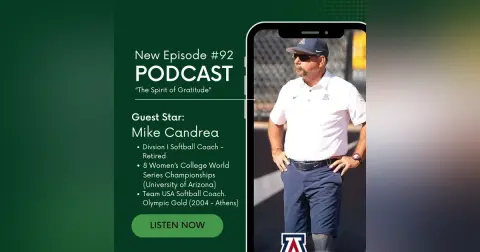
Championship teams are built long before they ever step onto the field. Coach Mike Candrea, one of the most accomplished leaders in Division I sports and a longtime force behind University of Arizona softball and Team USA, shares what it really takes to build a championship culture. From an elbow injury that changed his career to growing softball into a nationally recognized sport, Coach Candrea explains why relationships, trust, character, and consistency matter most. He also opens up about ...


Championship teams are built long before they ever step onto the field.
Coach Mike Candrea, one of the most accomplished leaders in Division I sports and a longtime force behind University of Arizona softball and Team USA, shares what it really takes to build a championship culture. From an elbow injury that changed his career to growing softball into a nationally recognized sport, Coach Candrea explains why relationships, trust, character, and consistency matter most.
He also opens up about mental health in youth sports, social media pressure, failure, grief, faith, and finding balance beyond winning.
🧠 What you will learn:
- How trust and relationships build stronger teams
- Why culture starts with character and accountability
- How to handle pressure and control the controllables
- Why failing forward builds resilience
🔑 Key takeaways:
- Coach the person first, then the athlete
- Focus on what you can control
- Strong cultures make tough conversations easier
- Success is about growth, balance, and impact
Listen now to Coach Mike Candrea on leadership, coaching, resilience, and building championship teams.
Watch on YouTube or subscribe to YoggNation’s Spirit of Gratitude podcast for more conversations that turn real experiences into practical lessons for growth.
00:00 - Relationships And Daily Improvement
00:35 - Welcome And Coach Introduction
02:22 - From Baseball Setback To Coaching
09:10 - Building Arizona Softball From Scratch
17:20 - Culture, Accountability, And Leadership
25:05 - Failure, Anxiety, And Staying Present
33:10 - Grief, Faith, And Life Balance
39:15 - Coaching Differences And Final Gratitude
Relationships And Daily Improvement
SPEAKER_02Building relationships is kind of the foundation. If you're going to be a leader, you have to know your people. Athletics is a great venue to teach people how to be successful. I think we all have a choice when we get up in the morning. You know, we can go through the motions and do something, or we can actually be where our feet are and focus on trying to get 1% better every day. When you're coaching young kids, I think the most important thing is enjoyment. Are you teaching your the kids to enjoy what they're doing? Because if they don't enjoy it, they're not going to do it. Men have to play good to feel good. Women have to feel good to play good.
Welcome And Coach Introduction
SPEAKER_00Welcome to the Yog Nation, the Spread of Gratitude podcast on the OneTegration platform. Hello, friends. My name is Yogesh Patel, and this podcast explores the themes of bullying, self-awareness, and the power of our inner spirit, including the silent battles we all face. Join me every week as I invite high-profile guests as we explore how adversity shapes us, how gratitude lifts us, and how we can all uncover the inner strength that we all have within ourselves. Join the conversation. I appreciate you listening in.
SPEAKER_01And my next guest is quite simply one of the greatest coaches in the history of Division I college sports. Throughout his 38 years of coaching women's softball, Coach Mike Kendrea amassed a 79.3 career winning percentage, leading the University of Arizona Wildcats to eight women's college World Series championships with over 1,600 career victories. To put that in perspective, citizens, legendary men's basketball coach Mike Cheshewski had a 78.5 winning percentage during his tenure at Duke University. And for those that follow the Olympics, Coach Kondrea also led team USA softball to Golden Athens in 2004 and silver in Beijing in 2008. Simply quite impressive. But today we go beyond the wins in championships to explore how adversity can shape success through character, attitude, and discipline. We talk about the unexpected path that led him from dreams of playing professional baseball into coaching, the philosophy and leadership style he developed over decades, and why coaching the person becomes just as important as coaching the athlete, as we explore the growing mental health challenges facing young athletes today. And with gratitude, it is my honor and distinction to welcome you to the podcast, Coach Kondrea. Great to be with you. Likewise, sir, likewise.
From Baseball Setback To Coaching
SPEAKER_01Well, a curious inquiring minds want to know how did you get into coaching as you had aspirations to play MLB?
SPEAKER_02Well, that's a great question. You know, um, I think as a young young man, I was in love with the bat and ball game. And so every moment that I had, I was always playing wiffle ball or playing pickle or doing anything that young kids do, and um just fell in love with the game and then later on um really was became a student of the game and and really kind of fell in love with coaching, you know. Um my career ended um abruptly with uh a surgery on my elbow, um, what they consider Tommy John surgery today, but they didn't name it after Mike Andreas. So I missed that that boat. But um I I knew right then and there that um if I couldn't play the game, um, that I wanted to continue to coach and influence young people um to pursue their goals and their dreams. Um and it just so happened that I got offered the opportunity to start coaching at a very young age. I was um just out of college, um, first year 1976, coaching um men's baseball at Central Arizona College, and we won a national championship my first year, and I thought, well, heck, this is pretty easy. I can get used to it.
SPEAKER_01And you were only 21, correct? Or 22? I was young, yes.
SPEAKER_02Yes. I was that's crazy.
SPEAKER_01Yeah, very, very young, but very blessed, you know, to have a well going back to the Tommy John surgery that uh ended your career as a prospect in MLB. How did you deal with that setback? Or it wasn't really a setback?
SPEAKER_02Well, it was a setback because you know, I to be a major league baseball player, um, you know, you have to be highly skilled, you have to be a little bit lucky. Um back then, when I was growing up, they had two drafts. They had a January draft and a June draft. And um through high school, I you know, I was a good player, I wouldn't say a great player, but I became a student of the game, which was probably my blessing because um I would outwork you, you know, and I knew the game, and that ended up being um the doors that opened for me to follow my career in coaching. Right. And so I started coaching baseball, and then um the AD came into my office one day and said, Mike, I need your help. And this is after about five years of coaching baseball. And I said, uh it was George Young, and ironically, George was a four-time Olympian, uh, won the bronze medal in Mexico City. Um, never ever dreamed that I would ever be in the Olympic arena, but um, you know, the game took me that way. But um he said, I need your help. And I go, well, what's that? He goes, I need you to coach the women's softball team. And I said, George, I don't want to coach women. Right. You know, and and I definitely don't want to coach softball because I knew nothing about it. Um, but I said I'll try it because it gave me a chance to call the shots and find out what I could do as a head coach. And after the first year, um I realized that if I could find a pitcher, that I could probably win this thing, and I went out and recruited a pitcher named Connie Clark. Um later on, she was the first head coach at the University of Texas. Uh very accomplished player, um, ended up playing at Cal State Fullerton after Central Arizona College for two years, won back-to-back championships, and then I went on to Arizona, and that was kind of when it all started.
SPEAKER_01This was during an era where men really didn't coach women's athletics, especially in the Pac-10 at the time, correct?
SPEAKER_02Absolutely correct. I think at that time there were like maybe five male coaches in the country. Um, never thought that I would get the opportunity because you know, Title IX had just come in to play, and the women were really trying to protect their territory. They thought that women should coach women, you know, and men should coach men. But um fortunately, um, Cedric Dempsey, who was our athletic director at Arizona at the time, um, gave me an opportunity, you know, to take a program that was, I wouldn't say bad, but they weren't great. Um, and um back then it was you know a step above rec ball. I mean, I remember the first day going to practice, and I, you know, there's a bunch of people on the field, and I go, hey, I got practice at 2.30. And the guy goes, Well, you're gonna have to wait till the PE class gets off the field because we have this field too. And so I shared a field with the physical education department, um, a very, very um recreational looking field, but for me it was an opportunity. You know, I didn't really care. I really wanted to, if I was gonna coach at that level, um, Arizona was a good place to start. And um, so I started, I had a vision. I started the program, and in 91 we won our first national championship. And then um uh I had the blessing of a young man coming in my office and said, Mike, I want to help you. What can I do? And I says, Well, what do you have in mind? He goes, Well, what do you have in mind? I go, Well, here's a napkin with a drawing of a stadium that I had drawn um on my way back from Oklahoma City. And I said, I really believe that if we build this stadium that we could put people in the seat. This is like Field of Dreams, build it and they will come. Absolutely, you know, and this is this was like in uh 1993, right? And um and so Bill Helen Brand um went home and thought about it for a little bit, came back and said, I want to help, and here's a check. Wrote me a check for $1.5 million, and we built the very first softball field of its kind for women's softball. And that was kind of the beginning of everything, you know. Um, and sure enough, we built the stadium, we started drawing people. Um, the the Tucson community got behind us, and next thing you know, we're averaging 2,000 to 2,500 people every game, and it became an event. And um, you know, the 90s were very good to me because we won it in 91, we finished second at 92, won at 93, won at 94, second at 95, won at 96, one at 97. So people started really jumping on the bandwagon and going, you know what, this is fun. And um softball started booming, you know. I mean, I remember in in 91 we had one game on TV, and then by the time 1996 came around, they were televising lots of games. And so young kids, yeah, young kids had a chance to watch people play the game. And um, you know, the the sport started growing, and I I always go back to '96, the first Olympic Games that softball was in in Atlanta. Um when ESPN covered that, that was kind of the shot
Building Arizona Softball From Scratch
SPEAKER_02in the arm where the the sport really boomed after that. Every kid wanted to grow up and be a an Olympic player, you know, and a softball player at the college level. And um so, you know, I was lucky to be able to not only be involved with the game, but actually to be able to watch it grow from the infant stages to where it is.
SPEAKER_01And I remember, in fact, I must have met you when I was probably 2021 at the time at the University of Arizona, or excuse me, University of Washington Go Huskies. I remember Arizona playing Washington UW, and uh, you know, little did I know all these years later, I would have you on the podcast. So it was kind of a surreal moment for me. Um that's an and we were highly ranked as well. But uh well.
SPEAKER_02Yes, you were. Teresa Wilson, uh good friend of mine, did a heck of a job developing that program. And you know, the Pac-10 back then it was a Pac-10, Pac-12 now. Um now we're in the Big 12, but um, that was a place to be. I mean, we had the the softball, yeah, yeah, it was softball heavy, you know, from UCLA in Arizona to Cal to Stanford to Oregon to Oregon State to Washington. The good old days. You know, it was a gauntlet to go through. Yeah, it was a gauntlet to go through, but it prepared us for um the World Series, that's for sure.
SPEAKER_01Well, curious, speaking of World Series, I mean, what was your personality and leadership style like as a as a coach?
SPEAKER_02Well, if I go back, I think my strength was um relationship building. You know, I always felt like building relationships is kind of the foundation. If you're gonna be a leader, um you have to know your people. And um, you know, the one thing that people always ask is how did how do you have tough discussions? Well, it's hard to have a tough discussion with someone if you don't have a relationship. So I think that was my foundation was building a relationship. And then um, you know, I I think I was a good motivator. Um, I had very high expectations um because I wanted to win championships. So when people came to Arizona, they knew that there was going to be a high demand on doing things the right way and treating people the right way. So I think if you look at my leadership, you know, I I definitely held people accountable. I definitely treated them with um mutual respect and honesty and compassion. Um and then I wanted them to enjoy the process. I wanted them to enjoy the moment because I knew that they weren't going to play softball the rest of their life. And so softball was kind of a platform for me to teach life lessons, to get them ready for life after softball. And I think athletics is a great venue to teach people how to be successful. Right. And how to be successful in a team environment. And if you think about life, you know, you have to handle adversity every day. We all do. Um, you have to handle failure every day, and I can't think of a better place or a better arena to teach those lessons than on a softball field or an athletic field.
SPEAKER_01Taking a step back though, I mean, I think one of the qualities you also bring, have to bring as a skipper for a team is that intuition, right? Learning, knowing when to, you know, perhaps get a pitcher out of the mound to install a new pitcher or make a replacement in the outfield. So where does how did you develop that intuition to be a successful uh winning coach?
SPEAKER_02Yeah, I think that goes back to relationships, getting to know the person, you know. So if you know the person, then you know which buttons to press. If if you don't know the person, you don't know the buttons to press. Therefore, you know, you have doubts all the time as a skipper as to am I making the right decision? Am I putting this kid in the right situation to be successful? Um, and to me, I really always came down to I I had a thing that you know I have to coach the person first, and then the athlete will come out. Yeah, tell me more about that. That's that's interesting. Well, I yeah, when I when I first started coaching, I'd go out and find the most skilled player, but then I wouldn't look at the intangibles. I I I would not know um, you know, whether this kid was struggling today or not, um, whether they were enjoying what they were doing or not, until I really spent time and energy learning more about the person. You know, so the first thing I did is I always went to the home before I recruited a kid. I wanted to see what their parents were like, I wanted to see how they treated their parents, because if they didn't treat their parents well, they weren't gonna treat me well and they weren't gonna treat their teammates well. So sometimes that was kind of the end of the decision-making process. But I thought that was very, very important that um you could feel the character of a person by the house and the parents. And so to me, I I never did recruit a kid unless I went to their home. Yeah, you know, and then I was always looking for kids that were high character. Um, you know, kind of steal something from my my athletic director, Desiree. You know, she she says when she's looking for people, she wants high output, high energy, low drama. Well, if you think about coaching women, that's a pretty good solution to picking the right people. I wanted people that were high character, but I also wanted them to be a huge part of our team, so they had to be a good teammate. Right? I don't care how good you are, but if you if you can't step back and be a good teammate, support the person to your right and to your left, then we may win as an individual, but we're not gonna win as a team. And in teams win championships.
SPEAKER_01Going back to your philosophy of high output, does that mean having results uh oriented approach, or is it the process when you when you speak of the output?
SPEAKER_02Well, I think it's a process, but I think are you willing to prepare yourself each day for success? I think we all have a choice when we get up in the morning. Right. You know, we can go through the motions and do something, or we can actually be where our feet are and focus on trying to get one percent better every day. And that was kind of my thing is if I can get your number one, if I can get kids to understand to control the controllable. So what are the controllables? Your attitude, your effort, and for me it was your focus. When you come to practice, are you focused to get better that day, or your is your mind somewhere else? You know, and and so I think that's a big part of the solution dealing with young kids is having them control the things they can control. There's a lot of things we can't control. So don't worry about those things. But the things you have control of, are you willing to put the time and the energy and the effort into preparing yourself to be successful? Because when you look at a successful athlete, it just doesn't happen. You know, some people say, well, you're born as an athlete. Well, you're not really, you're born with the skills, but you still have to work at the process each and every day to be able to handle film.
SPEAKER_01But isn't this coaching principle universal amongst all coaches, whether you're coaching Pop Warner to should be.
SPEAKER_02Yeah, it should be. But it's not absolutely. I think when you're coaching Pop Warner, when you're coaching young kids, I think the most important thing is enjoyment. Are you teaching your the kids to enjoy what they're doing? Because if they don't enjoy it, they're not gonna do it. Yeah. Okay. The other thing is I found is developing their skill set to the highest level. So I wanted to be good at teaching the game because the best the more information I have to give to my players, the better they're gonna be. Therefore, the more confident they're gonna be, because every kid is confident in the things they like to do and that they're good at. So my job as a coach is to make them good at the game of softball so that they enjoy it and they want to play it. You know, and so to me that that was a big part of the the piece of the pie is
Culture, Accountability, And Leadership
SPEAKER_02number one is developing their skill set, but also making sure that they're enjoying the process, that they know that it's it's gonna be a marathon, not a spring.
SPEAKER_01Well, the process is competing at the highest level. So I'm just wondering, and thinking out loud, having having your the players be held to high standards and accountability, did you ever have to I wouldn't say chew out the player, but I'm sure you chewed out some of the officials when they called uh a bad a bad player.
SPEAKER_02Well, yeah, I'm I'm sure I did, you know, a time or two. But I I think a big part of it is is holding them accountable. But here's the here's the key is having a culture where they hold each other accountable. Okay. That's different. It's one thing for me to have to hold them accountable every day, but it's another thing when they are self-policing themselves that they're holding each other accountable. Right. And to me, that's the beauty of great teams. Great teams have great teammates, um, great teams have high standards, but great teams hold each other accountable.
SPEAKER_01Yeah, and I guess this is a universal uh that can apply to in when you're working for a company or even uh raising your family. Um you know, the the sacrifices that are involved in becoming great, and it's not easy.
SPEAKER_02It's hard work and it's not easy. And and you have to learn how to do the hard better than others because every day is going to be a challenge. Yeah you know, and so I think a lot of it too is is the mindset that you have to develop, especially when you're playing a game like softball or even in life. You can learn from failure. In fact, sometimes you learn more from failure than you learn from success. And so the key is to get young kids to be able to fail forward instead of being their worst enemy because they internalize failure. And I try to look at failure as part of the process.
SPEAKER_01Is that part of why young athletes today have more anxiety than they did perhaps 20, 30 years ago, or is it a different element that you see today?
SPEAKER_02I think I think you're spot on. And I think the thing is, is when I was a young kid, no one knew that I was struggling because it wasn't in the paper. It I didn't have to deal with social media, you know, and and all the things, all the distractions that kids have today, you know, they are um people are more aware of what they're doing. Right. You know, kids today get on social media and they want to tell people what they're doing all the time. Well, that's great, but on the other hand, it as an athlete, it can be very tough because people can take pot shots at you and you don't know who they are.
SPEAKER_01Well, not only that, it's it becomes a 24 by seven cycle as well. Absolutely.
SPEAKER_02It's it's really yeah, I I think the the mental part of the the anxiety and the and the the mental grief that our kids are going through today, much of it is it can be self-inflicted, but most of it is inflicted by the distractions that are built in our society today. So, how do you coach that? Um you try to get them to stay in the present moment. You try to get them to focus on what they can control, you try to get them to understand failure and how to how to fail forward and to stay positive, and to understand how tough it's gonna be because when you get into life, there's gonna be a lot of curveballs thrown at you. Right and so this is a lesson that we're learning. This is preparing you for something bigger than this game. You know, this is talking about life and understanding that life is not always fair. Yeah you know, I I mean I've been through my ups and downs, and I'm sure you have too. Oh yeah, yeah. And for young young kids, those ups and downs become very steep. Whereas we grow older and have more experience, it looks like this. Right. Which is a little bit different. Okay, because we've learned how to handle it. And you can't teach experience, so the more experience you have, probably the more tough situations you've been through in life. Sure. And the the easier it is for you to navigate through those tough decisions.
SPEAKER_01And I guess it's one thing to listen to your wisdom, but it's not it's another to internalize it. Again, kind of going back to you know, the mental health challenges that young athletes face today. I mean, we even see it in in the professional rankings, uh, in professional sports. Like Naomi Osaka, who's very vocal about her mental health being a professional tennis player. And so I think for me, what I'm inferring from this, sir, is that uh there are leaders that you can look up to to say, I see you and me, or I see myself and in in the situation that would help calm that individual down that is perhaps a little anxious.
SPEAKER_02Yeah, and a lot of that is is how how do you treat people? You know, um leaders, you know, like we we talk about leaders. I I I always I never had a captain, but I had lots of leaders, and the the leaders weren't always my best players. And that's a whole nother topic. Do your leadership.
SPEAKER_01A lot of seems counterintuitive.
SPEAKER_02And I say no, they don't, because I need different types of leaders in my culture. I need people that are vocal leaders, I need people that are pat you on the back leaders, I need people that are the moms, you know, I need people that um just do it, set examples. I mean, there's many ways you can lead, and I think sometimes the worst thing you can do in a culture is appoint people because of their talent. Because some of those talented people don't want to lead. They want to lead themselves, but they don't want to lead others. And to me, to be a leader, you have to have you have to you have to embrace the opportunity to help other people and to put yourself in their shoes in every situation that comes up. And to ask a young kid to do that is pretty tough.
SPEAKER_01Well, that seems more stressful as well. Absolutely. And how did you how did you coach these leaders as you develop their talents?
SPEAKER_02Well, you well, many of them, um, number one is identifying what are their strengths. So I think going back to that personal relationship, sure, you know, what what are your strengths? What are your weaknesses? I don't want to put you in a situation where we're using your weaknesses. I want you to be able to use your strengths. So I think identifying number one, what type of person am I, what type of leader would I be? You know, and then give them the tools to be able to lead, and then it's up to them as to how they use those tools. And I think we spent a lot of time giving young kids opportunities to learn how important it is to be able to have conversations and with their teammates, tough conversations with their teammates, you know, taking care of one another, so that the thing about leadership is it's 24-7. Young kids sometimes want to turn it on, turn it off. When they're having a good game, they want to be a leader. But when they're having a bad game, they internalize, they want to go hide, they want to take themselves away from it. And so to be a leader, you can't do that. I mean, I think a lot of times it's not what what I said to people, it's how
Failure, Anxiety, And Staying Present
SPEAKER_02it's what I did. Or how you make them looking feeling or how you make them feel, or how you react to bad situations. Sure. You know, yeah, because I think I think leaders are are I think coaches kind of set the example, you would hope. And if you have a coach that is well-rounded, that that likes themselves, that understands people, then they're not gonna put those kids through the highs and lows that they're putting themselves through. When the leader's doing that, that's when you have problems.
SPEAKER_01Right.
SPEAKER_02So I always go I always go back to you know, if you're looking at your team, why things are not working well, the first thing you gotta look at is yourself. What kind of message are you giving each and every day? You know, if you expect them to bring energy, then you better bring energy too. If you expect them to stay positive, then you have to stay positive.
SPEAKER_01Right. Well, and on that note Yeah, and on that note, speaking of being positive, I think this is where the team helped you, specifically what I'm referring to is the uh Beijing Olympics, where you know, again, you had an angel looking above uh from the Athens Olympics, yeah. Yeah, yeah. I'm sorry, not Beijing, but Athens, yes. No, 2004, yeah.
SPEAKER_022004 was a highlight of my life.
SPEAKER_01Yeah. So and it was one of the most difficult times. I mean, how did you find the strength, sir, to lead anyone when you're aggrieving yourself? Good question.
SPEAKER_02You know, I I think um I think sometimes it's how you're wired, but I in this situation it was my my my kids. Yeah, you know, my kids, my kids really were the ones that kind of pushed me to finish the job, you know, because you gotta think about the Olympic Games. You you train for four years for one week of competition. Right, right. Four years, and my kids just felt like, you know, dad, mom would want you to finish the job, and we're in your corner. And the other thing was my players. My players became my guardian angel, they became my safety net. And truthfully, when I look back at it, thank God I did it because that that was the therapy that I needed to get through this.
SPEAKER_01Sure.
SPEAKER_02Everyone breathes differently. That must have been so special.
SPEAKER_01I can just imagine just the the warmth and the heart and the vulnerability.
SPEAKER_02Unbelievable. Even to today, Yogi, these are these people are they're family. Right. They're part of my life, they always check in, you know. I mean, that's the neatest part about being a part of a team because it lasts a lifetime.
SPEAKER_01Absolutely. And uh, you told me in the pre-planning call you haven't skipped a wedding for for them? Nope.
SPEAKER_02Sure haven't. I I I mean, I I can't say that I've never missed a wedding, I mean, but it it would take uh something really drastic for me. I missed a wedding here uh a week ago because my sister passed away. Oh. So you yeah, 75 years old um suddenly. And like I say, you know, we we talk about the the curveballs that life throws you. Well, that's another one.
SPEAKER_01Oh I'm sorry to hear about this, Spirit. Um, how's the grieving process, if you don't mind me asking?
SPEAKER_02Well, it's good because you know, I I the one thing I've learned through all of this is um is the most important thing to me today is the balance I have in my life. You know, my family is very important. Um my my faith is very important, and when I get in tough times like that, I lean on my faith. And she's in a better place, and she's um, you know, we will reunite someday, right? Uh, but it's it's it's it's all how you look at things, and and I, you know, I always tell people that you you're it's not whether you're gonna need it, it's when. You know, and so you kind of prepare yourself for that because that's the hard part. Sometimes when you get into coaching professionally, I spent more time with other people's kids and my own kids. So I was a better coach than I was a parent. And I say that, you know, feeling pretty heavy hearted. I was I was not a great parent because I wasn't around. I was coaching, I was coaching other kids, I was trying to win championships. And you know, when I retired at the end of the day, it's like, what is really important to you right now? Well, for me, every day's important, right? You know, winning at the game of life, I'm sure. Yeah, I'm in the fourth quarter. That's kind of how I look at it, you know. And so I've got to enjoy it, and I and I'm trying to play catch up sometimes with grandkids and and family members, but we're not we're we're renting space here. We're not guaranteed tomorrow. That's true. So one of the things I try to do is prepare myself spiritually for that next step in life.
SPEAKER_01Wow, that's certainly uh that hits the heart for me and the soul, because you know, I with this podcast on gratitude. I mean, I feel that I feel the energy from guests like you and from the comments that I that I get on social media about uh you know what a particular reel had done to positively affect that individual. So I'm certainly there with you, coach. Um and I guess just taking a step back with all of the wins, I guess what does winning mean to you and how is it different than losing?
SPEAKER_02Well, let's put it this way. I I probably um hated to lose more than I like to win. Okay. And the one thing that I wasn't good at was celebrating the victories. I would agonize on a defeat. Defeats would take chunks out of my body, but I would just kind of blow through the victories. I kept looking for the next one, the next one, the next one. And um, that's not a good way to live. You know, I mean, it's it's very tough because at one time I thought the most important thing to my career was me winning a national championship, and I realized that's not gonna happen every year. Right. You know, so you had to kind of redefine what is success, you know, and success to me became watching young kids grow physically, mentally, and emotionally to prepare themselves for success after softball. And once I started focusing on that, the game kind of took care of itself. Because it's it's yeah, it it's it's hard. It's hard to win. Right. Uh, and and and unfortunately, you you you have to have expectations for yourself that will also give you some enjoyment in life, you know. And I was finding myself being miserable. I mean, I'd come home and I'd have a bad practice, and I'd walk in the house and I'd be complaining about these kids don't care. You know, we had a terrible practice today. And I remember one time my wife says, you know, Mike, no one really cares what happened to you today. She says, Why don't you walk around the neighborhood, knock on everyone's door, and ask if they really care what happened to Mike Andrea. And I realized, you know, it's self-inflicting, you know, so you have to have a little different approach on how you view success. And and for me, um, I I loved, like I said, I I love to compete. Yeah. Probably that was the thing that um was the most special thing to me was you know, having a great practice. I always wanted a perfect practice. We never had a perfect practice, but that was my goal. Right. Is every day we're gonna have a perfect practice.
SPEAKER_01Well, it's like Michael Jordan. I'm sure if you ask him what his greatest game was, he said, I haven't had it yet. Exactly.
Grief, Faith, And Life Balance
SPEAKER_02Yeah, yeah. And he he also said he missed X number of shots, and you know, I mean, the the the game that I played was a game of failure. And so the one thing I realized as a player, if I was a great hitter, I'd get hit three out of ten times. I mean, 70% of the time I'm failing. Well, honest to God, I mean, that's the thing I gotta focus on is how can I deal with that to keep myself moving in the right direction?
SPEAKER_01But how do you influence your athletes to to do that though? I mean, that's I mean, to to have your philosophy is one thing, but to impart that knowledge and wisdom and competitiveness and drive, do you do you improve upon that or do you of the athlete, or do you sense that they have these raw, I'm not gonna say raw, you know, finely chiseled, right? I should say exactly.
SPEAKER_02Yeah, you know, part of that's the recruiting process. Those are some of the intangibles that you look for. Right. You know, when I would go out and recruit sometimes, I would watch a kid when they made a mistake, how they would react to that mistake. I didn't really care that they made a mistake, but how did they react? And it kind of tells you a little bit about a person's, you know, are they the type of kid that's gonna jump right into the team and high-five people and say, you know, I'll get them next time? Or they're the kid that goes in the back of the dugout and starts banging their head against the wall. Because those are those are teachable things, you know, but but they they also have to understand the complexity of the game they're playing. So a lot of it is giving them tools when they are not successful, how can they deal with that? You know, it could be breathing, it could be taking a step back, and I mean there's a lot of different tools that people use when it comes to failure to kind of get themselves back. I mean, I look at golfers, I look at professional golfers, and how in the heck can they keep so focused for so many shots, yeah, and then all of a sudden they hit a bad shot, like Scotty Scheffler. I love him because he he he's like even Keel. You never know whether he's winning or he's losing, right? The same luck. And so those are things that you kind of share with your players about is you know being able to control your emotions, right? Because if if you don't control your emotions, your emotions control you. Right. Right? So that's true. I I think that's a big part of it, and then understanding. I always use this green, yellow, red light theory. Like when you're in a green, everything's cool. I mean, you're you can the ball looks this big, you're in you know you're an automatic pilot, you're not thinking, and but everyone goes to yellow, and then they either go to red when they're in a panic, everything gets quick, you know, you don't see as well, or they can have tools to get back to green. That makes sense to you. It does, yeah. So sometimes it's just giving them an image of where am I at? They have to be honest with themselves of where there where are where am I at this point, and what do I need to do to get back on track so that I don't get into that red that I stay in the green.
SPEAKER_01Do you find it uh difference uh coaching men versus young men versus young women?
SPEAKER_02Um yeah, in some some sense. I mean, the skill set and the the um the process of the uh of preparing them for competition is the same. I never changed that. But I did realize this. Men have to play good to feel good, women have to feel good to play good. So I've got to make sure young women feel good about themselves. Men have to play good to feel good. Yes, women have to feel good to play good. Interesting. So for women, you have to take care of their inner self much more. You know, how are they feeling about themselves? You know, men don't really care. Men, men, men are a little bit different, they're wired differently. They just want to go out and compete. You know? And if you knock them down, they're gonna get back up. Women, on the other hand, are like an elephant. They never forget about things. So they bring a lot more baggage, I think, to the game. There's there's a lot of strength that they have that men don't have. I mean, I love the emotions of the female athlete because I think you can turn it into a positive. Right. Where the men are more cocky. They all think they're gonna be in the big leagues. Even today, you think that?
SPEAKER_01Or has that evolved?
SPEAKER_02I think it's evolved a little bit. I think it's they know how difficult it is, but still today, any young kid that's playing the game at a certain level feels like they have a chance of being a professional.
SPEAKER_01Right.
SPEAKER_02Where women, on the other hand, yes, they have a chance to play professional softball, but they also know that there's other things in life that are more important to them.
SPEAKER_01True.
SPEAKER_02So they have more of an opportunity to get on with their life. You know, whether they're gonna be a mom, whether they're gonna be, you know, a wife, whether they're gonna be a professional. Sure. And I think that's the one thing I'm seeing more of with our athletes is they know how to be successful. So we we see many more athletes today being, you know, vice presidents, being owners, being nurses, doctors, you name it. You know, the I think the women are kind of taking over our world, to be honest with you.
SPEAKER_01And that's always a good thing. That's always a good thing. Yeah. Uh coach, this has been incredible. Um, I've certainly learned a lot. I mean, the heart is getting this Orban fuzzy feeling, especially knowing how you know you're uh the young women uplifted
Coaching Differences And Final Gratitude
SPEAKER_01you during uh during the Olympics. You know, and and I'll give you the final words, sir, on this spirit of gratitude. Is there anything that I missed uh that you'd like to share to the audience who I like to call the citizens of Yog Nation?
SPEAKER_02Well, I think the first thing I would say is follow your passion. You know, one thing that I did in life is I followed my passion, which was the baton ball game, and it ended up being a career for me. And I always tell people I never worked a day in my life because I was doing what I love to do. So I I think you can never go wrong if you can get young kids to find their passion and follow it. You know? Um even with the pressure of winning and losing. You there's no pressure. Depends on how you look at it. You know, if if you enjoy the process, the I never thought about winning and losing with the process. I I just I worried about getting 1% better every day. I worried about kids getting better. I worried about teams getting better. The winning and the losing kind of takes care of itself. That's kind of the test at the end of the road. You know? Like you can't control the you can't control the amount of studying you've done as when you're getting ready to go take a big test. True. You know, but you do know once you take the test whether you've done a good job of preparing for it. Right? I remember as a young kid, I knew when I didn't study that I wasn't gonna do well on the test. And I think the same thing in athletics, if if you have if you have the right skill sets, the right people, um, and you have the right process, your chances of winning are better than not. But there's no guarantee. You know, it's it's tough. But life is tough. Yes. And so you you try to find the small victories and enjoy those each and every day. And that's kind of what that's kind of what kept me going, is you know, enjoying the small victories. Small victory may be seeing a smile on this kid's face that I haven't seen a smile on for two weeks. Because now all of a sudden they look in the mirror and they like what they see. You know, they they kind of feel like they they they have something to contribute to the whole group. Sure. Where you you you see young kids come into a group and boy, they're very quiet, very shy, they don't think they have anything to contribute. So it's kind of fun to see that development. And I always loved watching them grow from uh a young woman to a to an adult, you know, and what a great job I had because I could see that process over four or five years.
SPEAKER_01Well, and you actually coached some Hall of Famers, including uh Jenny Finch, uh Caitlyn Lowe. Is it uh did I pronounce this correctly? Teryn Mawat. Taryn Mowatt and Chelsea Maker. Jenny Dalton.
SPEAKER_02Well, we we we had about a hundred and I think right now it's like 110 all Americans. Oh my gosh. At Arizona. So you know that that's the warm and fuzzy feeling that I get is knowing that that the process worked. And um and then and then the other thing is that each and every one of them, we stay in contact. Yeah. And for for a coach, that's what's important. You know, that I didn't just use them for four years or five years, that I was part of their life forever. And so it's kind of fun.
SPEAKER_01And I think that is a great way to uh land the episode a conclusion, Coach Kendra. I mean, I think that's beautifully said, it's just those relationships over time that you develop. It's not just, you know, you're with me for four years and hasta luego. It's actually deep creating these deep, meaningful relationships that enrich you, as I'm sure that it's it's enriching to them as well. So, Coach Kendra, it was an absolute honor to have you on the podcast. Thank you for sharing your wisdom, your knowledge, your perspective on winning and losing and preparing these athletes for the real game of life. Thank you.
SPEAKER_02Absolutely. It's been a pleasure. Thank you. Absolutely.